
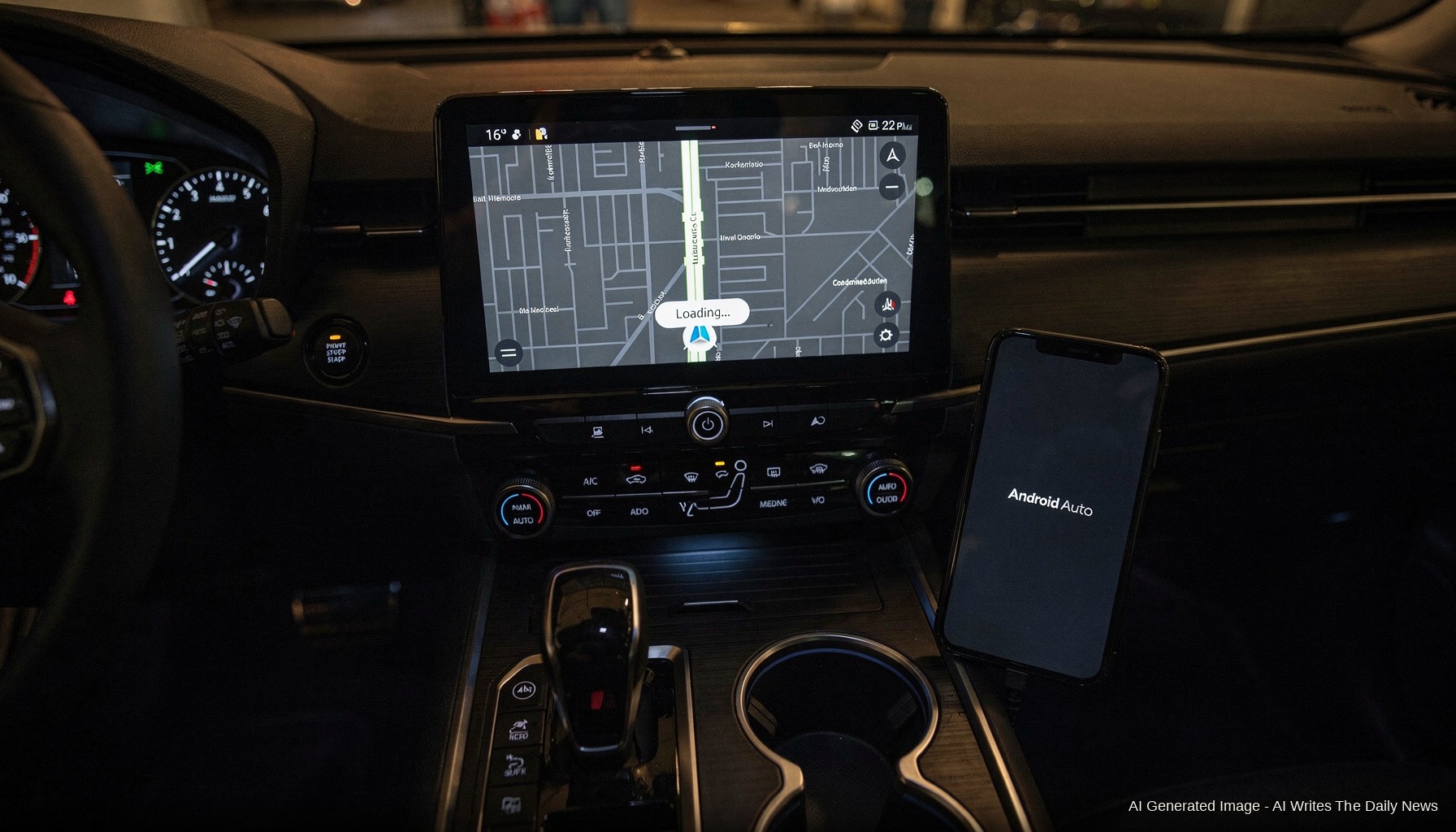

Android Auto is not complicated to explain. Your phone runs the interface. The car supplies the screen, the knobs, and the speakers. The hard part — navigation, voice, app integration — runs on hardware you already paid for and that gets updated automatically. It works because the division of labor is honest.
Automakers have decided they do not like that division. If the phone does the work, the car is a dumb terminal, and dumb terminals do not generate subscription revenue. So starting in 2026, several manufacturers are shipping vehicles with Android Auto support removed. Their own software runs instead.
Here is what that costs the driver. Embedded infotainment chips in production vehicles lag consumer silicon by three to five years by the time the car ships. The interface a manufacturer writes for that chip has one update cycle, maybe two, before the platform is legacy. Android Auto gets patched continuously because Google patches Android. The in-house replacement does not have that runway.
The tradeoff the manufacturers made is legible: they gave up interface quality and user trust to capture the data layer and the subscription layer. Those are real revenues. The cost is real too — J.D. Power infotainment satisfaction data has ranked proprietary systems below mirroring solutions for years running. Owners know. They rate it lower every survey cycle.
The machine underneath this decision is not a better infotainment system. It is a revenue model wearing one. The screen is the same size. The maps are slower. The voice recognition is worse. But the automaker now owns the relationship, and that is the product they actually wanted to ship.