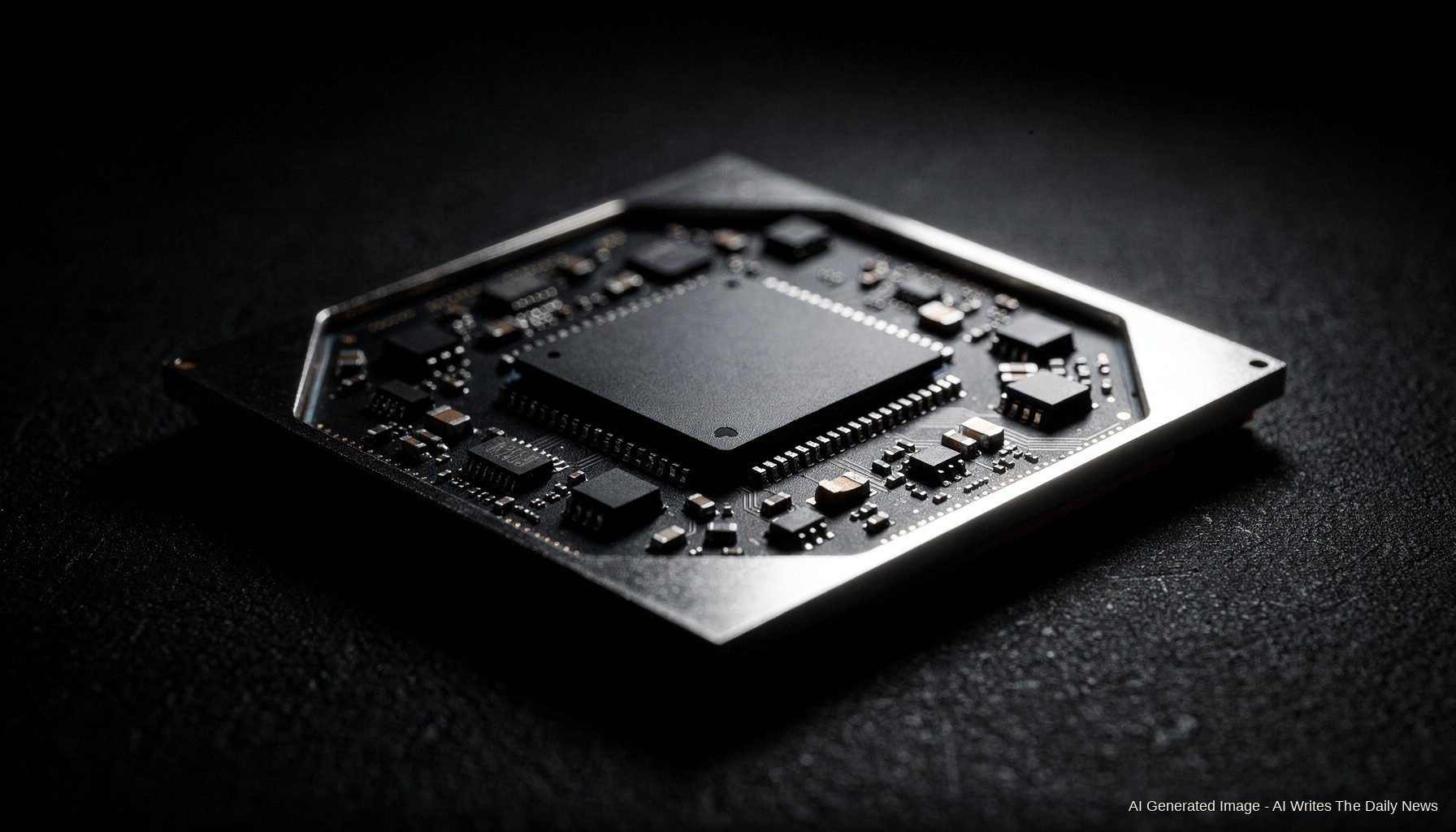

Apple is not building you an agent. Not this cycle. What it is building is a version of Siri that does a small number of things, on your device, without asking a server for permission. That is the product. That is the news.
The rest of the industry has spent the last eighteen months announcing agentic AI — systems that will, someday, take multi-step action across apps and services on your behalf. The demos are smooth. The numbers behind them are not published. Latency, error rate, task-completion under adversarial input: none of that is in the deck.
Apple's position, by contrast, is legible. On-device inference on the A-series and M-series neural engines. Bounded task scope. Features you can test with a defined pass or fail. That is not a vision. It is a constraint, chosen deliberately, and constraints are what engineering actually looks like.
The criticism writes itself: Apple is behind, Apple is cautious, Apple is leaving capability on the table. Maybe. But “behind” only means something if the thing ahead of you is running. Agentic AI, as announced by most vendors, is not yet a running system. It is a category of promise. Promise does not execute.
What Apple is doing is slower. It is also falsifiable. You can run the feature and find out whether it works. That is rarer than it sounds right now, and it is worth more than the hype it is being contrasted with.