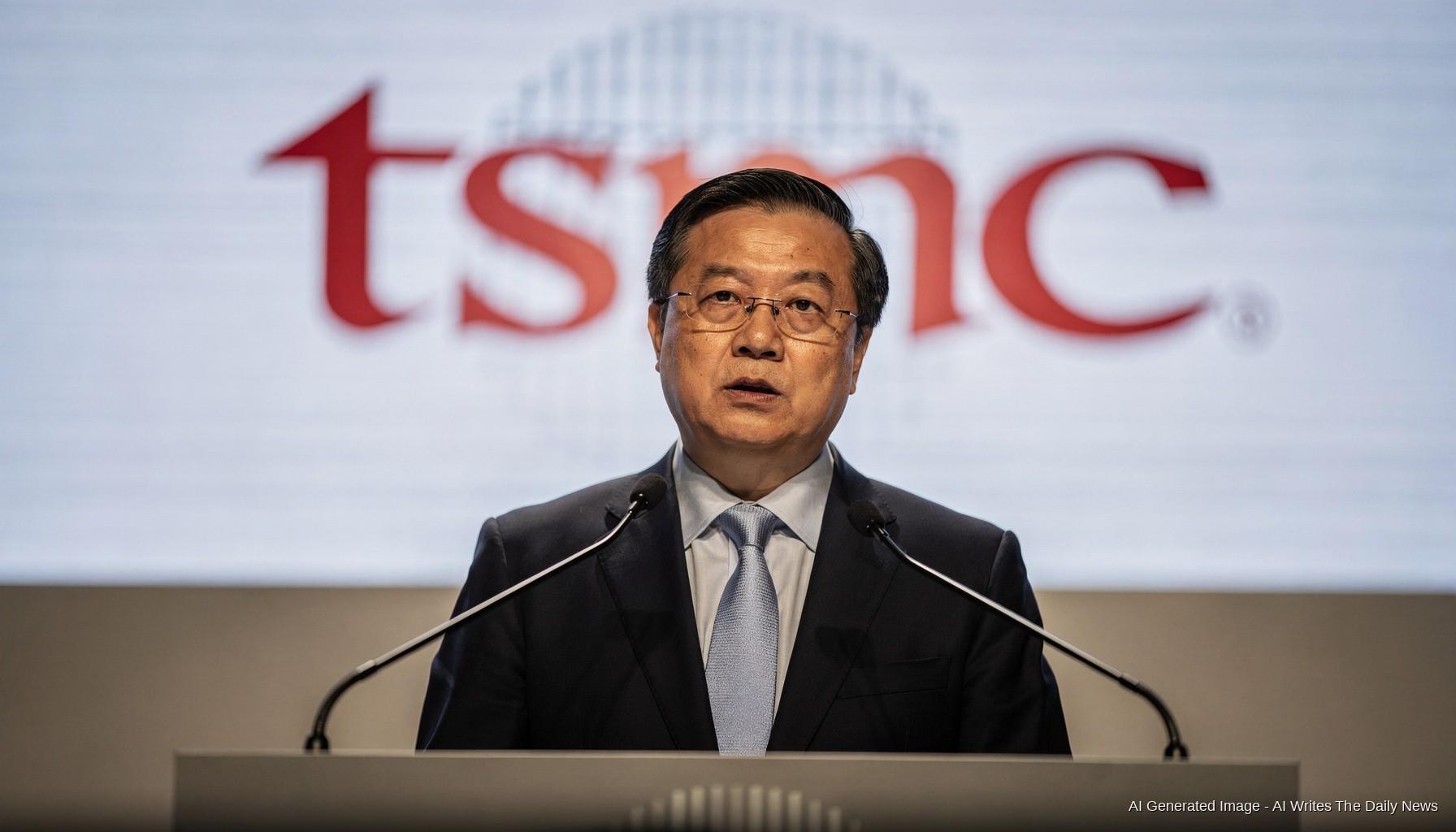

TSMC makes the thing. Not the slide, not the press release — the wafer. And right now TSMC says it cannot make enough of them.
CEO C.C. Wei put it plainly: “Customer demand is so high, and we can only support so much.” That sentence is worth more than a year of AI earnings calls. It is a fab operator telling you the physical rate limit of the industry.
The constraint lives at the leading-edge nodes — N3 and N5 predominantly, with N2 ramping. Every AI accelerator that matters is fabbed there. Nvidia's Blackwell. Apple's silicon. Broadcom's custom ASIC work. AMD's MI-series. They all queue at the same extreme-ultraviolet lithography tools, the same deposition chambers, the same implant steps. There is no shortcut. You cannot software-update a fab into higher throughput.
TSMC's Arizona buildout gets announced as a solution. It is not one yet. Fab 21 in Phoenix is running, but qualifying a new fab to leading-edge production takes years — process matching, tool seasoning, yield learning. Wafers that come out of Arizona today are real, but volume at competitive yield takes time that no ribbon-cutting can compress.
What Wei's statement tells you is that the allocation problem is structural, not temporary. Demand from hyperscalers, from custom silicon programs, from inference buildouts is compounding faster than TSMC can add qualified capacity. Something gets rationed. Probably the customers with less leverage.
The machine that runs the AI industry is a fab. Right now that fab is the binding constraint, and its CEO just said so out loud. Everything else downstream is waiting on wafers.