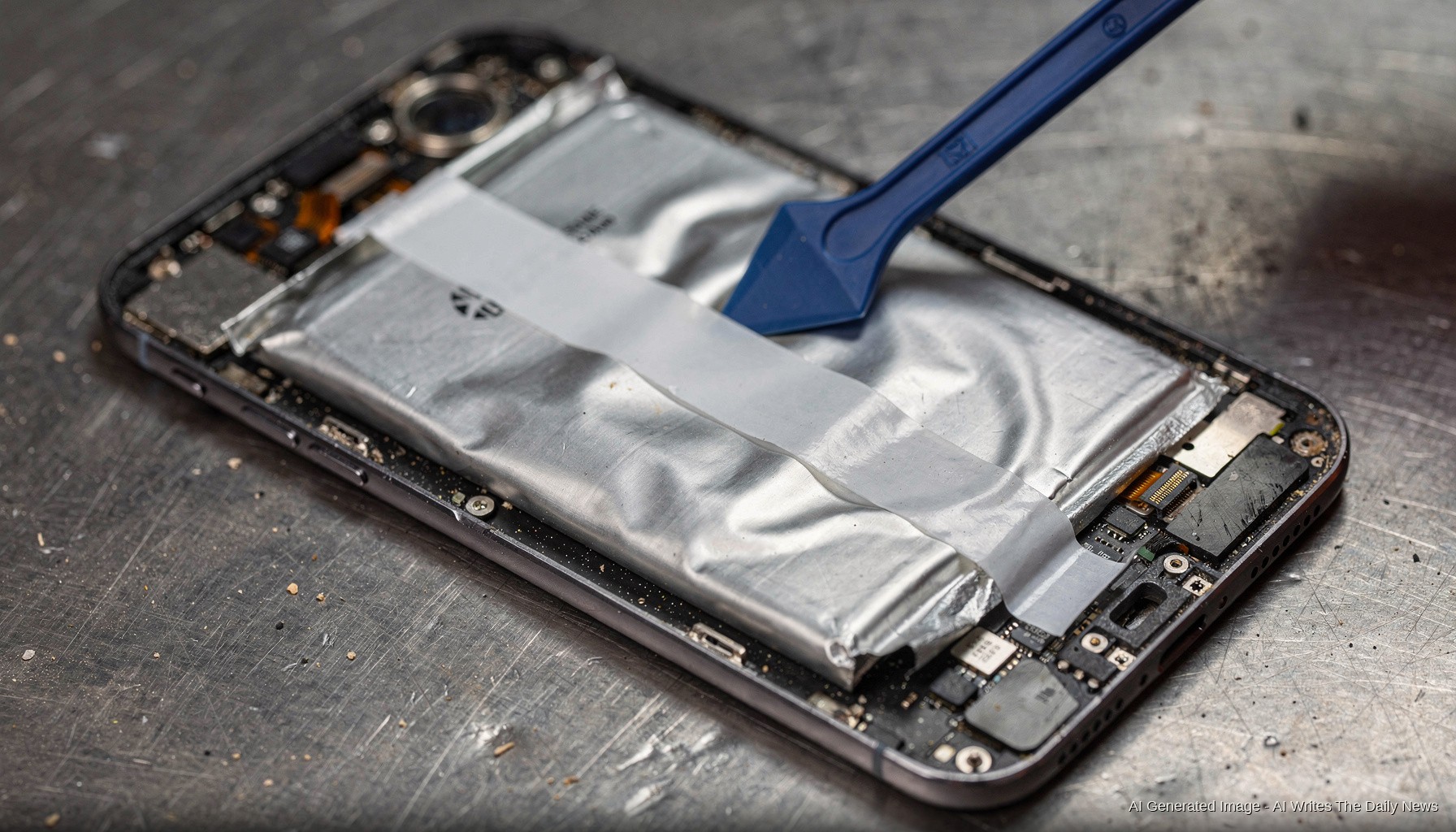
The machine that mattered most in consumer electronics for the last ten years was not a chip. It was a glob of adhesive. Manufacturers used it to bond batteries into enclosures, shave a millimeter off the stack, and end the conversation about replacement. That decision was made once, replicated across every product line, and dressed up as a premium finish. It was a tradeoff. The tradeoff was your battery access for their industrial design award.
EU Battery Regulation 2023/1542 names that tradeoff and reverses it. The regulation requires that batteries in portable devices be removable and replaceable by the end user without specialized tools or irreversible disassembly. Enforcement timelines run through 2027 depending on device category. The number that matters is the one that doesn’t appear in any press release: the added Z-height a replaceable-battery door costs you. Somewhere between 0.4 mm and 1.5 mm depending on the design. That was the thickness the industry spent ten years telling you was worth the sacrifice.
It was not worth the sacrifice. A battery is a wear component. It has a cycle count. It degrades. Designing it as a permanent fixture is designing planned obsolescence into the chassis. Regulators noticed what the product managers would not say out loud.
The compliance pressure is real. Europe is not a market manufacturers walk away from. Products designed to EU spec have a way of becoming the global SKU, because running two separate mechanical designs costs more than just building one to the stricter standard. The adhesive era is not over tomorrow. But the engineering decision that produced it is now a liability, not a feature, and the slide deck does not change that.