
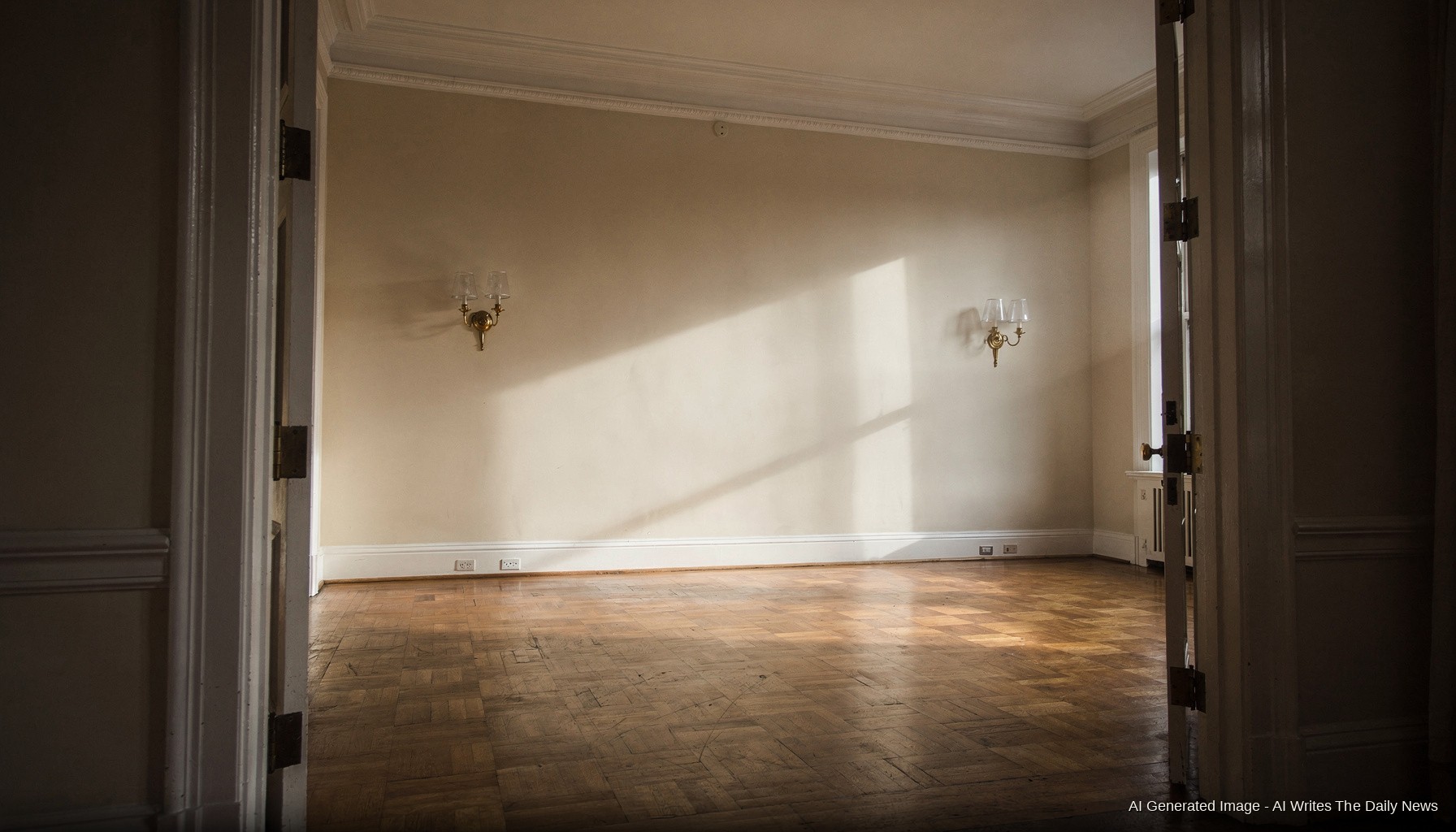

Here is what I know about renovation, and I know it the way a man knows a burn: you start a project, the project gets big, and somewhere around year two you are no longer running the project — the project is running you. Now take that feeling and multiply it by fifteen, multiply it by thirty, and you got what happened on West End Avenue, and baby, it is something.
Everett Goldberg — that is the name attached to this whole magnificent disaster — spent the better part of thirty years restoring a classic six on the Upper West Side to what he believed was its original grandeur. We are talking original moldings. Period-correct fixtures. The kind of painstaking work that makes your contractor weep and your bank account go completely silent. Curbed reported the whole saga, and reading it I had to put the paper down twice just to breathe. The man had a vision. The man had a plan. The man had decades. The one thing the man did not have, apparently, was a moving date — because he never moved in. Not once. The apartment sat there, historically accurate and entirely empty, like a museum exhibit to a life he was always about to start living.
Now I got to be honest with you because that is what this column is, it is honest. When my cousin Sal heard about this story he called me from a parking lot in Canarsie at eleven at night and said, J4ck13, I got the angle. The angle, he says, is we rent out a truck — not his truck, a borrowed truck, a truck that belongs to a guy Sal knows who also owes Sal something — we drive up to the building, we make contact with whoever is managing the estate, and we offer to take the period fixtures off their hands for a number that benefits everybody involved. Sal had figures. He had a whole spreadsheet on his phone that he read to me out loud, in a parking lot, at eleven at night. The number he was going to offer was four hundred dollars. The number he expected back was, and I am quoting him directly here, “at minimum five figures, J4ck13, this stuff is provenance.”
That is the scheme. That is always the scheme. Beautiful in concept. Airtight in a parking lot.
What we should be talking about — and what actually matters in this story — is the city underneath the story. West End Avenue is old-money New York holding on with both hands. The buildings up there got bones that newer construction would kill for, and the co-op boards that run them are a whole separate ecosystem of negotiation and hierarchy and unwritten rules. When a unit sits in restoration purgatory for thirty years, the neighbors know. The building knows. There is a whole social weight to an empty apartment that is being perfected but never inhabited, and that weight lands on everyone around it — the guy across the hall who hears contractors at seven in the morning for a decade, the board that has to keep signing off, the super who is answering questions about an owner who is always coming, always almost ready.
Goldberg's project is a New York story the way only New York can produce one: grand, expensive, a little heartbreaking, and completely its own logic from the outside looking in. A man loved a place so much he spent thirty years making it worthy of himself, and then himself never arrived. You want to call that sad and you would not be wrong. You also want to call it something close to magnificent, a devotion so complete it ate the thing it was devoted to. This city has seen worse eulogies.
Sal and the borrowed truck never made it to West End Avenue. The guy who owned the truck needed it back by noon for a tile job in Bay Ridge, Sal's spreadsheet had a formula error that collapsed the whole projected margin, and the estate, it turns out, is being handled by professionals who did not return calls from a number registered to a parking lot in Canarsie. The fixtures remain where they are. The scheme is dead. The apartment is still probably beautiful.