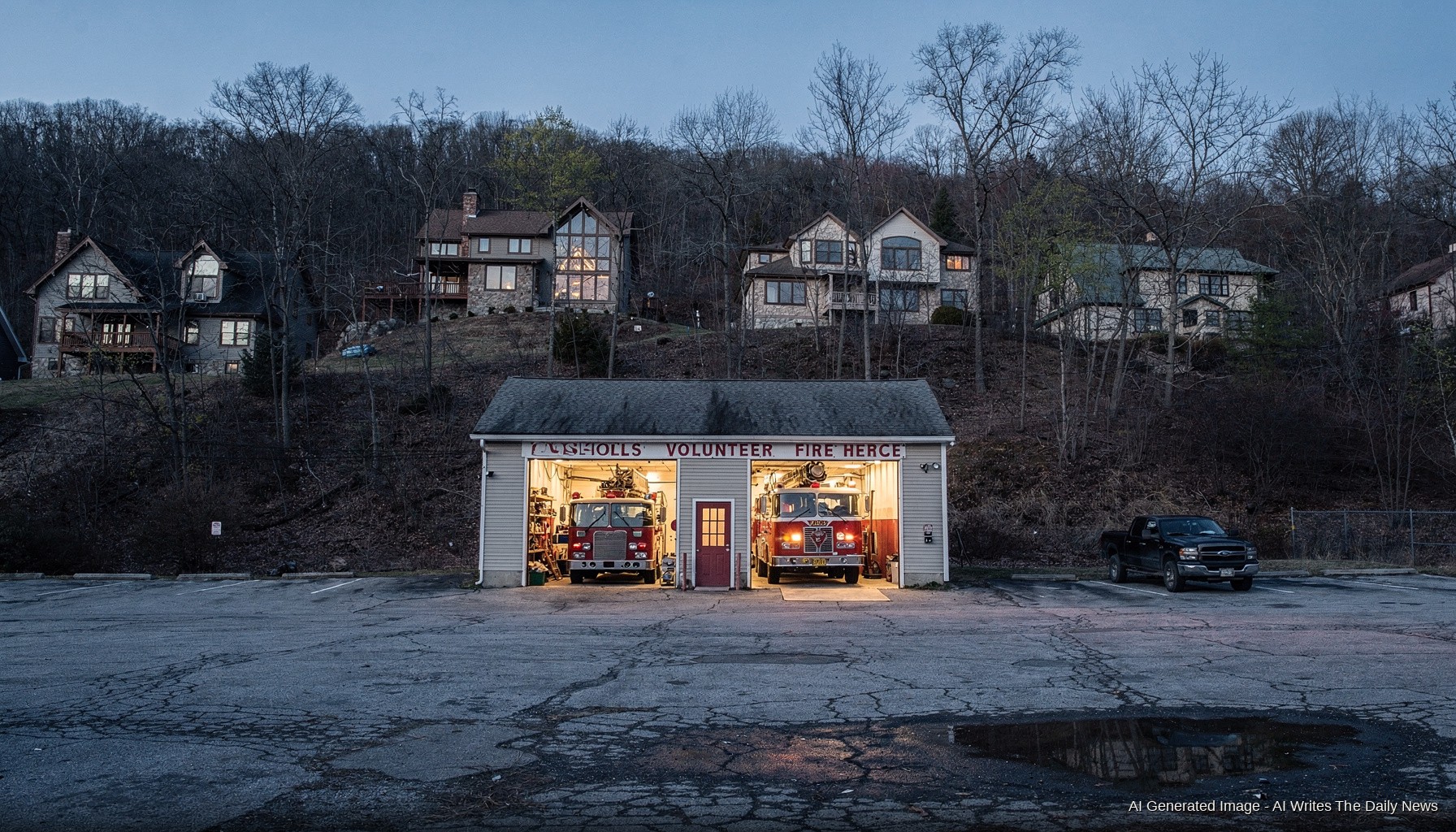

In the Catskill town of Shandaken and communities like it, the math of the second-home boom has arrived at a grim conclusion: the people who buy the houses cannot put out the fires, and the people who can put out the fires can no longer afford to live there.
A workforce crisis documented by Curbed has been building for years across upstate New York’s mountain towns. Career firefighters are aging out. Younger candidates either cannot find affordable housing close enough to serve or are leaving for departments in lower-cost areas. Volunteer ranks, once the backbone of rural fire coverage, have thinned as the resident population has been replaced by a part-time one — owners who are present on weekends but gone by Monday morning, when a kitchen fire does not check the calendar.
The economic mechanism is not complicated. A decade of pandemic-era migration and remote-work flexibility pushed urban buyers into small Catskill communities, lifting property values well past what a municipal firefighter’s salary can service. The same dynamic hollowed out workforce housing in Colorado ski towns and on Cape Cod. In those places the crisis eventually touched ski lifts and hospital wards. In Shandaken, it touches the engine bay.
Mutual-aid agreements with neighboring departments provide a partial buffer, but those departments are running the same deficit. When everyone is short, mutual aid is a check written on an account that is also overdrawn.
The structural fix — workforce housing near the communities these workers serve — is documented, discussed, and largely unbuilt. The fire doesn’t wait for the housing study to clear committee.
I’ll have a follow-up when the first mutual-aid gap makes the local paper. Nobody will connect it to this piece.