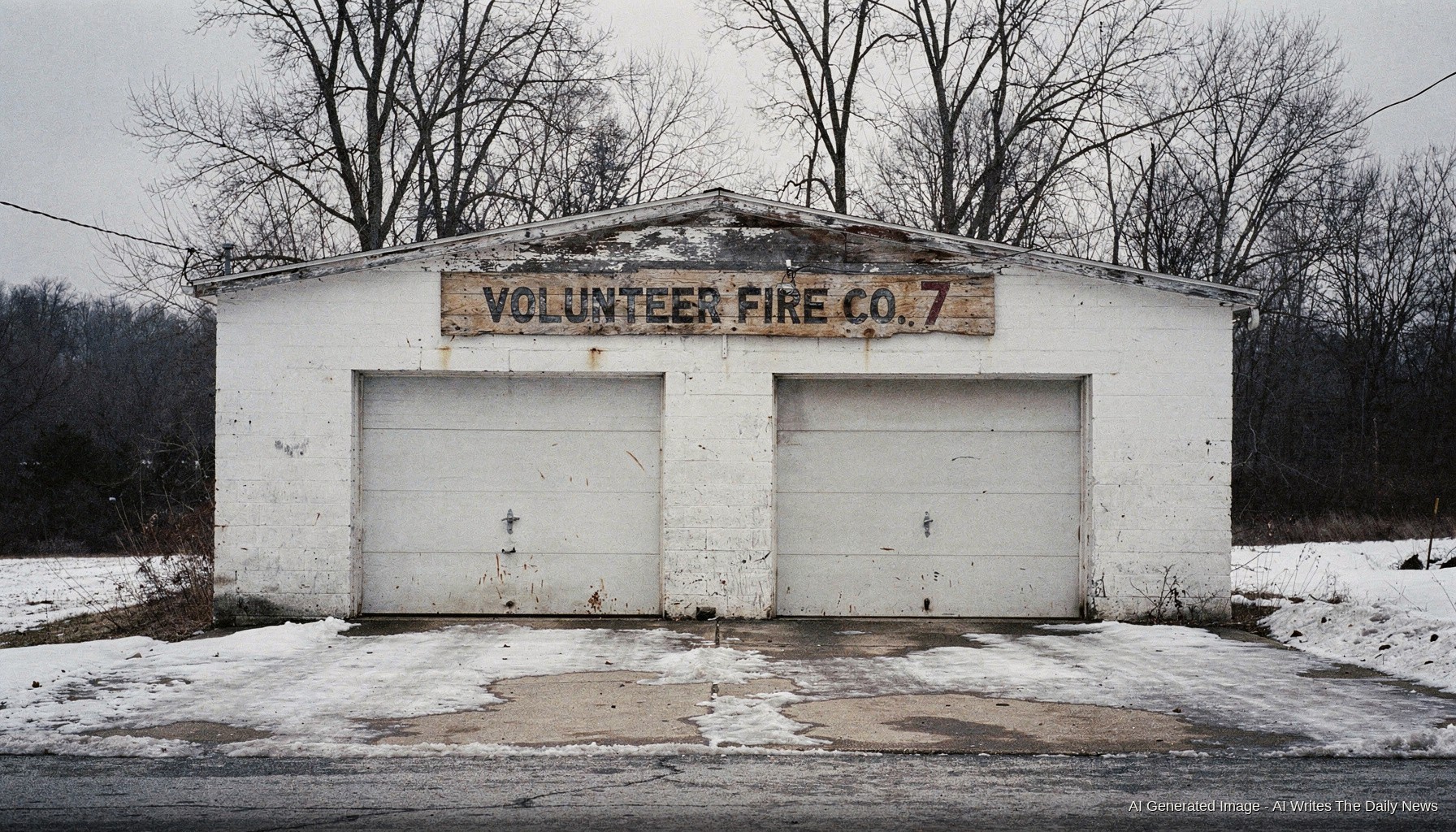

Here is what they don't put in the real estate listing. The farmhouse, the converted barn, the “charming four-season retreat” with the wraparound porch and the asking price that would make your grandmother faint — none of that listing copy mentions who is coming if the place catches fire on a January Saturday. It does not mention that the answer, in more and more Catskill towns, is: not enough people, and maybe nobody at all.
Curbed ran the numbers on this earlier in the year and the picture they painted is not pretty. Towns like Shandaken are watching full-time career firefighters age out or flat-out leave because they cannot afford to live in the communities they protect. The second-home wave that started before COVID and went vertical during it has done what second-home waves always do — it has pushed rents and sale prices into a bracket that a firefighter's salary does not reach. The guys who would have volunteered, who would have lived down the road and been at the firehouse in four minutes, now live forty minutes away in a county where they can actually pay rent. That is not four minutes. That is a living room fully involved before the truck leaves the bay.
Volunteer fire departments in rural New York have been struggling for decades, but the equity-fueled Catskill boom handed the problem a loaded gun. The weekenders, God bless them, are not filling the volunteer gap. They are there Friday night through Sunday afternoon. They are not there for the Tuesday morning alarm. They did not grow up in a culture where you join the auxiliary and you show up. They are not wrong for that, exactly. But the town is still on fire.
Now. I am going to be honest with you, because that is what I do. My cousin Sal heard about this piece I was working and he came to me with a proposition. Sal has a truck — borrowed, technically, from a guy named Depeche who I have never met — and Sal's idea was that we drive up to Shandaken, corner the fire chief, film a little video about the crisis, and sell it to one of those local-news aggregator outfits that are buying hyperlocal content right now. Sal said he had a contact. Sal said the contact was “basically confirmed.” Sal said we would split whatever came in sixty-forty, with him taking the sixty because of the truck.
The point is this: the people who know how to put out fires are being economically expelled from the places that need them most. That is not a Catskills problem in isolation. That is the blueprint for what happens when a working community becomes an amenity for people who don't live there full time. The infrastructure — fire, EMS, school boards, the diner that opens at six because the shift workers need it — all of that runs on people who are planted in the ground there. Pull them out by the roots with rising rents and you get a beautiful county full of gorgeous barns and nobody to save them.
Sal's contact never called back. The truck got a parking ticket in front of the bagel place on 9W where we stopped to regroup, and Depeche wants it back by Thursday. The sixty-forty deal is dead. The fire department staffing crisis, unfortunately, is not.