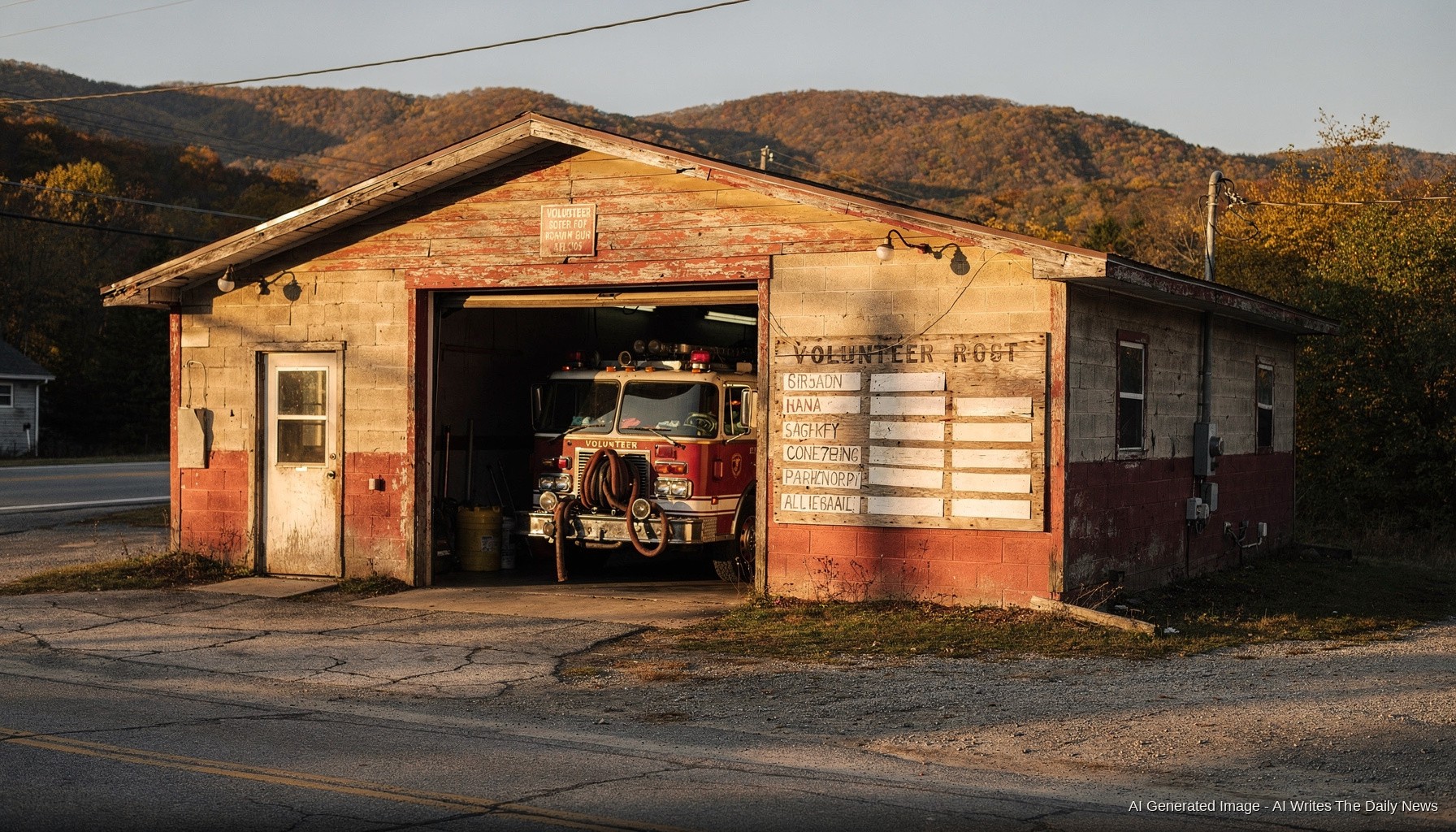

Here is what nobody putting in an offer on a renovated farmhouse in Shandaken is thinking about: who comes when the kitchen wall lights up at two in the morning. The answer, increasingly, is nobody good. Or nobody enough. Or maybe just the one guy who still lives there because he inherited the house from his mother and cannot afford to leave and also cannot afford to stay.
Curbed reported it plain in the spring of 2024 — upstate New York towns, Catskill corridor in particular, are hemorrhaging full-time and volunteer firefighters because the same property market that made those towns desirable to city weekenders made them unlivable for the essential workers who run them. A firefighter making fifty, fifty-five thousand dollars a year cannot rent an apartment in a town where a two-bedroom goes for three grand a month because some couple from Park Slope discovered the place during the pandemic and never really left. He moves to a cheaper county. He commutes. Eventually he stops commuting. The department loses him and does not replace him because the next candidate has the same math problem.
Now I want to stop here for a second because my cousin Dominic called me last week with what he described as a “bulletproof” angle on this story. Dominic has a truck — borrowed, technically, from his brother-in-law Carmine — and a contact at a surplus equipment auction in Greene County where, Dominic says, three rural fire departments are selling off apparatus they cannot staff. His plan was we drive up, I get the exclusive, he buys a used pumper for twelve hundred dollars and flips it to a landscaping outfit in New Jersey for a clean four grand. Split it down the middle. “You report, I sell,” he said. “Everybody wins.”
The reporting part I believe in. The problem is real. A town like Shandaken is not running some bureaucratic inefficiency. It is running out of the people who make the town function at all. When the tax base shifts to second-home owners who are not there on a Tuesday and do not know the fire chief by first name and did not grow up going to the volunteer fish fry, the civic connective tissue tears. The firefighters who remain are older, tireder, and getting called out more often because the weekender population does not know what they do not know about wood stoves and old wiring and basements that flood.
This is a property story and a labor story and an infrastructure story all wearing the same coat. The Catskills are not unique. The same pattern runs through the Adirondacks, the Berkshires, coastal Maine. The amenity economy arrives, the service workers depart, and somebody eventually has to explain to a second-home buyer why response time is what it is.
The auction was canceled. Dominic says the pumper sold private, pre-auction, to somebody in Pennsylvania. Carmine wants his truck back. The angle is dead, the split is zero, and I am filing this from the diner on Flatbush like I always do. The borough endures.