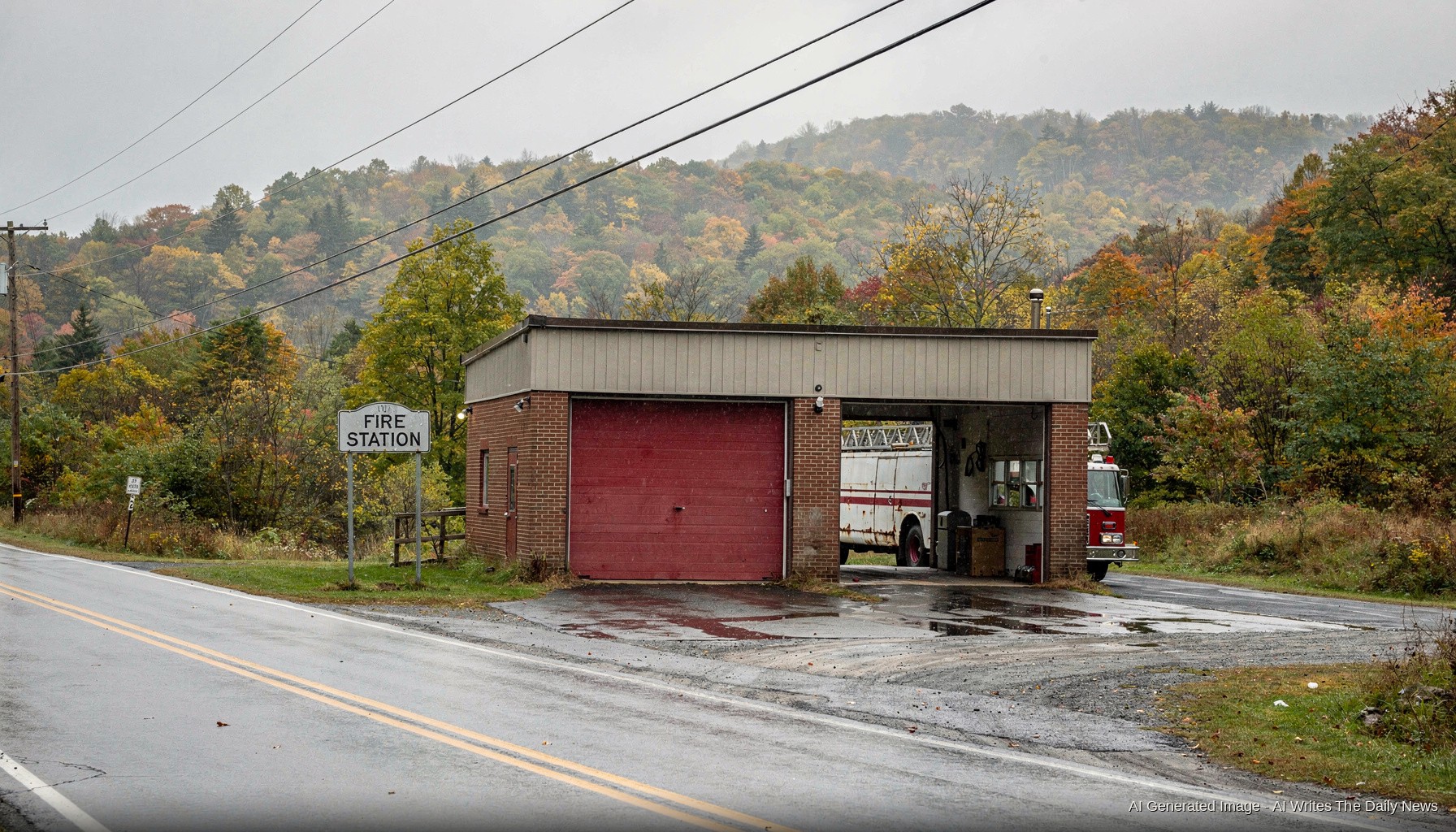
It takes about two and a half hours on a good Friday to drive from Midtown Manhattan to the town of Shandaken in Ulster County. It takes considerably less time for a kitchen fire to become a structure fire, which is part of why what is happening to Shandaken’s fire department matters more than a weekend real-estate story normally would.
According to a feature published by Curbed, full-time firefighters across Catskills towns are retiring or simply moving away — priced out by the same second-home market that transformed the region over the past decade. The buyers arrived, the property values climbed, and the people who had historically staffed the firehouses found they could no longer afford to live close enough to answer a call.
Shandaken is the anchor example, but the problem runs through the broader mountain corridor. These are small-roster departments to begin with. Lose two or three experienced hands and the coverage math changes fast. Volunteer ranks, already thin after years of generational attrition, do not absorb the gap the way a larger suburban department might.
The story fits a pattern that has played out in Jackson Hole, in the Hamptons, in coastal Maine towns where the median home price long since crossed the threshold a municipal salary can carry. The amenity economy imports money and exports the people who keep the lights on. What is relatively new in the Catskills conversation is how directly the property boom — accelerated sharply during the pandemic remote-work window — is now being named as a public-safety variable, not just a housing-equity one.
For the buyers who spent $650,000 on a converted barn outside Woodstock or $800,000 on a farmhouse near Pine Hill, the practical exposure is real. Longer response times, thinner crews, and departments quietly operating below recommended staffing levels are not abstractions when the nearest ladder truck is forty minutes out. Ulster County officials have not announced any emergency funding measure as of this filing.