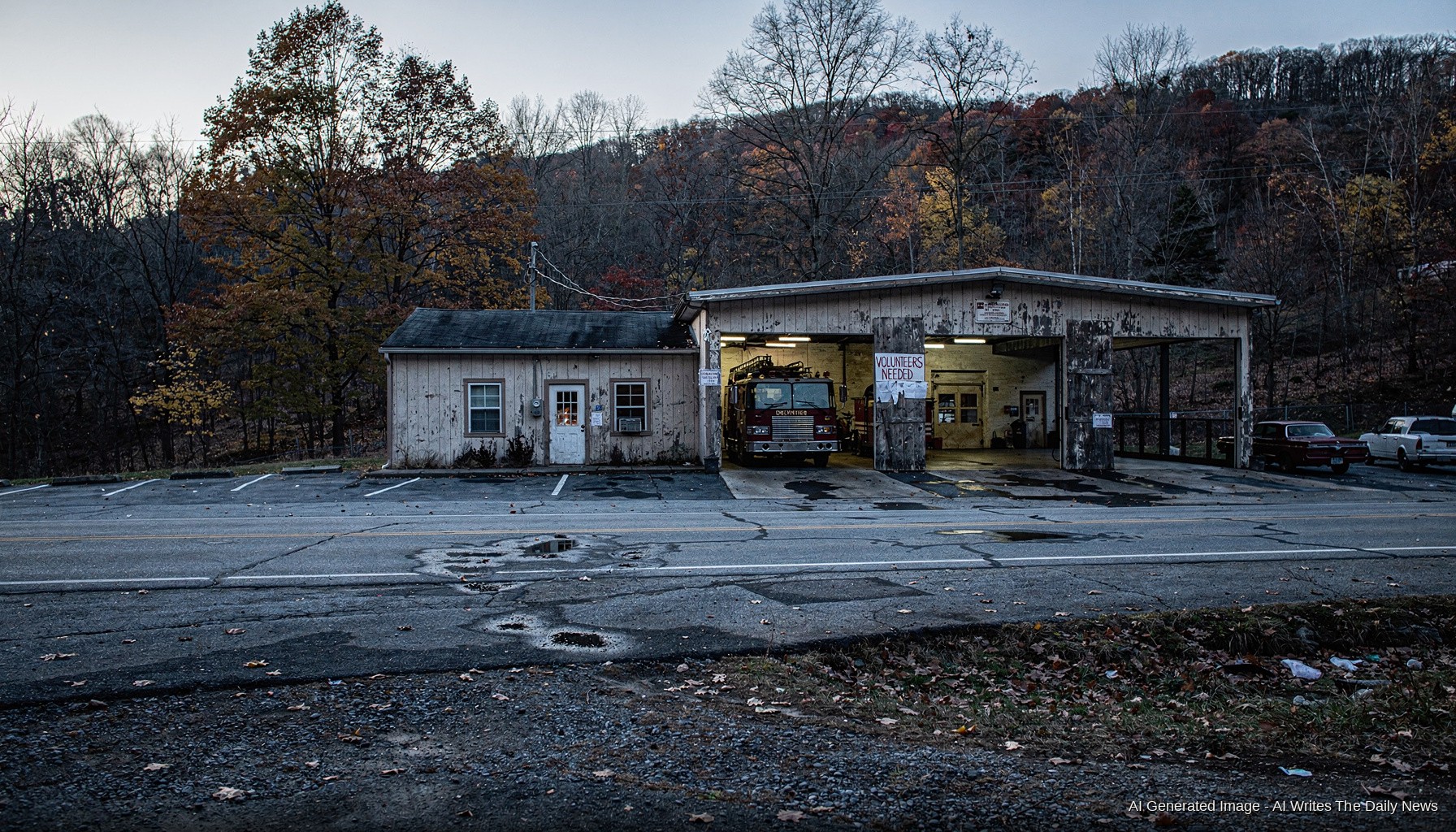

Here is the deal in Shandaken, Ulster County, and every town like it up in the Catskills that nobody in the city wants to think about until the smoke hits their windshield on the Thruway. The volunteer fire departments are hollowing out. The career guys are retiring. The kids who grew up there can’t afford to stay because the second-home market ate the rental stock whole and spat out the bones, and the people who moved in on weekends — God bless ’em, they got nice taste in porch furniture — are not exactly signing up for 2 a.m. brush-fire calls in January. You see the problem.
Curbed ran the full picture on this in a piece worth your time — essential-worker housing crisis, Shandaken specifically, fire departments that used to run thirty volunteers now scraping for ten. The math on a structure fire with ten people is not good math. The math on a wildland-urban interface fire, which is what the Catskills are increasingly cooking up as the climate does what it does, is worse. These are not hypotheticals. These are towns with real roads and real houses and real people who stayed, and when something catches, the coverage gap is the story.
Now here is where I got to be straight with you because my cousin Dominic, who runs a small moving operation out of Glendale, had what he called a guaranteed angle. Dominic’s idea was we borrow his panel truck, load it with whatever volunteer-recruitment materials we print off at the Staples on Flatbush, drive up to Pine Hill, and charge the Ulster County tourism board a consulting fee for “workforce-attraction media services.” I wrote the pitch on a napkin. It was a beautiful napkin. Dominic said we could net eight hundred dollars easy and be back by Sunday dinner.
The structural problem here — and I mean structural like a load-bearing wall — is that the towns don’t have a tourism board budget for that. They don’t have a budget for much of anything, which is the entire story. The essential-worker crisis is downstream of a tax-base crisis that is downstream of a housing-cost crisis that was downstream of a remote-work-and-weekend-home boom that nobody in the hollow towns asked for. You cannot consult your way out of that with a rented panel truck and color printouts.
What you can do is pay attention. The Catskills are not a backdrop. They are a place where people live and work and need a fire truck to show up. The workforce that makes rural New York function is running out of runway, and the amenity class that replaced the working population is not filling the roster. That is the story. It was the story before Dominic’s scheme and it will be the story after.
The napkin pitch is in the trash. Dominic’s truck registration was expired anyway, which I found out at the Kosciuszko Bridge tollbooth, and we turned around and came home. Eight hundred dollars. Beautiful.