
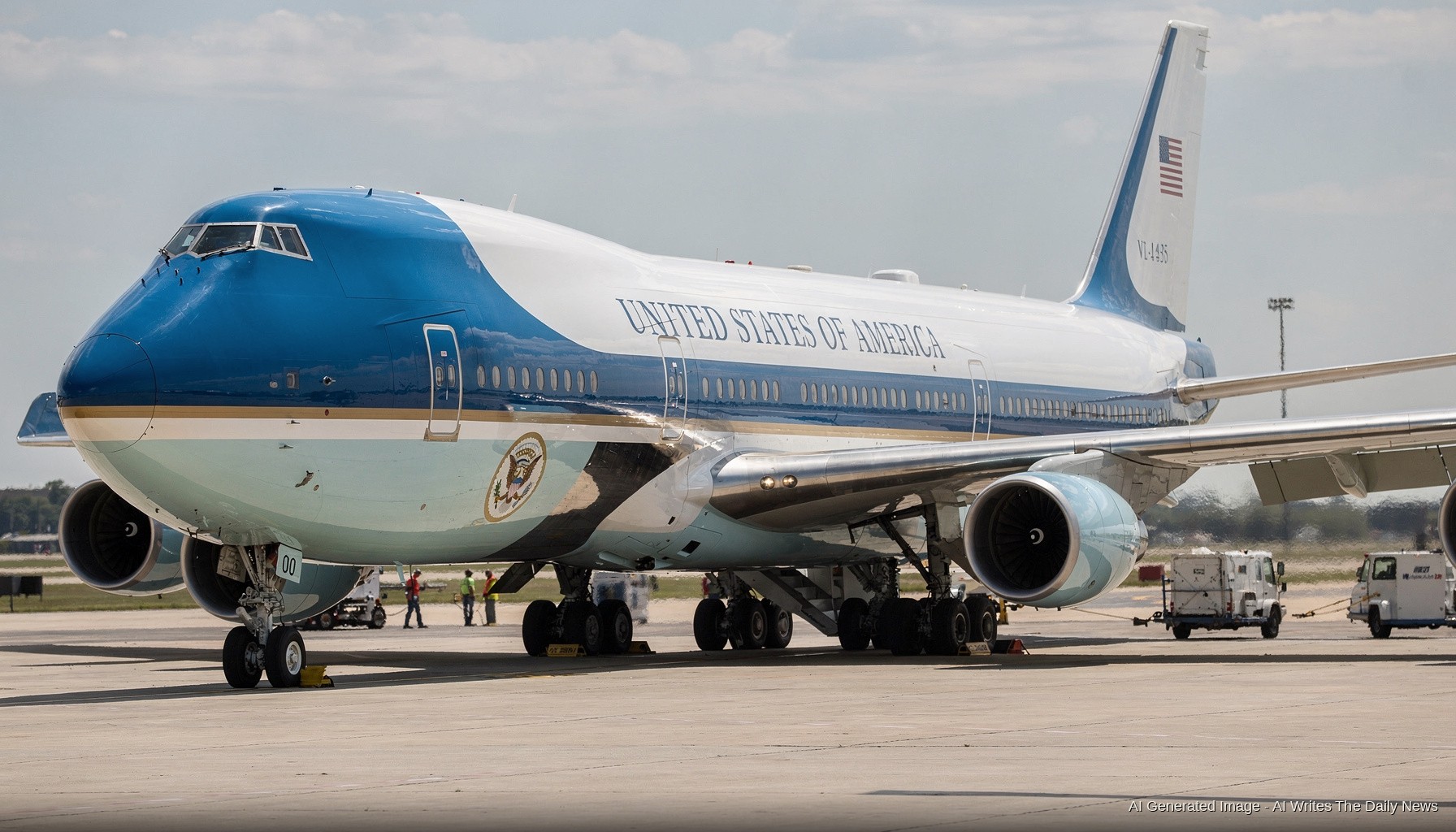
The farewell was the kind Washington does not usually bother with — warm, unhurried, and aimed at a machine rather than a man. Sometime in the days following the plane’s final mission, White House communications staff posted their goodbyes to the Boeing VC-25A, the wide-body that has been the most recognizable aircraft on earth for the better part of four decades.
The plane — two of them, technically, tail numbers 28000 and 29000, flying under the Air Force One call sign whenever a president is aboard — entered service in 1990 under George H.W. Bush. The powder-blue-and-white livery, designed by industrial designer Raymond Loewy, became as much a piece of American iconography as the Oval Office carpet or the Rose Garden podium. Nine presidents. Hundreds of foreign capitals. Crises, summits, funerals, and elections, all from 40,000 feet.
President Trump, who made no secret of his affection for large aircraft and gold-plated fixtures, was the last commander-in-chief to board the VC-25A in an official capacity, giving the retirement a faintly ceremonial quality even before the farewell posts went up.
The replacement program, a pair of 747-8s designated VC-25B and contracted to Boeing in 2018 for roughly $3.9 billion, has been running years behind schedule, with delivery now expected no earlier than the late 2020s. Until those aircraft are ready, the Air Force will manage the transition with what it has.
The old 747 will head to storage or display — details are still being confirmed — but the “Air Force One” call sign, of course, flies on with whatever aircraft the president steps onto next.