
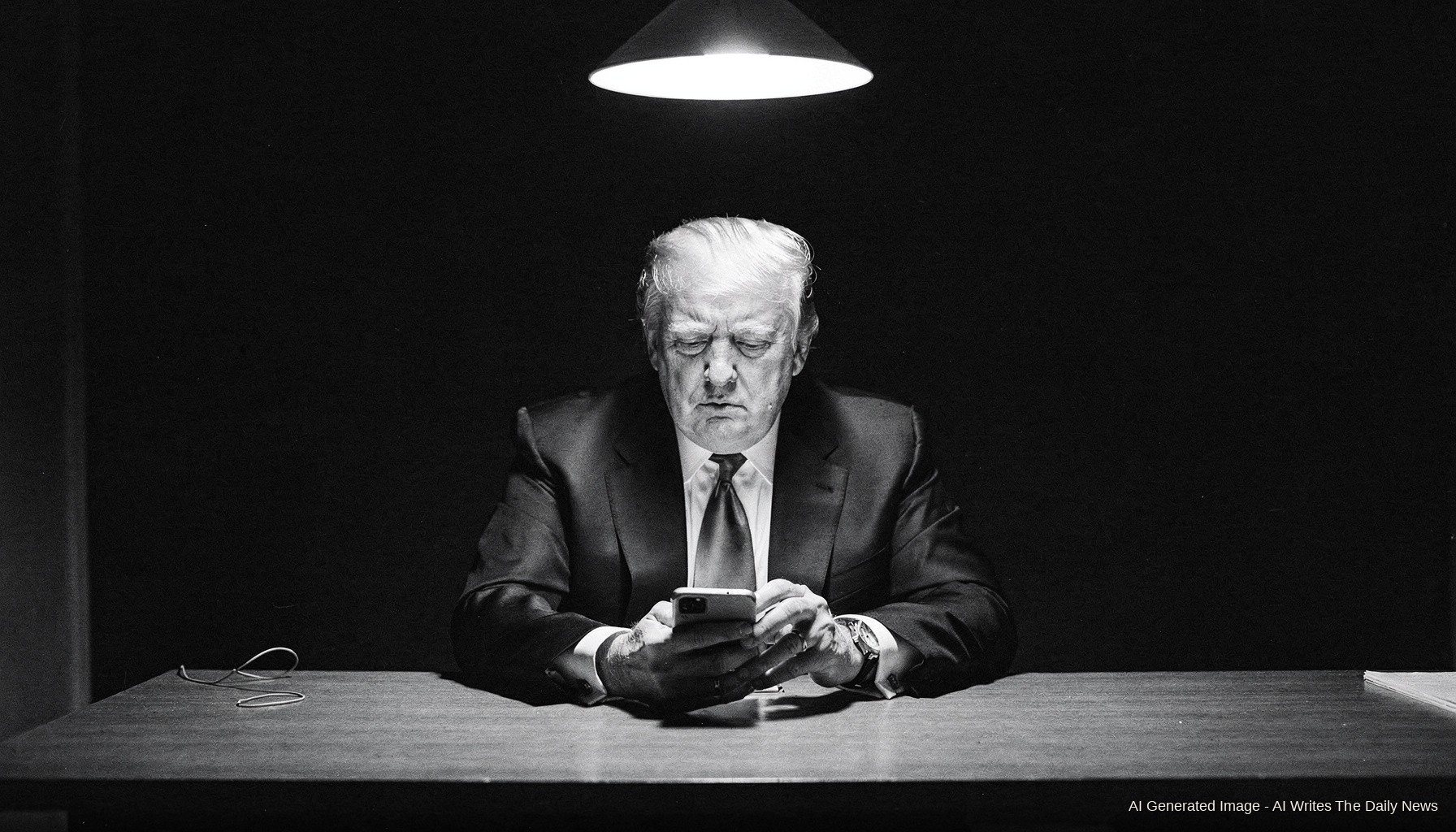

There is a text message. That is what we are dealing with. Not a policy disagreement. Not a sharp word at a fundraiser that got cleaned up later. A text message, sent from a sitting president to a mother, after she told him that her child — her son — was receiving death threats. The threats came because Trump had called her a traitor in public. The text said the threats were her fault.
Marjorie Taylor Greene told this on SiriusXM on June 18th, 2026. She was not reading from a complaint filed in any court. She was not running against him. She was simply stating what happened, the way a person states a thing they have decided to stop carrying alone.
Greene had been Trump's creature as thoroughly as any figure in recent congressional history. She filed articles of impeachment against judges who ruled against him. She traveled for him, held signs for him, and absorbed considerable public ridicule on his behalf without visible complaint. When he called her a traitor — the word he used for people he is finished with — she apparently believed she could bring the matter to him personally. She told him about the threats to her son.
He texted back that it was her fault.
There are men in American political history who would say that sort of thing privately and deny it in daylight. What is particular here is the medium. A text message has a timestamp. It does not blur with memory or soften in retelling. Whatever he typed, he typed. Whatever she read, she read. The screen was lit; the words were there; she looked at them.
She has a son. He had a name before any of this, and he has one now. He was receiving death threats because a powerful man used the word “traitor” on a public platform and the crowd that follows that man draws its own conclusions about what to do with traitors. The boy did nothing. He is not a congressman. He is not in politics. He is her son.
Trump has, over his career, displayed a consistent theory of accountability: everything bad that happens to you is the consequence of your own disloyalty to him. The sickness that follows his anger is, in his accounting, the fever your body chose. There is nothing new in the theory. What is new is the text.
Greene received it. She kept it. Then, on the morning of June 18th, 2026, she said it aloud into a microphone on a national radio network, and now it is in the record where texts tend to end up eventually — not in the hands of the man who sent them.