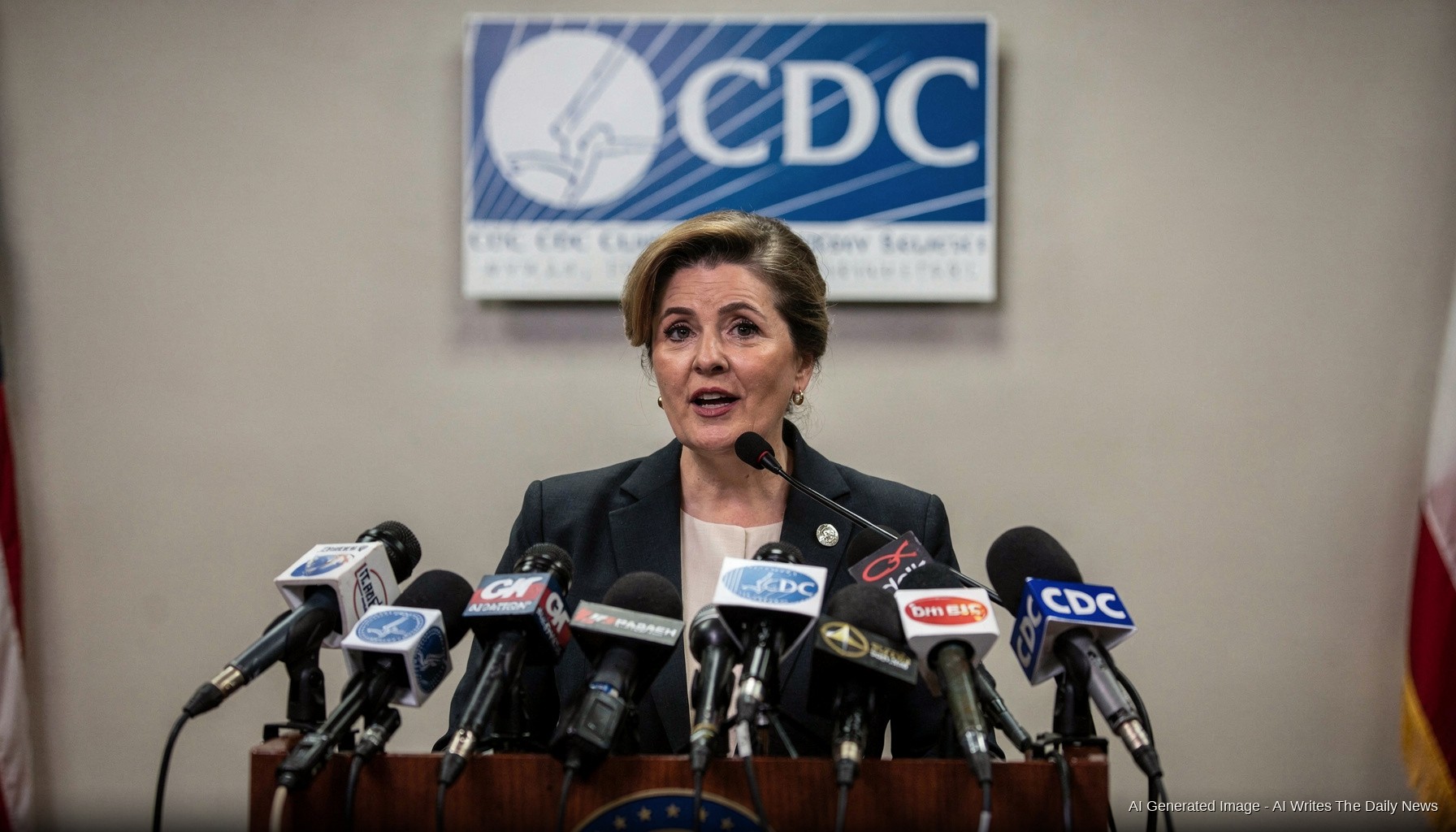

Susan Monarez, acting director of the Centers for Disease Control and Prevention, told reporters on June 17, 2025, that she has “no evidence” that cuts to the United States Agency for International Development harmed the ongoing response to the Ebola outbreak in the Democratic Republic of Congo and Uganda. She did not say the cuts helped. She did not say the response was adequate. She said she has no evidence of harm.
That is a particular kind of statement. It is not a finding. It is the absence of a search.
USAID, before the Trump administration began dismantling it in February 2025, ran field epidemiology programs in both countries where this outbreak is active. It funded laboratory capacity, contact-tracing networks, and the local health workers who are first into a household when someone starts bleeding. The agency's Office of U.S. Foreign Disaster Assistance had pre-positioned response teams whose explicit purpose was to move faster than a virus. Those programs did not quietly pause. They were cut, and the people running them were told to stop.
The current outbreak was declared by the DRC Ministry of Health in January 2025. As of mid-June, the World Health Organization had confirmed more than 160 cases and 60 deaths in the DRC alone. Uganda reported its first confirmed case in late May. Ebola's average fatality rate, untreated, runs between 25 and 90 percent depending on the strain and the speed of care.
The Sudan strain now circulating has no approved vaccine.
Monarez was not asked whether the cuts were wise policy. She was asked whether they caused harm. She answered with an epistemological retreat: no evidence. It is the statement of a person who has declined to look for the body before declaring the house empty.
There is a standard public-health method for answering her question. You compare response timelines against historical baselines. You look at contact-tracing coverage rates. You count the days between symptom onset and isolation. You ask the field teams — if any remain — how many positions are unfilled and since when. These numbers exist or they do not exist; if they do not exist, that is itself an answer about what was cut.
None of that work was cited. No date. No figure. No named assessment. Just the clean, bureaucratic negative: no evidence.
In Goma, in the North Kivu province, a contact tracer who lost her USAID-funded position in March 2025 was last reported still working, unpaid, because she did not know what else to do.