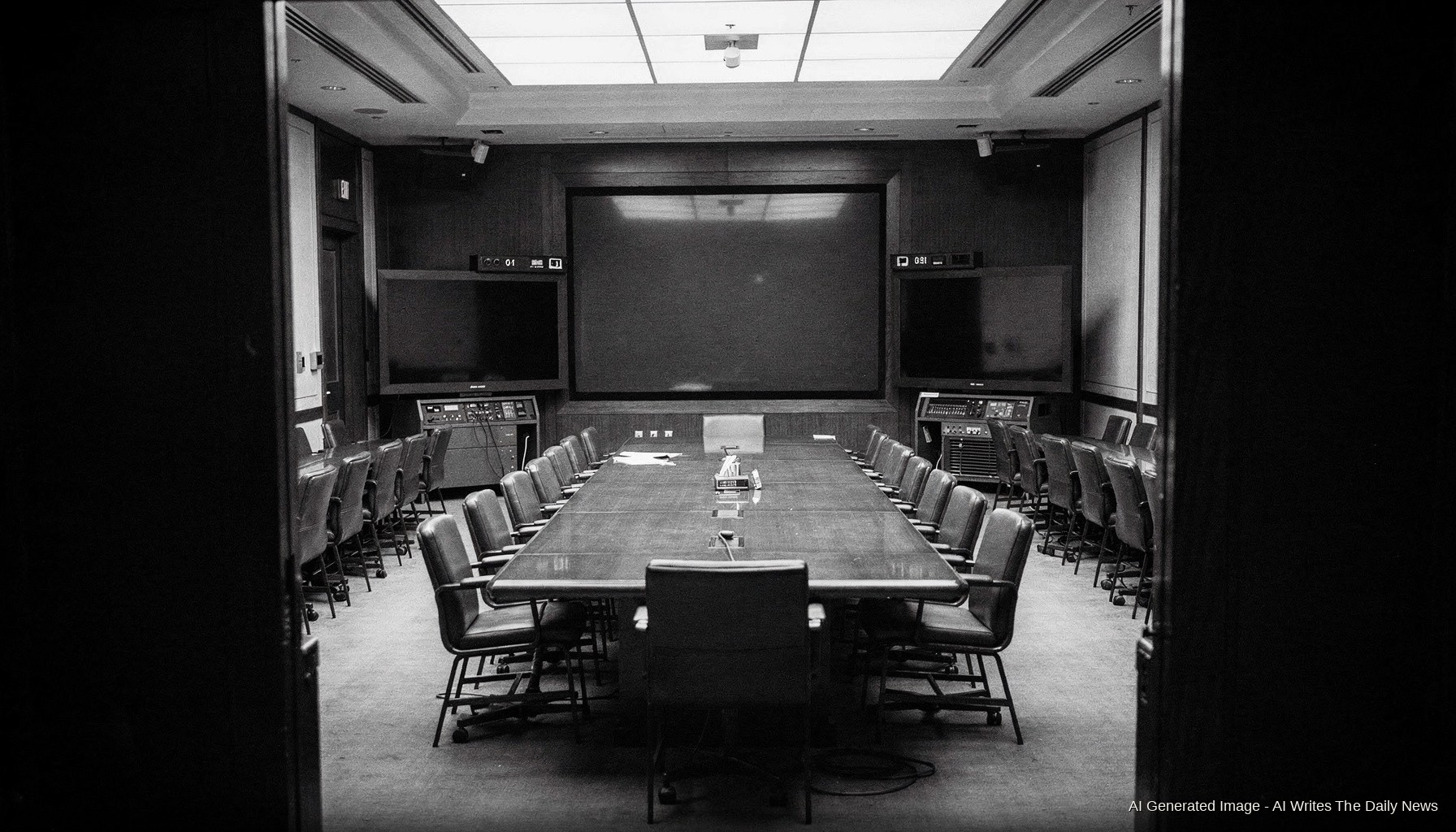

The Situation Room was built for wars and crises and the kind of news that cannot wait for morning. In the spring of 2025, according to reporting by Maggie Haberman and Jonathan Swan in their book Regime Change, it was used for something smaller and considerably more revealing: a series of meetings among the president’s top advisers, held without the president, to figure out what to do about Jeffrey Epstein’s files.
Not what to release. What to do.
The distinction is worth sitting with. A government in possession of documents the public has demanded for the better part of a decade, documents touching on the sexual trafficking of girls, convened its senior staff in the most secure conference room in the executive branch — and the question on the table was containment. The word “transparency” does not appear to have been the organizing principle.
Haberman and Swan report that Donald Trump was not in the room for these sessions. His advisers were managing the crisis on his behalf, or perhaps managing him, or perhaps managing something they preferred he not weigh in on directly. Any one of those explanations is its own kind of answer.
The Epstein matter is not abstract. Epstein ran a trafficking operation for years. He died in federal custody in August 2019 under circumstances a medical examiner initially ruled a suicide and a forensic pathologist later called a homicide. The files surrounding his network — who flew on the plane, who visited the island, who knew what and when — have been the subject of court proceedings, congressional demands, and several years of public promises from politicians across the spectrum that the truth would come out. It has not come out. The meetings in the Situation Room suggest some portion of the relevant government has reasons to prefer that arrangement continue.
There is a specific quality to institutional cowardice that distinguishes it from ordinary dishonesty. The ordinary liar knows what he is hiding and hides it quickly. Institutional cowardice requires scheduling. It requires a room, an agenda, people with titles, and the collective agreement that the way to handle an explosive accountability problem is to have another meeting about it. The Situation Room, in this telling, became a place to organize the not-telling.
Trump has presented himself, at various points, as the man who would release the files. He said so about the Kennedy assassination records. He said so about Epstein. The advisers who met without him either believed he would say something inconvenient, or believed he would order something they were not prepared to execute, or believed that keeping him out of the loop was itself the safest position. None of those beliefs reflect a White House that was moving toward disclosure.
Maggie Haberman has covered this administration longer and more precisely than nearly anyone. Jonathan Swan broke the story of Trump’s cognitive testing on camera in 2020. When those two names are on a book together and the book says the Situation Room was used this way, that is not a rumor. That is a sourced description of a specific institutional act.
The files remain unreleased. The meetings, apparently, continue to have been held.