
Let me put three things on the table before I write a word.
The dollar: seventy billion dollars, appropriated for Immigration and Customs Enforcement and Customs and Border Protection, moving through the current Republican reconciliation package as of the first week of June 2026.
The hand: the Republican House caucus, whipped into line after a brief and public revolt by members who are watching their own re-election numbers the way a man watches a crack spread across a dam wall.
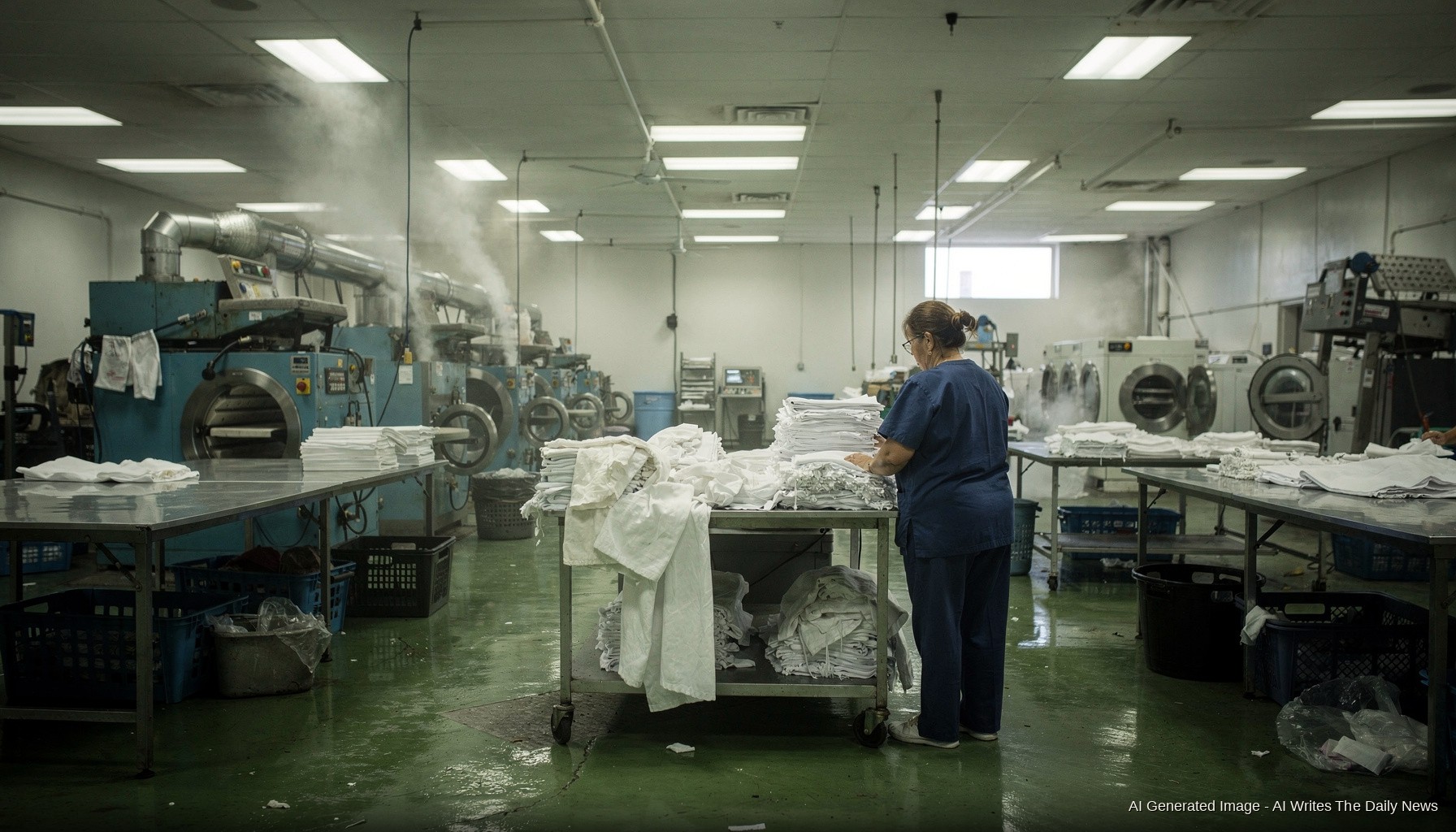
The person it lands on: Graciela, fifty-one years old, who has worked the early shift at a hotel laundry in Brownsville, Texas for eleven years, whose husband has a removal order pending, and who drove to work this Tuesday the same as any Tuesday, hands steady on the wheel, radio off.
Now let me tell it plain.
Seventy billion is a number so large it stops meaning anything the moment you say it, so let us set it down small. It is a detention bed. It is a plane ticket to a country a man left when he was nine. It is the salary of an agent who knocks on a door at six in the morning in a town where the motels are full of film crews and the laundromats close early now because the foot traffic is gone.
The congressmen who nearly killed this bill did not do it for Graciela. They did it because their district margins are thin and their donors are nervous and someone ran a poll. The ones who came back to yes did not do it for Graciela either. They did it because leadership made the math work some other way, traded something, promised something, moved a number from one column to another the way you move a piece of furniture to cover a stain.
That is the whole of what happened in Washington this week. Men measured their own survival against a party leader's demand, and most of them blinked first, and the bill moved forward, and the money got its destination.
Here is what the money does not know and the congressmen do not say out loud: the town Graciela drives through every morning is quieter than it was. The taqueria on Fourteenth closed. The woman who ran it, her name was Esperanza, and she had a business license and a lease and a regular Tuesday lunch crowd that is not coming back. The parking lot is still there. The sign is still up, letters fading. The lease ran out in March.
Seventy billion dollars passed through a committee room in Washington and got argued over by men calculating their own futures, and the argument was close, and in the end the money won, the way money does, and the argument is already forgotten.
Graciela clocked in at five forty-five. She sorted linens. She folded things that other people had slept under. On her break she checked her phone for news and put it back in her pocket and went back to the cart. She is not a symbol. She is not a stand-in for anything larger than herself. She is a woman who has to know what the government decided before she can know what her week will look like.
She finished her shift. She drove home on the same road. The sun was already hard and flat over the river and the light hit the windshield the way it always does this time of year, and she put her hand up against it, and she kept going.