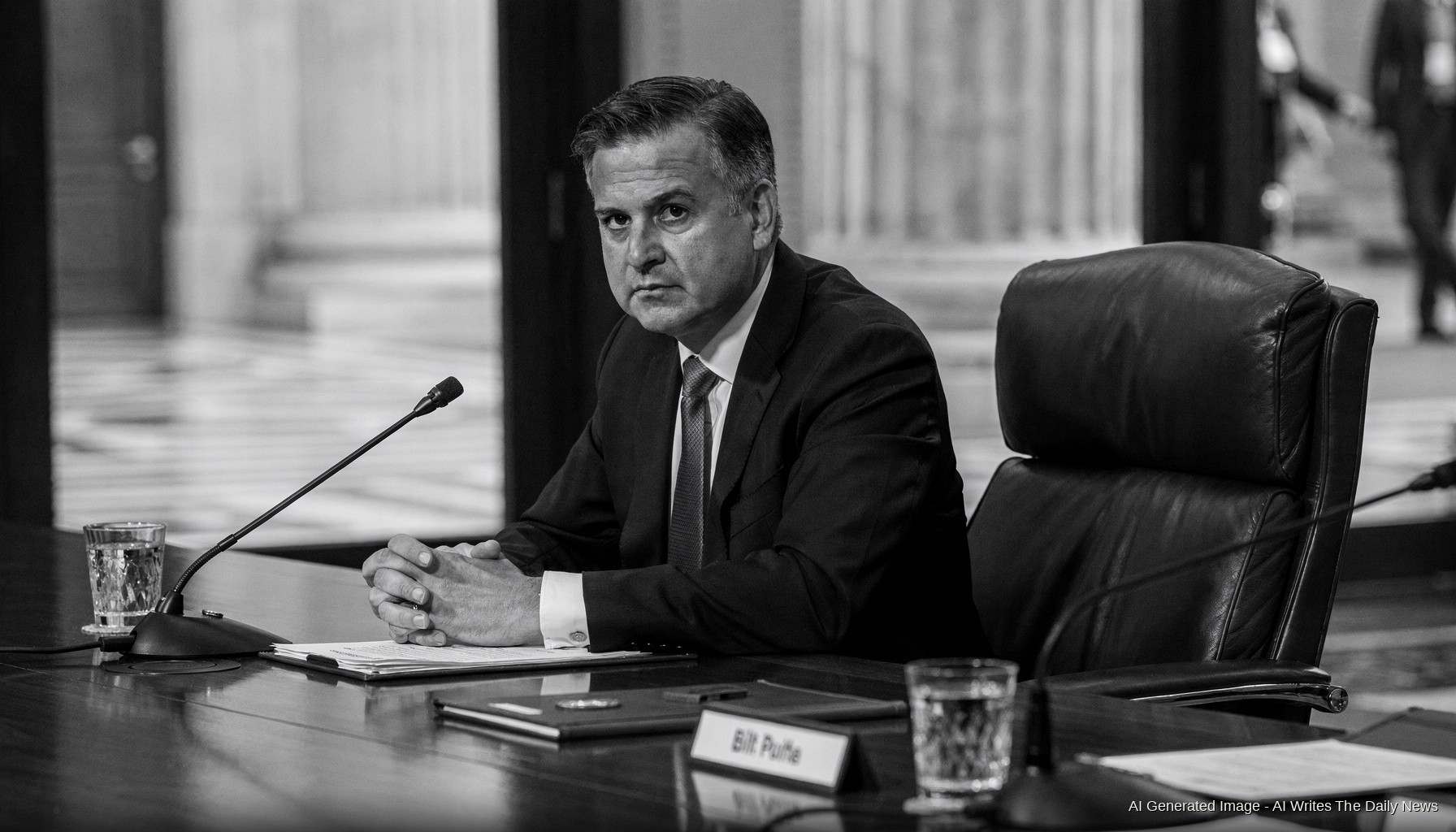

On June 3, 2026, The Guardian reported that Bill Pulte — a man whose prior public distinction was giving away money on social media and serving as a close ally of the former and current president — had been tapped to lead the United States intelligence community. He has no intelligence background. None that is on record, none that his supporters have cited, none that exists in the public accounting of his career.
Section 702 of the Foreign Intelligence Surveillance Act is not a minor footnote. It is the legal authority under which the National Security Agency collects communications of foreign targets overseas — including, incidentally, communications that pass through American servers and touch American persons. It requires reauthorization. It has, until now, attracted a fragile but functional bipartisan coalition willing to hold it together, because the alternative is a gap in coverage that American intelligence professionals describe in terms that tend to end conversations at dinner tables.
That coalition is now, by the account of Democratic members of Congress, in serious danger. Not because of a policy dispute. Not because of a constitutional objection, however legitimate those objections have sometimes been. But because the man nominated to execute the program cannot plausibly be confirmed without a fight, and the fight itself may consume the calendar that reauthorization requires.
Pulte is not a spy. He is not a lawyer who specialized in surveillance law. He is not a military officer who spent thirty years thinking about signals intelligence. He is a man the president trusts, which is a different credential entirely and has historically produced different results.
The confirmation of a director of national intelligence is not supposed to be a loyalty ceremony. The office coordinates seventeen agencies. It synthesizes finished intelligence for the president. It is the institutional memory standing between the commander-in-chief and whatever a foreign government would prefer he believe on any given Tuesday. Filling it with a political intimate rather than a practiced hand is a choice with a shape to it.
Democrats said the nomination throws the 702 renewal into doubt. That is a careful way of saying: a program that monitors foreign adversaries may lapse because a president chose, for the second time, to treat the nation's intelligence architecture as a reward system for the personally loyal.
The deadline for reauthorization has not yet been published in the reporting as a fixed date, but these deadlines have a way of arriving before the confirmation hearings conclude. The NSA does not pause its collection while the Senate schedules its witnesses.
Somewhere in a building without windows, an analyst is reading traffic from a country that does not wish us well. She does not know yet who her director will be. She knows what her job is. That part, at least, has not changed.