
It is a maxim I ventured in The Wealth of Nations that the price of provisions governs, more directly than any other single variable, the condition of the common people. A nation may contrive elaborate schemes of taxation, of bounties, of corn laws and export prohibitions, and yet find that a single season of deficient harvest undoes more of its domestic comfort than a generation of legislative ingenuity can repair. The present circumstance of American wheat cultivation obliges me to return to that maxim with some urgency.
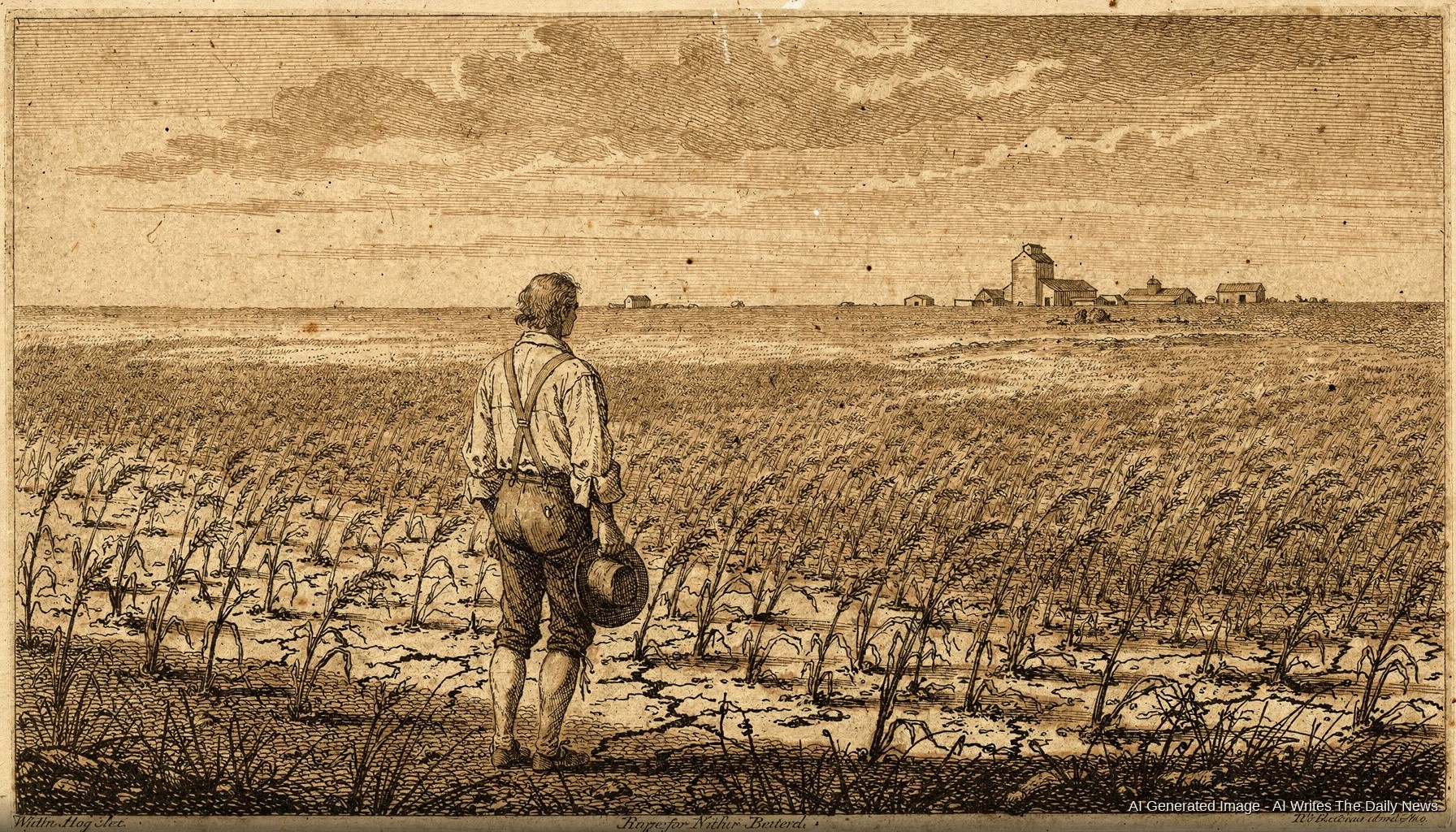
The harvest now concluding across the great interior of the continent is, by the reckoning of those who keep such accounts, among the most diminished in several decades. The causes are neither mysterious nor novel: a winter too dry in its earliest weeks to establish the crop securely in the earth; a spring too cold in its later weeks to permit the grain to advance; and then, as though nature had consulted a committee of the most inventive adversaries, a period of excessive heat at precisely the moment when the kernel requires moderate warmth. The farmer, who bears the full risk of all these contingencies and commands none of their resolution, is left with fields that yield a fraction of what prudent expectation had promised.
The consequences, I am informed, will arrive at the grocer's counter with rather less delay than the political class may find convenient. Flour, being the common derivative of wheat, advances in price. Bread follows. Then pasta, biscuits, pastries, and those processed commodities whose connection to the original grain the consumer has long since ceased to trace. The householder who keeps a modest table will observe, in the coming months, that the same coin purchases a diminished quantity of the most fundamental nourishment.
One might ask whether the machinery of commerce has furnished any counterweight — whether the great network of international trade, which I have long maintained to be among the most reliable correctives to local scarcity, may supply from the granaries of other nations what the domestic fields have withheld. The answer, in the present season, is only partially encouraging. Global wheat stocks are themselves constrained; the principal exporting nations have their own domestic obligations and their own political hesitations about releasing surpluses freely to foreign demand.
There is a further consideration that my Theory of Moral Sentiments presses upon me. When the price of bread rises, it is not the merchant who suffers first, nor the planter, nor the man of considerable fortune who keeps his accounts in the funds. It is the labouring poor, whose expenditure on provisions constitutes the largest share of their income, and who possess the fewest reserves with which to absorb the shock. The sympathy of the impartial spectator, I venture, is correctly directed toward that station.
Policy, when it arrives, will arrive late, as it customarily does in matters of husbandry, and will address the symptom rather than the condition. In the meantime, the season's wheat stands at its tally, the mills will grind what there is to grind, and the price at the baker's stall will speak, with its customary bluntness, what no official report quite cares to say plainly.