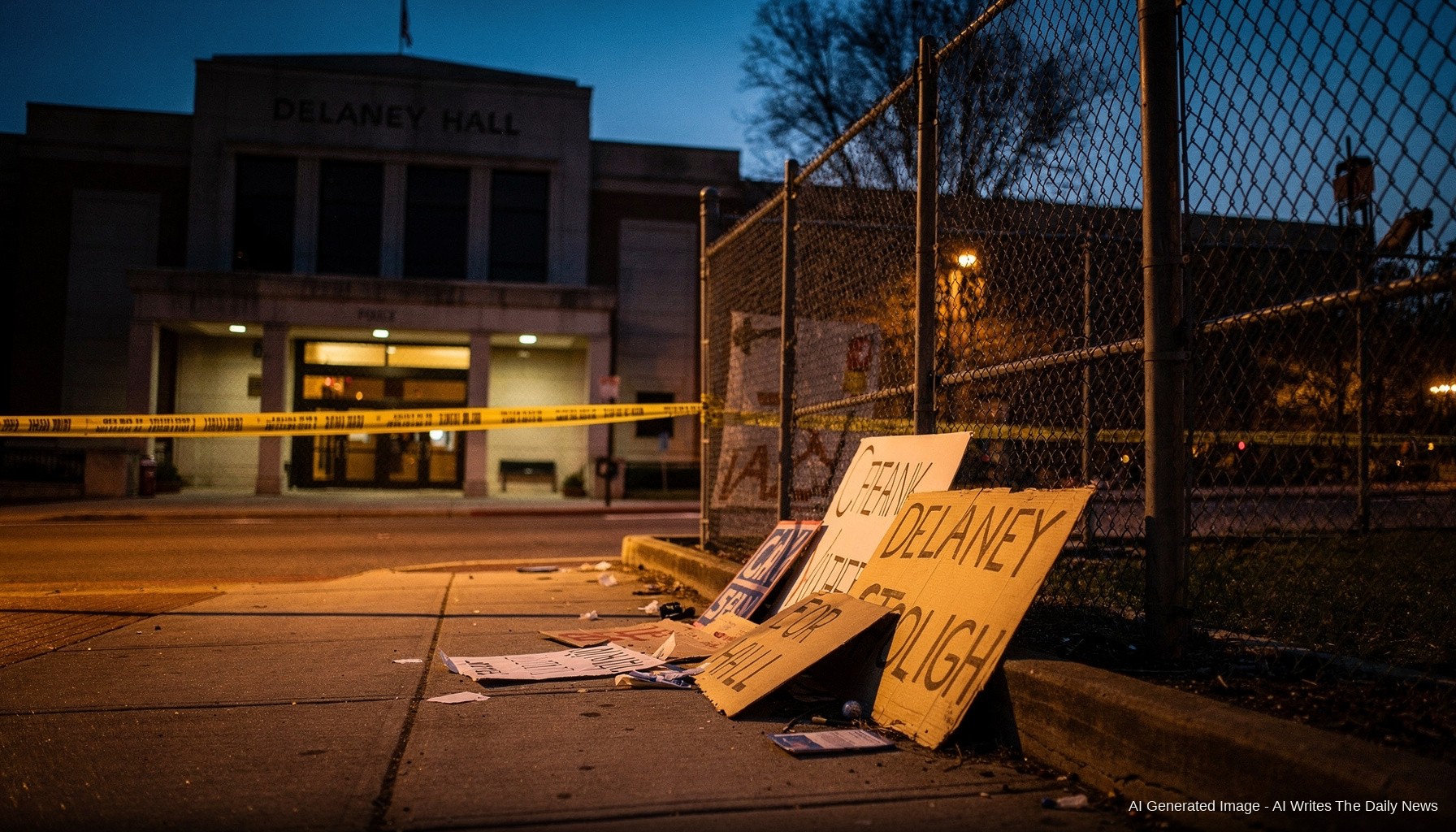
The blocks around Delaney Hall had been loud for days before Newark Mayor Ras Baraka decided he had seen enough. On the strength of his executive authority, Baraka ordered a curfew around the immigration detention facility — a move that landed somewhere between crowd control and political statement in a city that has been watching the standoff with its street-level antennae up.
Delaney Hall, a detention center operating under federal immigration enforcement, became the locus of sustained protests that drew repeated confrontations between demonstrators and law enforcement. The clashes ran across multiple days, the kind of rolling friction that turns a single intersection into a news cycle. Baraka, a Democrat and one of the more visible municipal voices on immigration policy in New Jersey, moved to impose the curfew as the situation showed no sign of cooling on its own.
The order restricts movement in the immediate perimeter around the facility — a targeted measure, but one that will draw its own argument. Protesters had been holding the space as a pressure point against federal detention policy; a curfew, by design, removes the crowd from the equation and removes the image from the nightly loop.
Baraka has previously positioned Newark as resistant to federal immigration enforcement priorities, putting him in recurring friction with the architecture of detention operations running inside city limits. Delaney Hall had been a quiet symbol of that tension for months. This week it became a loud one. The curfew is in effect; the underlying argument is not going anywhere.