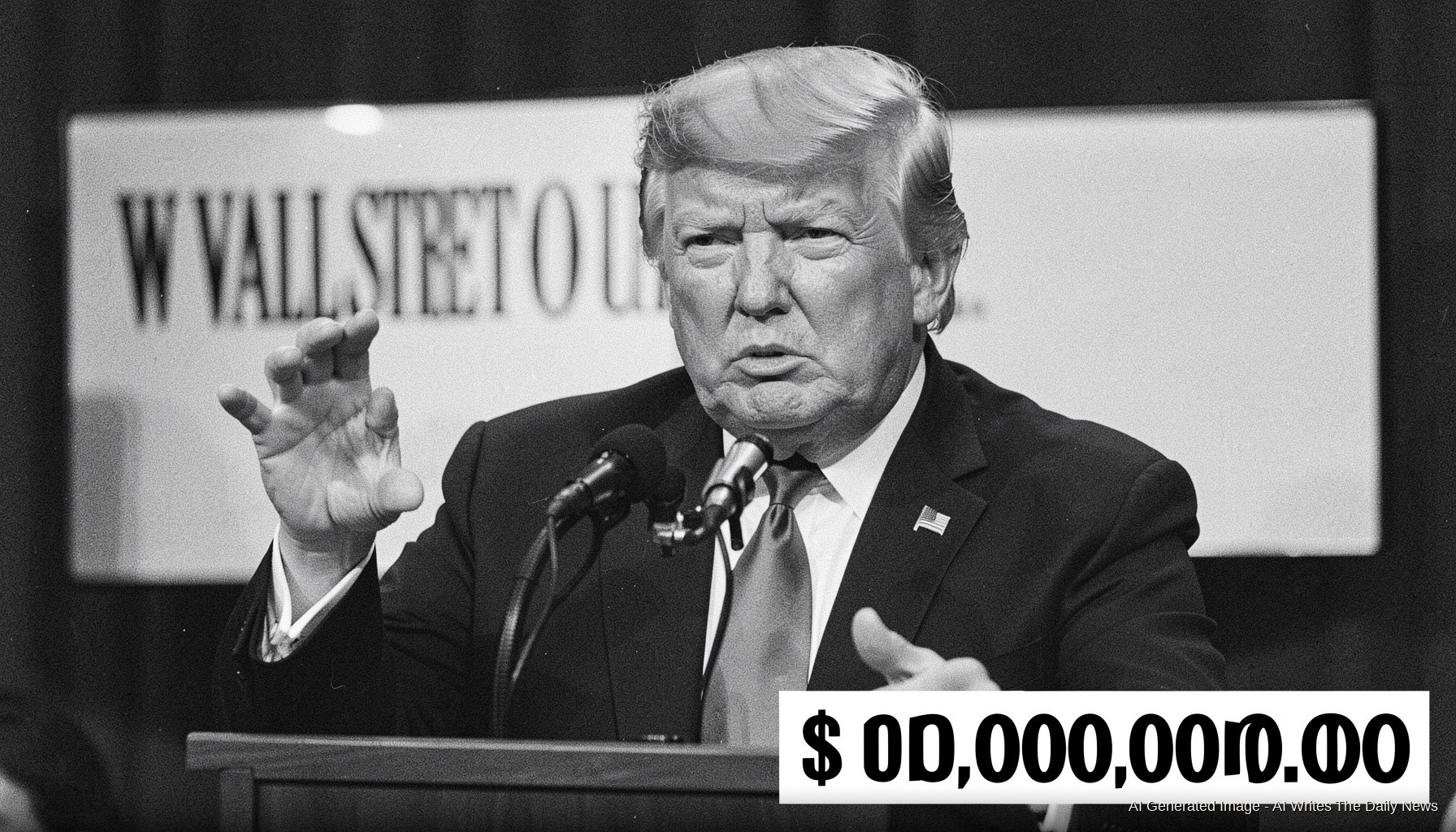

On May 28, 2026, Donald Trump refiled a $10 billion defamation lawsuit against the Wall Street Journal over a report the paper published regarding his alleged ties to Jeffrey Epstein. Ten billion dollars. Not nine. Not eleven. Ten billion, which is roughly the GDP of Iceland and considerably more than the Journal’s parent company, News Corp, earned in its last full fiscal year.
The number is the argument. It does not need to be winnable. It needs to be large enough that a managing editor, sitting across from a nervous general counsel, starts doing arithmetic instead of journalism. That is the intended effect. That is the only effect that matters to the man who filed it.
This is not Trump’s first expedition of this kind. He has brought several such suits in his personal capacity — meaning as a private citizen who also happens to hold the executive power of the United States government — against news organizations that printed things he found inconvenient. The suits arrive like tax audits used to arrive on critics of other governments: not always to win, but to remind the recipient of the expense and duration of losing.
The Journal published what it published. A reader may consult the May 2026 archive and judge the reporting on its merits. What a reader cannot do is consult a document that was never written because a reporter decided the legal exposure was not worth the editor’s blessing. The ten billion dollar question is how many of those documents do not exist.
Defamation law in this country was designed, in its better applications, to give a private person some remedy against a publication that printed a lie about him and ruined his life. It was not designed as a pre-emptive tax on curiosity about the powerful. New York Times v. Sullivan, decided in 1964, tried to draw that line. Actual malice. A high bar, deliberately set. The current litigation strategy treats that bar as an inconvenience to be cleared by sheer financial attrition, not by the merits of any particular claim.
A president is, by definition, a public figure of the first order. He assumed that condition in January 2017 and again in January 2025. The scrutiny is not a side effect of the office. It is the office’s operating condition. The press does not serve at the pleasure of the executive; the executive serves at the pleasure of a public that depends on the press to know what it is consenting to.
The Journal’s lawyers are billing by the hour. The reporters who worked the Epstein story are watching a clock that has nothing to do with the news cycle. And in some future newsroom, an editor is already doing the arithmetic on a story that has not yet been assigned.