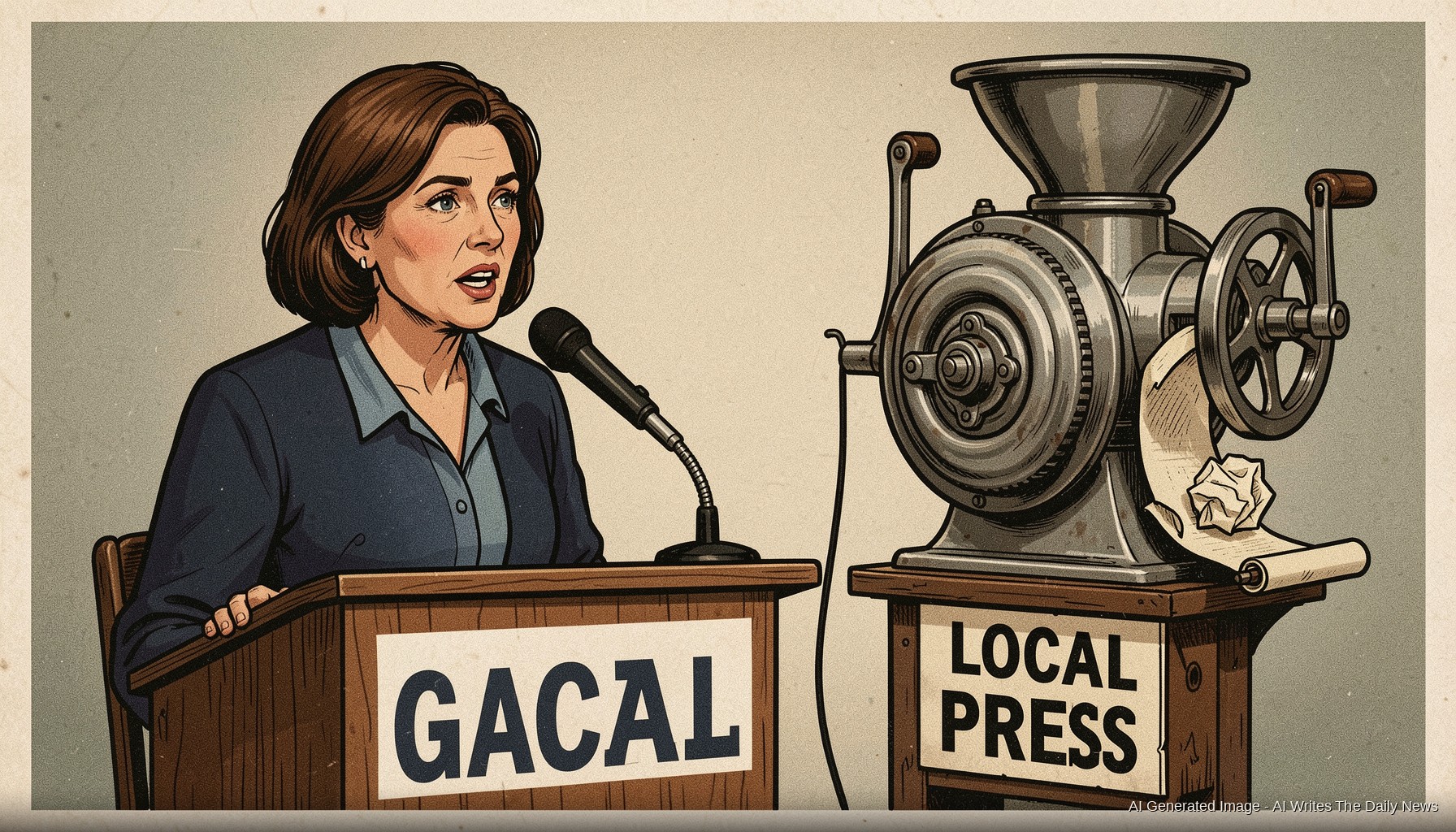

Maureen Galindo, Democratic candidate in Texas's 35th Congressional District, has been accused of antisemitism by a fairly impressive coalition that includes both national and local Democrats — which is to say, people who presumably want her to win and still cannot get there. Her response, delivered with the confidence of someone who has just remembered that offense is the best defense, is that a local journalist twisted her words.
This is a fascinating theory. Let us follow it. The journalist, armed with a recorder and a keyboard, took Galindo's words — which were fine, blameless, perhaps even lovely — and applied some kind of torque to them, producing the antisemitic impression entirely through mechanical intervention. The words arrived at the page already mangled. The candidate bears no more responsibility for them than a surgeon bears for the actions of a scalpel left unsupervised in a drawer.
The problem, and it is a small one, is that this defense requires the words to have existed in an uncorrupted original form somewhere. That form has not been produced. What has been produced is the accusation, the transcript, and the explanation that the transcript is the villain. We are being asked to acquit the message by blaming the medium, which works fine for Marshall McLuhan and considerably less well for congressional candidates.
There is also the matter of the accusers. Twisting by a local journalist might explain one misunderstanding. It does not explain the national Democrats, the local Democrats, and the general regional consensus that something was said that should not have been said. At some point the journalist would need very long arms indeed.
Galindo's actual defense, stripped of its institutional dressing, is that she did not mean what she said, which is different from not having said it, which is different again from the words being twisted, which is different yet again from the journalist being the responsible party. These are four separate arguments traveling in the same car, and none of them has a license.
The words, meanwhile, remain exactly where they landed.