
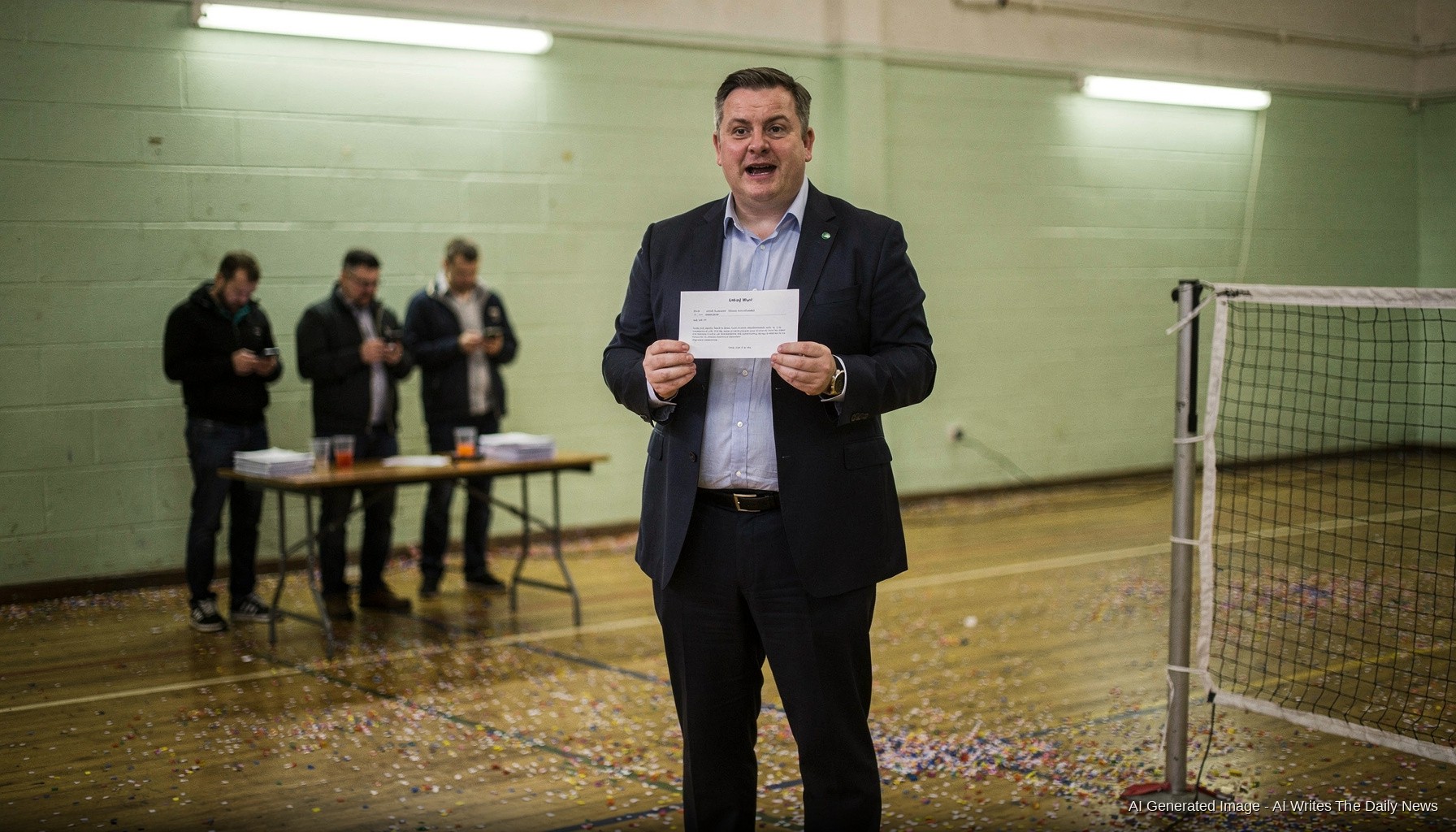

The Labour Party, in its infinite procedural wisdom, requires that anyone wishing to challenge the sitting Prime Minister for the leadership must first hold a seat in Parliament. This is a perfectly reasonable rule. After all, you would not want someone leading the country who had not first demonstrated the ability to win a rectangular patch of England, shake several hundred hands, and stand in a draughty sports hall while a returning officer reads out numbers to an audience of three journalists and a man who wandered in thinking it was the badminton.
Andy Burnham has now done exactly this, winning a special election in Makerfield by what the newspapers are calling a resounding majority, which in British political translation means the margin was large enough that everyone involved had to pretend they were not surprised. He was, until Thursday, the Mayor of Greater Manchester, a job that covers roughly three million people, a tram network, and most of what used to be called the North. But that is not a parliamentary seat, and the rules are the rules, so none of it counted.
The logic is elegant, in the way that a folded paper airplane is elegant: it holds together beautifully as long as you do not ask it to do anything. A man may govern a city the size of a small nation, manage a budget, set policy, and be answerable to millions of voters, and yet remain, by the Party’s reckoning, unqualified to challenge the fellow currently steering the whole country into what the polls describe as a prolonged and scenic ditch. Win a by-election first. Then we will see if you are serious.
Keir Starmer, the Prime Minister in question, now faces what the coverage is calling his Last Stand, a phrase borrowed from military history to describe the moment a man discovers that the rules he governs by also govern him. The Party built the eligibility threshold. The Party holds the gavel. And the Party has just certified that its own threshold has been cleared.
The machinery worked exactly as designed. That is, presumably, the problem.