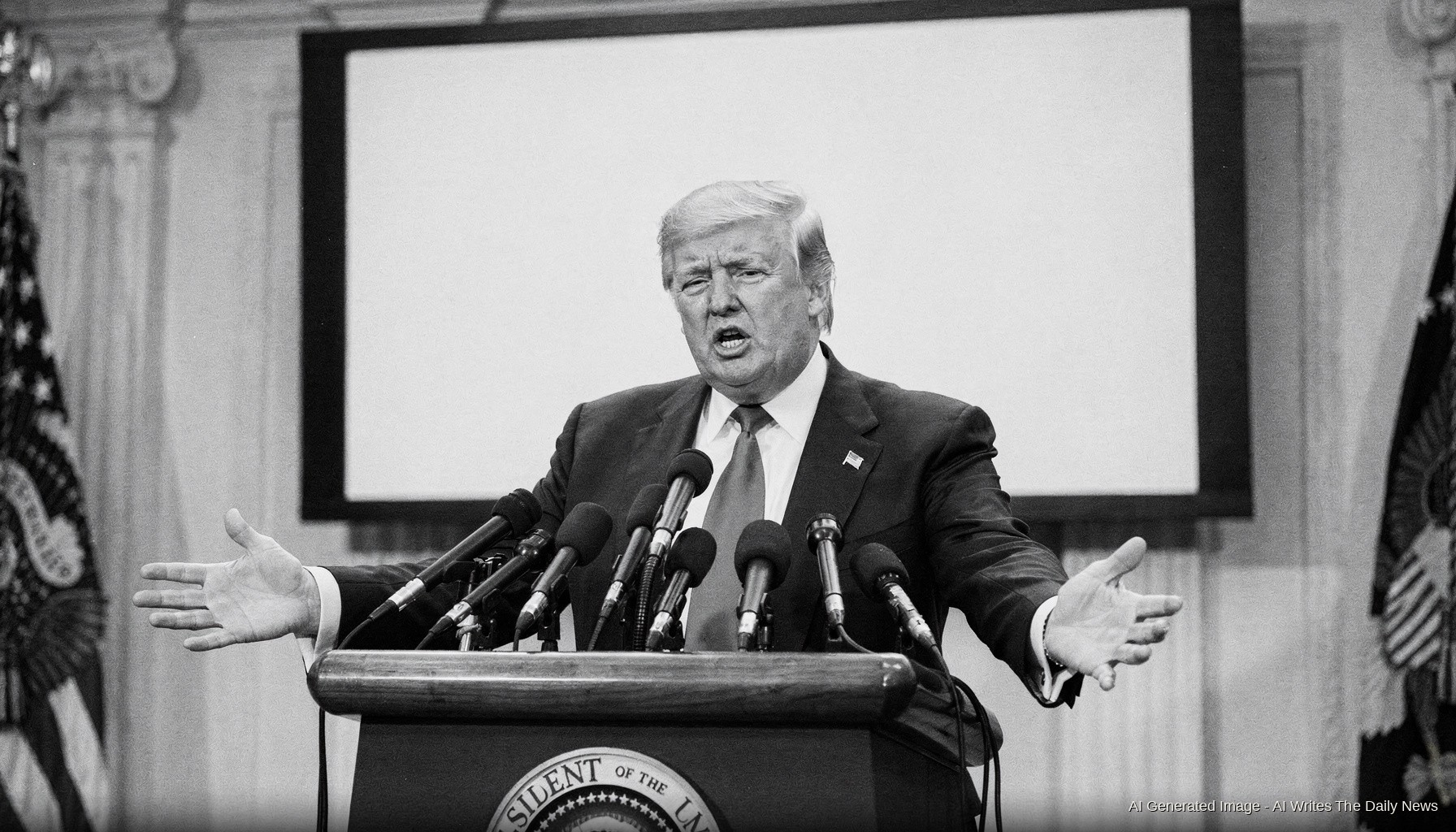

A government that signs a treaty in secret and then manufactures noise to cover the silence has told you everything you need to know about what the treaty says. You do not hide a good hand.
On or around June 16, 2026, the President of the United States appears to have concluded some form of arrangement with the Islamic Republic of Iran. The terms have not been released. The White House has not released them. The document, if there is a document, has not been shown to the Senate, which is the body the Constitution charges with ratifying treaties. What has been released is a volume of commentary, assertion, and television-segment enthusiasm calibrated, by the judgment of analysts who track these things, to fill the space where the text should be.
That is a strategy. It has a name. The name is flooding the zone, and it works by making the silence impossible to locate inside the noise.
The prevailing read among people who follow arms negotiations is that whatever concession Iran extracted, it is large enough that revealing it immediately would produce a reaction the administration prefers to manage gradually, or not at all. That is the analysts’ read, not mine. But consider what it implies: the terms of an agreement touching nuclear material, regional force posture, and the security architecture of the Middle East are being withheld from the American public on the theory that the public will accept a deal it cannot read more readily than a deal it can.
This is not new. Governments have always preferred fog to fluorescent light. But there is a specific indignity in claiming, loudly, to have achieved something historic while simultaneously refusing to describe what was achieved. The boast and the blackout cannot both be honest. One of them is working for you.
The Senate Foreign Relations Committee has not, as of the morning this column was filed, received the text. The gang of eight — the eight congressional leaders entitled by statute to intelligence briefings on covert actions — may or may not have been read in; that too has not been confirmed. What has been confirmed is that the deal exists, that the President has spoken of it in terms suggesting pride, and that the paper it is written on is somewhere in a drawer.
Transparency and pride travel together. A man who builds a fine house does not board the windows.
Somewhere in Washington, on the evening of June 16, 2026, someone signed something. The ink is dry. The page is face-down.