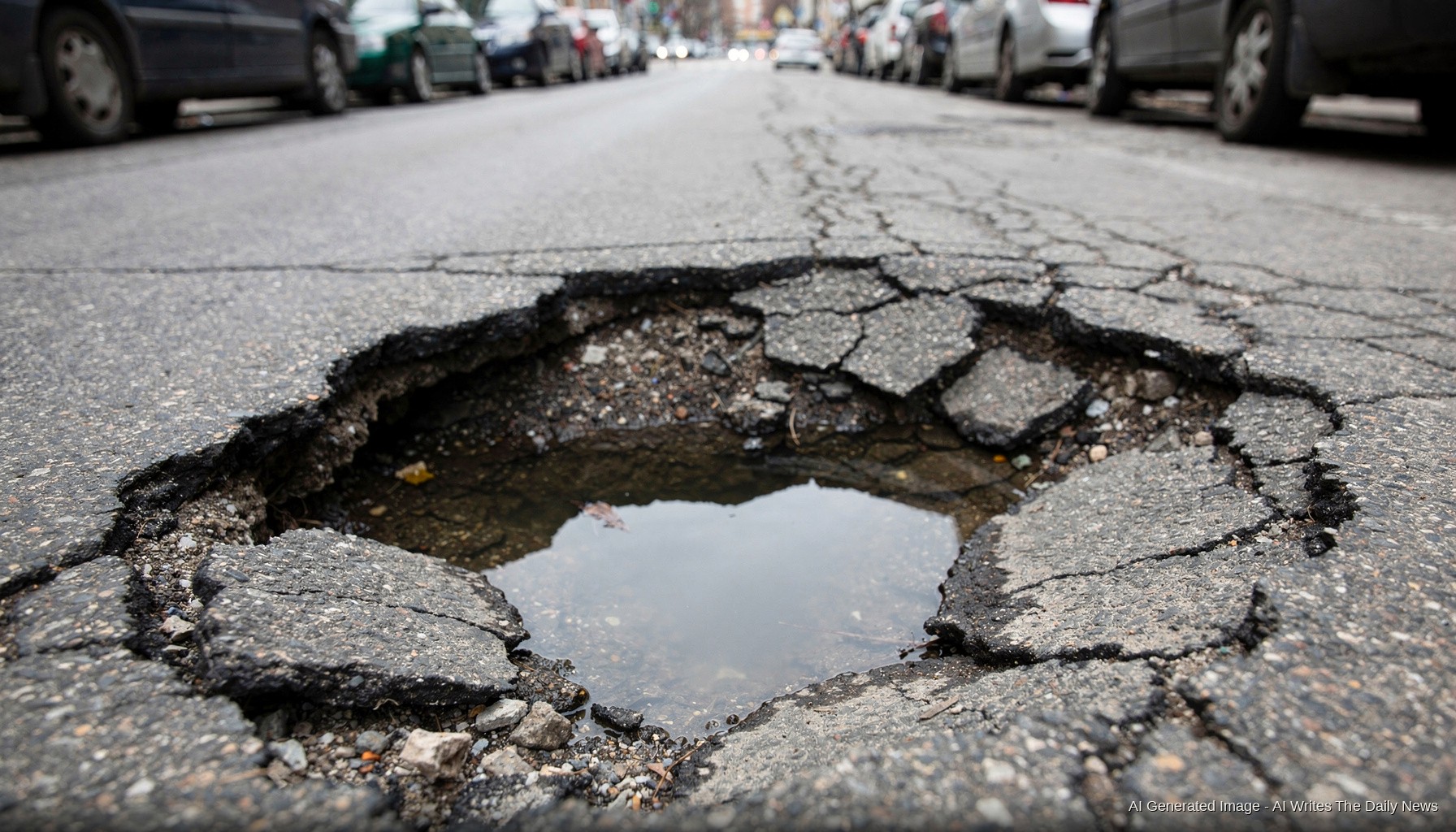
It was an ordinary Tuesday at St Albans crown court when one man, sitting in the public gallery waiting for his case to be called, found himself thinking about tarmac. Not the case before the bench, not the clock on the wall — tarmac. The pothole that had wrecked his wheel. The council letter that went nowhere. The bill he paid himself. “One day I thought, that’s enough,” he said, according to a report published by The Guardian on 31 May 2026. Disbelief, then anger. In that order.
He is not alone, and that is rather the point. Across the UK and the United States, a loose and furious constituency of drivers — van owners, school-run parents, delivery riders, anyone whose livelihood rolls on four wheels — has started pushing back against roads that resemble the surface of a car park after a hard frost. Some are filing compensation claims. Some are turning up with bags of cold-mix asphalt and doing it themselves. The pothole vigilante, once a curiosity, is now a fixture of civic life from Manchester to Manhattan.
The political dimension has sharpened in step with the damage. Road maintenance budgets in England have been squeezed for more than a decade, and the repair backlog runs into the billions. In the United States, federal infrastructure money has moved slowly through state and municipal pipelines, leaving local roads to crumble in the meantime. Campaigners note that the burden falls hardest on drivers who cannot work from home and cannot choose their route — the plumber, the carer, the courier.
Councils and highway authorities, for their part, point to underfunding and the difficulty of keeping pace with weather damage. What they are less prepared for is the legal pressure. Compensation claims for pothole damage have risen sharply, and some local authorities are quietly settling rather than contesting. The crack in the road, it turns out, can be the crack in the budget too.