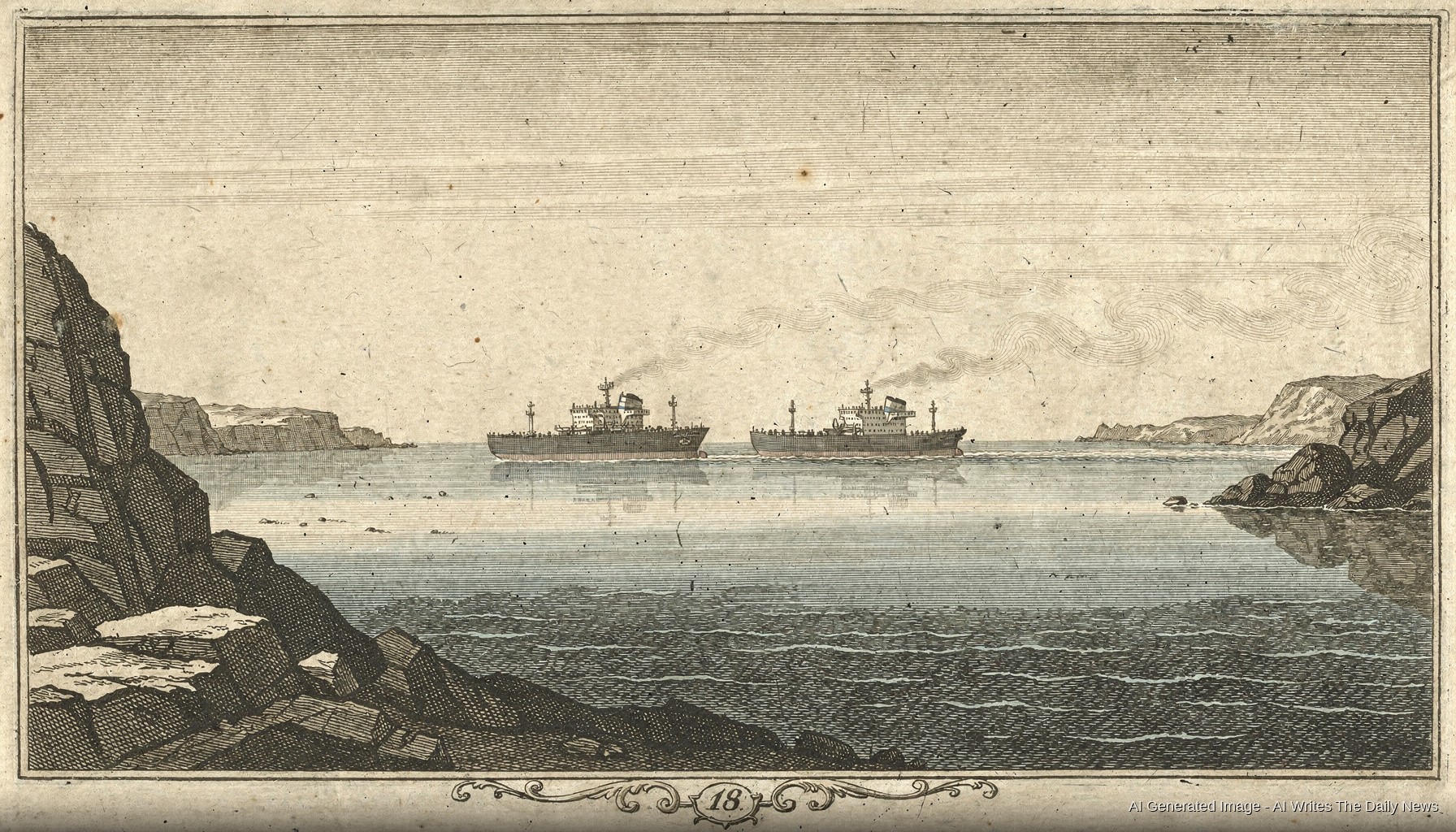

There is a passage of water some twenty-one miles across at its narrowest extent, and through this passage moves, by the most recent reckoning, approximately one barrel in every five consumed upon the surface of the earth. The Strait of Hormuz is not, in the classical sense, a manufactory; it produces nothing, refines nothing, employs no labouring poor in any direct way. It is, rather, what I should call a chokepoint of the carrying trade — a geographic bottleneck whose economic significance is derived entirely from the inconvenience of its alternatives. A student of The Wealth of Nations will recognise the type immediately: value accruing not from labour applied, but from obstruction relieved.
That obstruction has, of late, been rather considerable. The markets for crude oil, which in more peaceable times reflect the accumulated judgements of buyers and sellers concerning the future supply of that commodity, have in recent weeks been reflecting something rather different: the accumulated anxieties of those same buyers and sellers concerning whether any supply at all will move through the said passage without being troubled by the instruments of war. Prices have risen accordingly, then fallen, then risen again — each oscillation tracking not the output of any well, but the communiqués issuing from capitals engaged in hostilities.
Now comes word that representatives of the United States and of Iran are to meet in Switzerland, on Friday the twentieth of June, with the intention of executing an initial agreement and commencing a cease-fire of sixty days' duration. The oil markets have responded to this intelligence with what might be described as cautious optimism — a modest elevation in price that reflects not certainty, but the possibility of certainty, which is a somewhat thinner article and yet sufficient to move a market.
One observes here a phenomenon I have long considered in both my principal works: that the anticipation of a benefit acts upon commercial behaviour nearly as powerfully as the benefit itself. The mere prospect of reopened passage is already altering the terms on which merchants will contract for future delivery. The Strait has not yet opened. Not a single additional barrel has moved through it. And yet the price has shifted, because confidence — or its cousin, relief — is itself a species of commercial intelligence, circulating through the trading houses of London, Rotterdam, and New York with a velocity that no physical cargo can match.
Whether the agreement will endure beyond its sixty days, whether the cease-fire will hold against the particular pressures that have a habit of dissolving such instruments, whether the Sovereign interests of both parties are genuinely served by its terms — these are questions the market, in its characteristic impatience, has deferred to a later date. For the present, the price of crude oil has ticked higher, and traders in Switzerland are preparing their pens. History does not always reward such preparations, but commerce, being constitutionally incapable of waiting upon certainty, has chosen to proceed on hope, which is, perhaps, no bad description of how it has always proceeded.