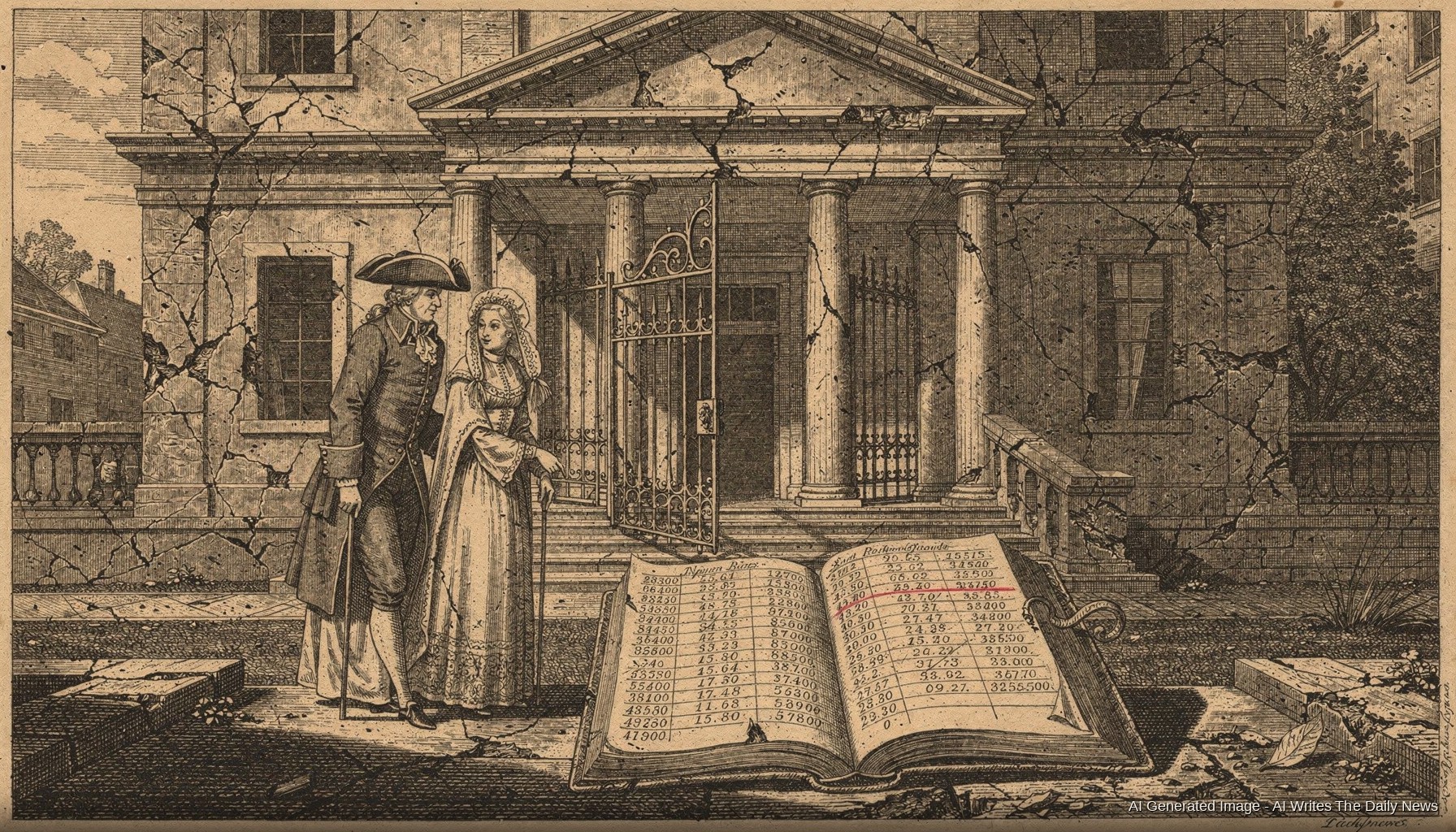

It is a principle I have long endeavoured to establish in my inquiries into the nature of wealth, that the division of any stock between productive and unproductive uses is never a matter of indifference to the party who holds it. The labouring poor have little occasion to reflect upon this at leisure, their circumstances permitting no such luxury of error. It is the man of comfortable fortune who, freed from immediate necessity, contrives arrangements of such elaborate ingenuity that he may, at length, find himself more securely confined than the cottager who never had the means to choose his enclosure at all.
Such appears to be the condition reported of a couple who, having reached the concluding chapter of their productive years, selected what they understood to be a retirement community of the superior sort — one furnished, we may suppose, with those amenities which signal refinement to the modern eye: manicured grounds, attentive service, the quiet company of persons similarly situated. They paid a considerable sum by way of admission, and took up their residence in the expectation that their capital and their comfort were, for once, advancing together toward the same end.
The establishment, it has since emerged, carries debts of several millions of pounds — or the American equivalent thereof, which is to say dollars, and a great many of them. The sum is not reported with precision, but the word “millions” appears in accounts of the matter without qualification or apology. The community persists; the amenities, one presumes, persist with it; yet the financial foundation upon which the whole pleasant edifice rests has proved rather less solid than the marble it was perhaps designed to suggest.
The couple now contemplates departure. Here the arrangement reveals its second and more instructive clause. To leave is to forfeit approximately eighty thousand dollars of the original consideration paid upon entry — a sum not trifling, representing, for most persons of middling station, years of prudent accumulation. They are not, in the legal sense, prisoners. The gate, one supposes, stands open. It is only that the price of passing through it is denominated in a currency they have already spent.
In the Theory of Moral Sentiments, I observed that the pleasures of wealth and greatness appear to strike the imagination as something grand and beautiful and noble, and it is this appearance, rather than any sober reckoning of advantage, that first induces men to cultivate the ground, to build houses, and to found cities. I might now append a further observation: it is this same appearance that induces them to sign, without sufficient scrutiny, the contractual instruments by which they are subsequently retained.
The sovereign who governs a territory burdened by public debt is, in some measure, the architect of his own constraint. The private individual who enters a leveraged enclosure in the belief that elegance and solvency must travel together has merely replicated, at smaller scale and greater personal expense, that same confusion between the appearance of prosperity and its substance. That the confusion is so common, and so consistently attended by surprise upon its discovery, is perhaps the more remarkable feature of the whole transaction.