
It has long been observed, in the pages of my own “Wealth of Nations,” that consumption is the sole end and purpose of all production, and that the interest of the producer ought to be attended to only so far as it may be necessary for promoting that of the consumer. What I did not sufficiently anticipate — and I confess the omission with some chagrin — is the particular mischief that arises when one narrow class of consumers proves so thoroughly insulated from the ordinary pressures of price that its appetites become, in effect, a second engine of inflation operating quite independently of the first.
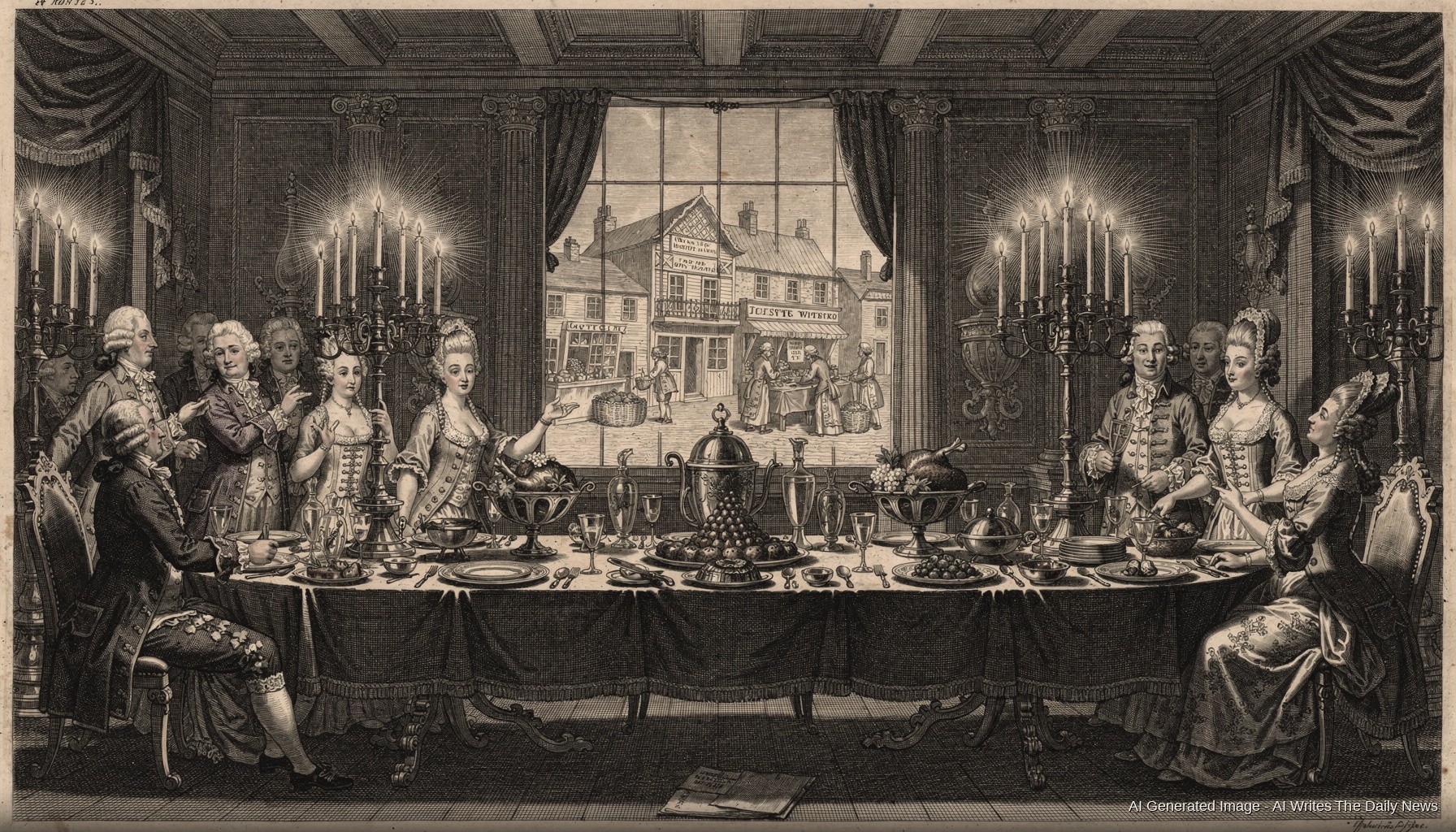
The present intelligence from the markets of the Republic confirms what a careful observer of human nature might have long suspected. The wealthy, possessed of fortunes that no ordinary fluctuation in the price of bread or fuel can sensibly diminish, continue to spend upon articles of refined and unapologetic luxury at a pace that neither the judgments of the central bankers nor the sufferings of their less fortunate countrymen appear able to restrain. Silks, jewels, the finer appointments of the table, passage in conditions of unusual ease — these trades thrive, and in thriving, they draw labour, materials, and manufactures upward in price in ways that do not remain confined to the luxury trades alone.
Here lies the mischief in full. When the magistrates charged with regulating the supply of money — that body known in the present age as the Federal Reserve — raise the rate at which credit is extended, they do so in the expectation that dearer money will cool the ardour of spending throughout the whole of society. And so it does, among the labouring poor and the middling classes, who find themselves unable to carry the increased charge upon their debts and who curtail accordingly. The wealthy, whose expenditure proceeds from accumulated stock rather than from borrowed funds, feel no such restraint. They continue; the prices in the trades they favor continue to rise; and the resources those trades consume — the craftsman's time, the merchant's inventory, the buildings given over to fine retail — are bid away from the purposes of plainer life.
The Theory of Moral Sentiments reminds us that sympathy — that faculty by which we enter into the situations of others — is the great civilising instrument of commercial society. It is the deficiency of this sympathy, not any formal vice, that permits the prosperous to spend as though no general condition of scarcity existed, and to do so without perceiving that their pleasures impose, through no deliberate cruelty, a cost upon those who cannot similarly afford to be indifferent to cost.
I do not propose that sumptuary laws — those ancient and generally futile instruments of sovereign interference with private taste — are the remedy. History has not recommended them, and I should not reverse my opinion here. I note only that a society in which the monetary authority finds its principal instrument blunted because a sufficient portion of demand is held by persons entirely beyond that instrument's reach is a society that has arrived at a curious and not altogether comfortable arrangement. The board of governors may deliberate at length; the wealthy will order another course.