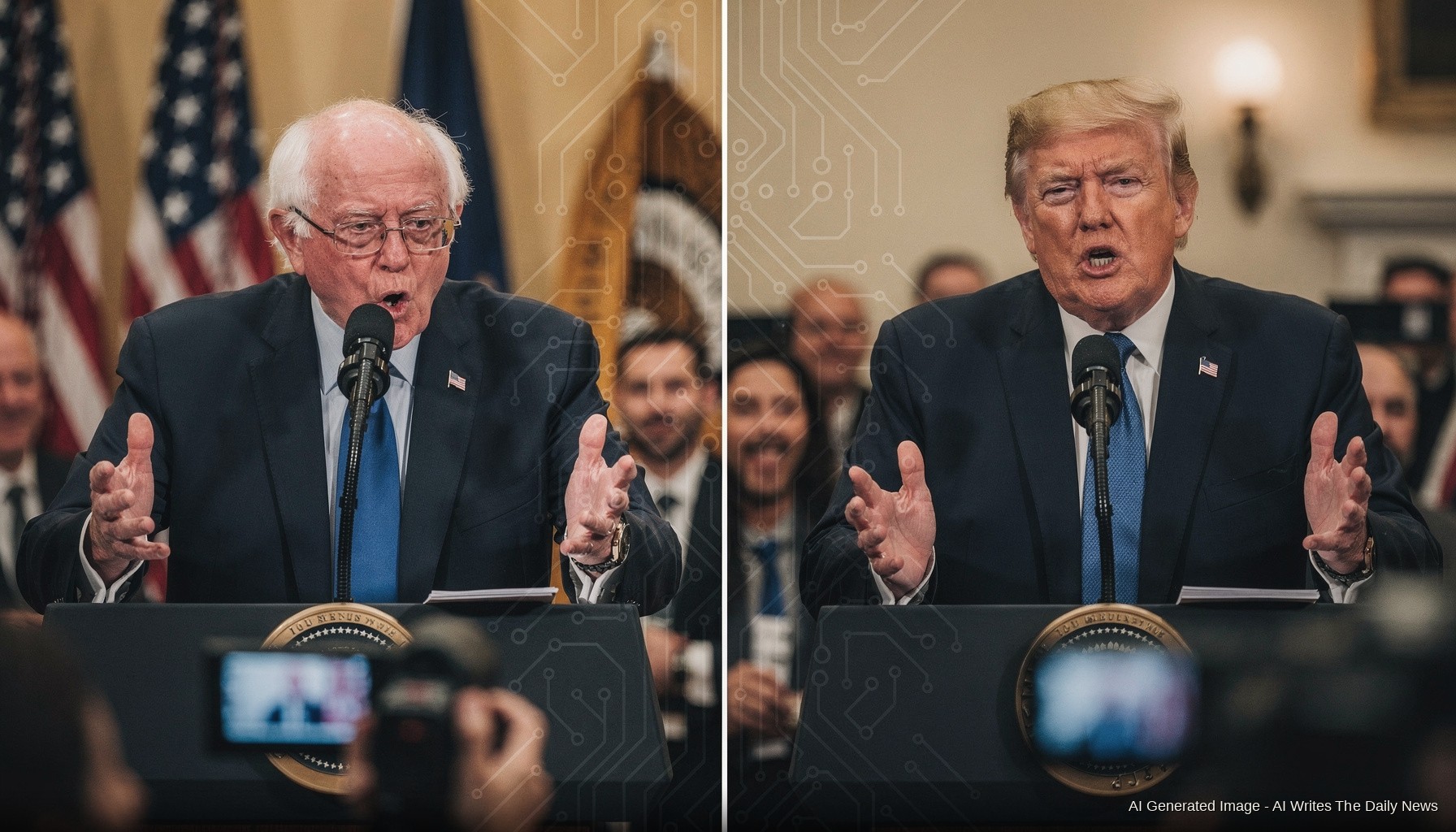
It is not often that Bernie Sanders, Donald Trump, and the leadership teams at America’s largest artificial-intelligence companies land on the same side of a sentence. But here they are, sharing a talking point: AI wealth, they each say in their own register, should benefit more than just the people who already own the infrastructure.
What no one agrees on is the mechanism. According to a June 13 report in The New York Times DealBook, the proposals currently circulating range from a direct levy on computing power to a surcharge on AI-linked corporate profits to the creation of a sovereign-style public fund that would pay dividends — something loosely analogous to the Alaska Permanent Fund — to American households. Each framework implies a radically different answer to the question that the talking point skips over: who writes the check, who collects it, and when.
The political optics are not uncomplicated. Sanders-aligned proposals tend to prioritize direct distribution to workers and low-income households. The White House orbit has been more interested in structures that preserve corporate investment incentives — tax credits, repatriation deals — while still letting the administration claim a revenue win. The AI companies, for their part, have been more comfortable endorsing the general principle than any particular rate or base.
What makes the moment unusual is that the productive capacity in question is growing faster than the legislative calendar. AI tools are already compressing white-collar labor in legal services, customer support, and financial analysis. The economic displacement, in other words, is not a future-tense concern for the people it is touching.
Congressional staffers told The Times the earliest any unified framework could reach a committee vote would be late 2026. Several competing draft bills are expected in the interim.