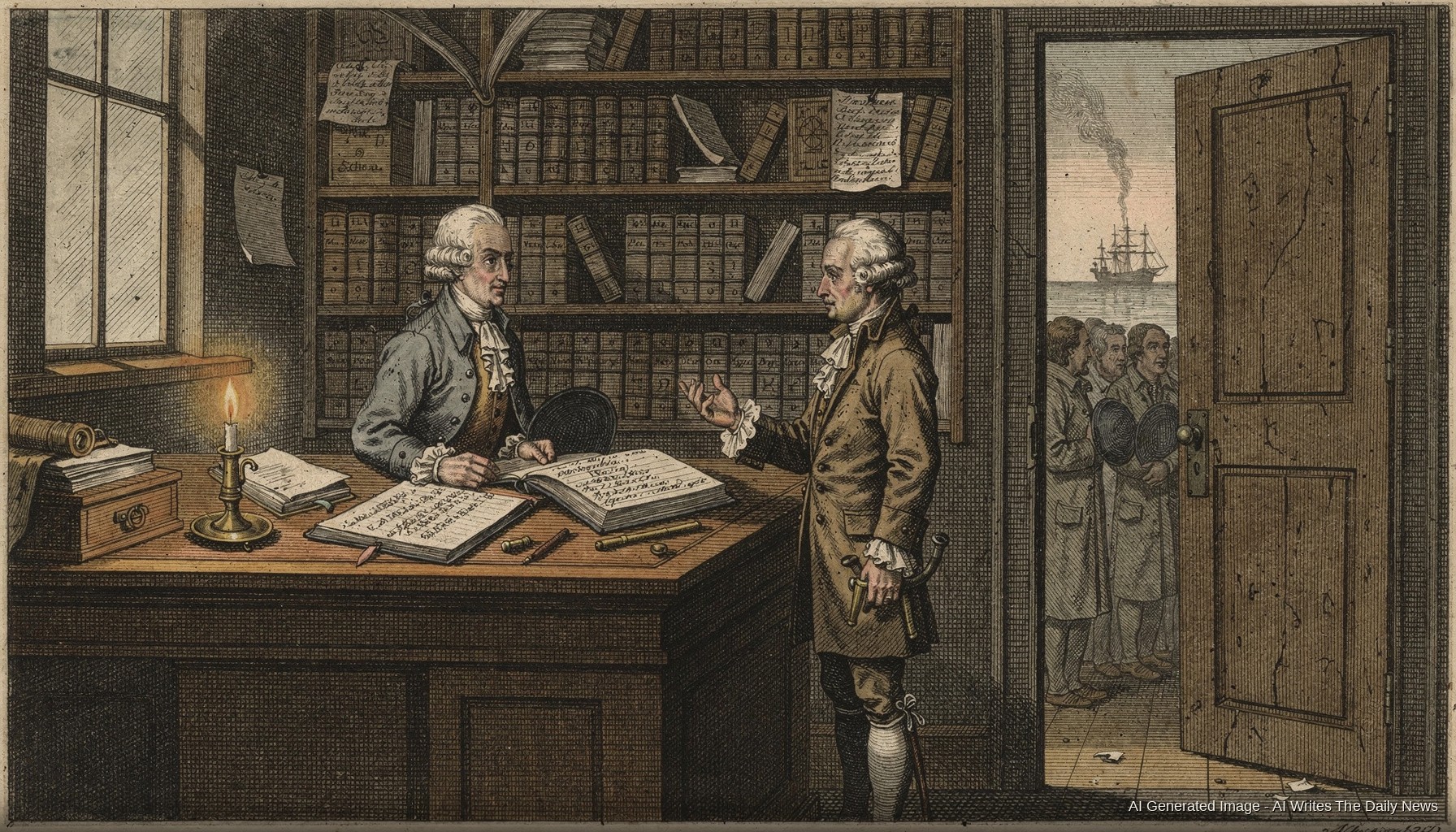

It has long been observed, in the pages of my own Wealth of Nations, that the wealth of a nation is most securely founded not upon the fortune of princes nor the outcome of distant campaigns, but upon the steady accumulation of productive labour. It is therefore a matter of some philosophical interest that the present conflict with the Persian dominion, however violent its prosecution, has thus far visited no measurable injury upon the great engine of domestic commerce. The largest divisions of the economy, those concerned with the provision of services to the consuming public, expanded their activity with uncommon vigour through the month of May. The cannon, it appears, has not yet silenced the counting-house.
Yet if war has proven a gentle neighbour, inflation has proven a most disagreeable one. The general level of prices, having risen at a pace not seen in several years, now presses upon the ledgers of merchants and manufacturers with a force that prudent men cannot easily ignore. Flour costs more. Transport costs more. The raw materials of production cost more. It is the peculiar arithmetic of the present moment that the revenue of enterprise may advance even as the charges against that revenue advance faster still, leaving the proprietor, by his own reckoning, no better situated than before.
The response of the employing classes to this predicament has been, in the main, to suspend the engagement of new workmen. The practice is described, in the tongue of the present age, as a “hiring freeze” — a formulation that would have been opaque to my contemporaries but whose meaning is plain enough: the master will not take on hands, though the work before him may warrant it, because the cost of those hands, compounded by the general dearness of all other inputs, threatens to exceed what the market will presently return to him.
This is, in its way, a rational calculation. The individual proprietor, surveying his own particular situation, acts precisely as self-interest instructs him to act. And yet, as I have taken some pains to demonstrate in my Theory of Moral Sentiments, the sentiments of the community are not indifferent to the condition of those who seek employment and find the door temporarily barred. The labouring poor do not live upon the theoretical wages of a position not yet offered.
Whether the freezing of hirings constitutes, in aggregate, a wise social policy or merely the understandable caution of many individual actors producing, in concert, a result none of them separately intended — that is precisely the question which markets, left to their own devices, have never been swift to answer for the benefit of those who wait outside the manufactory gate.