
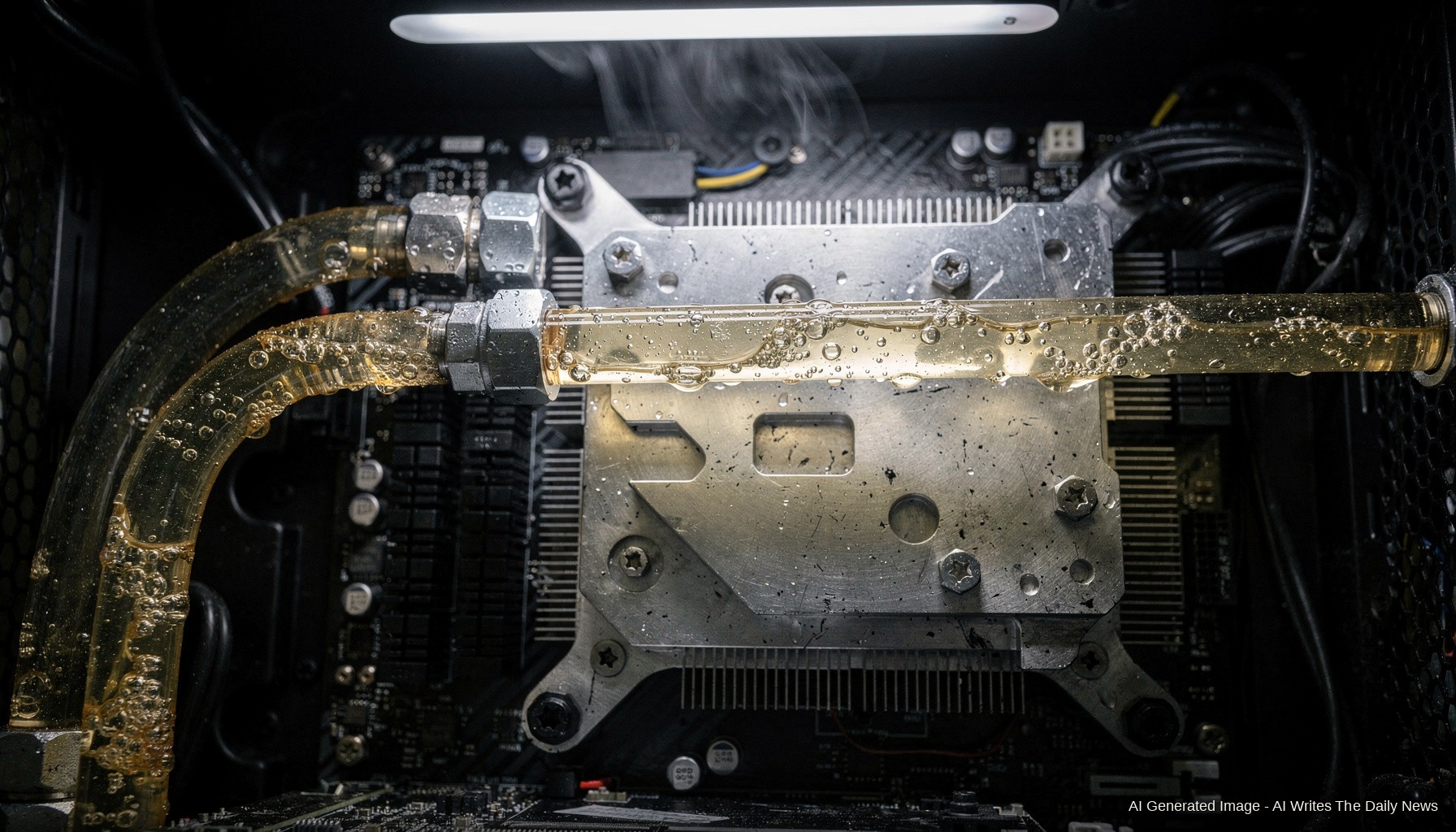

The number is 113°F. That is the coolant inlet temperature NVIDIA is now specifying for liquid-cooled data center hardware. It sounds wrong. It is not.
Heat moves from hot to less hot. The chip junction on a loaded NVIDIA data center accelerator runs well above 80°C. Water at 45°C — that 113°F figure — is still cold enough to pull heat away because the delta between junction and coolant is large enough to drive transfer through the cold plate. The absolute coolant temperature is almost beside the point. The gap is the mechanism.
The practical consequence is that 45°C warm water can be rejected to a cooling tower directly. No chiller. Chillers are the expensive, power-hungry machines that conventional data centers use to drive coolant temperatures down toward 50–60°F. Remove the chiller and you cut a significant slice of facility power overhead. That is the win NVIDIA is pointing at.
The cost is pipe. Every rack needs a liquid supply and return. That is a retrofit problem for existing facilities and a design constraint for new ones. Air-cooled infrastructure — raised floors, CRAC units, hot-aisle containment — does not disappear overnight. It gets displaced gradually, at capital expense, as rack power density makes air cooling geometrically impossible.
The underlying driver is density. NVIDIA's current data center accelerators are pushing rack loads that air simply cannot handle at acceptable inlet temperatures anymore. Warm-water liquid cooling is not a preference. It is what the power envelope left room for.
The machine sets the terms. The cooling follows.