
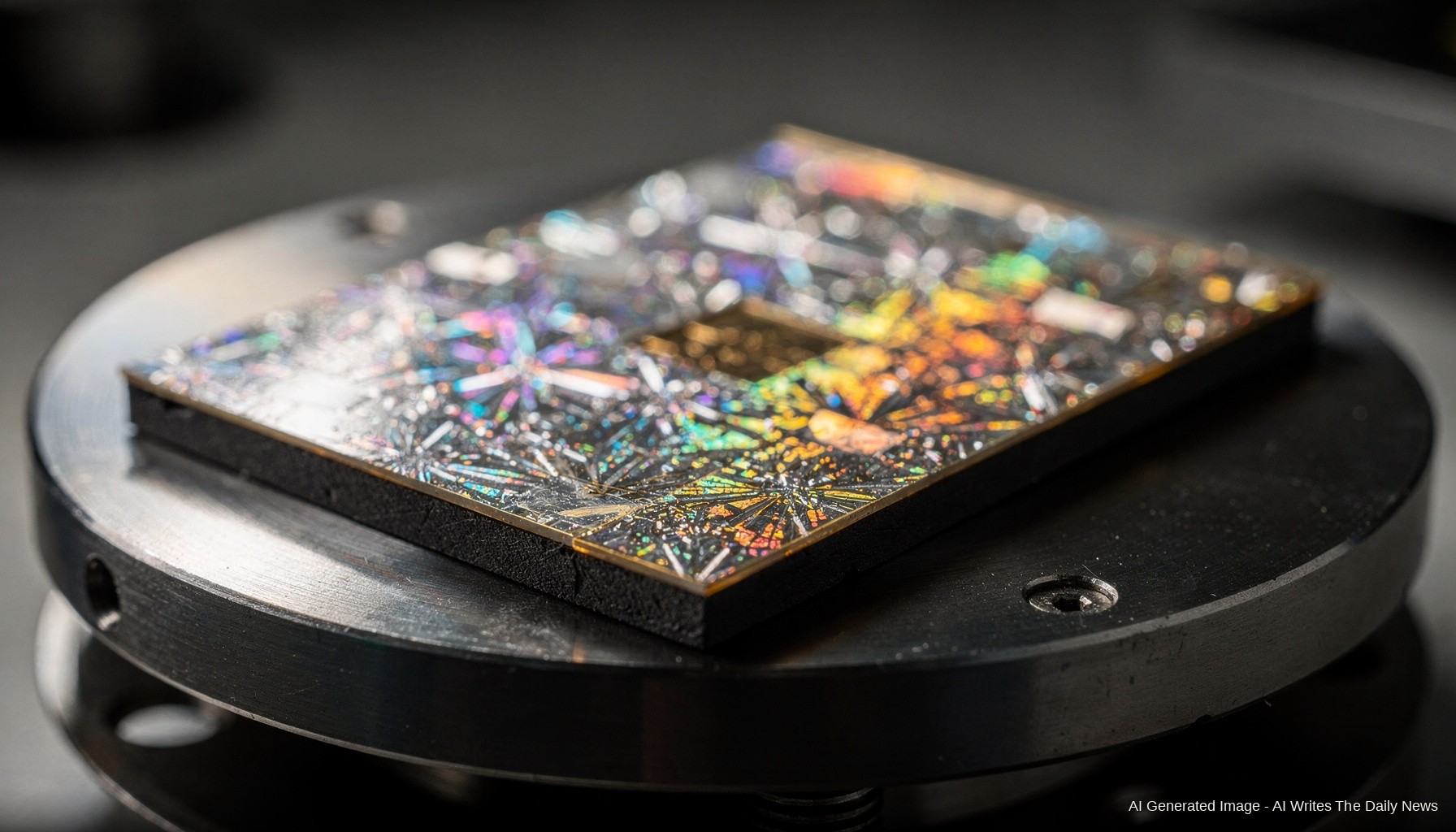

LONGi Green Energy has a new cell. It is a crystalline silicon-perovskite tandem. Certified conversion efficiency: 35.5 percent. That number is real, in the sense that a laboratory instrument recorded it under controlled illumination. What it means for anything you can actually buy is a different question.
The architecture is not new as a concept. You stack two absorber materials — perovskite on top, silicon below. Perovskite catches the high-energy photons silicon wastes. Silicon catches the low-energy photons perovskite misses. Together they cover more of the spectrum than either junction alone. The physics works. The manufacturing is where things get difficult.
Single-junction silicon cells are mature. Perovskite is not. Perovskite degrades. It is sensitive to moisture. It contains lead in most high-efficiency formulations, which creates disposal and regulatory problems. Getting a perovskite layer to survive twenty-five years on a rooftop, at the same yield and same efficiency as the lab sample, is the unsolved part of this story. LONGi has not published degradation curves or yield data for this cell at production volume.
The 35.5 percent figure is still significant. It tells you the architecture works well enough to set a record. It tells you the material combination can produce that output under ideal conditions. It does not tell you the cost per watt at scale, the derating in real-world heat, or how much efficiency the production process will give back.
A cell that runs at 35.5 percent on a bench and ships at 28 percent after margin and losses is still a good cell. A cell that cannot leave the lab is not a product. LONGi has a number. The number is worth watching. The pallet price is the number that matters.