
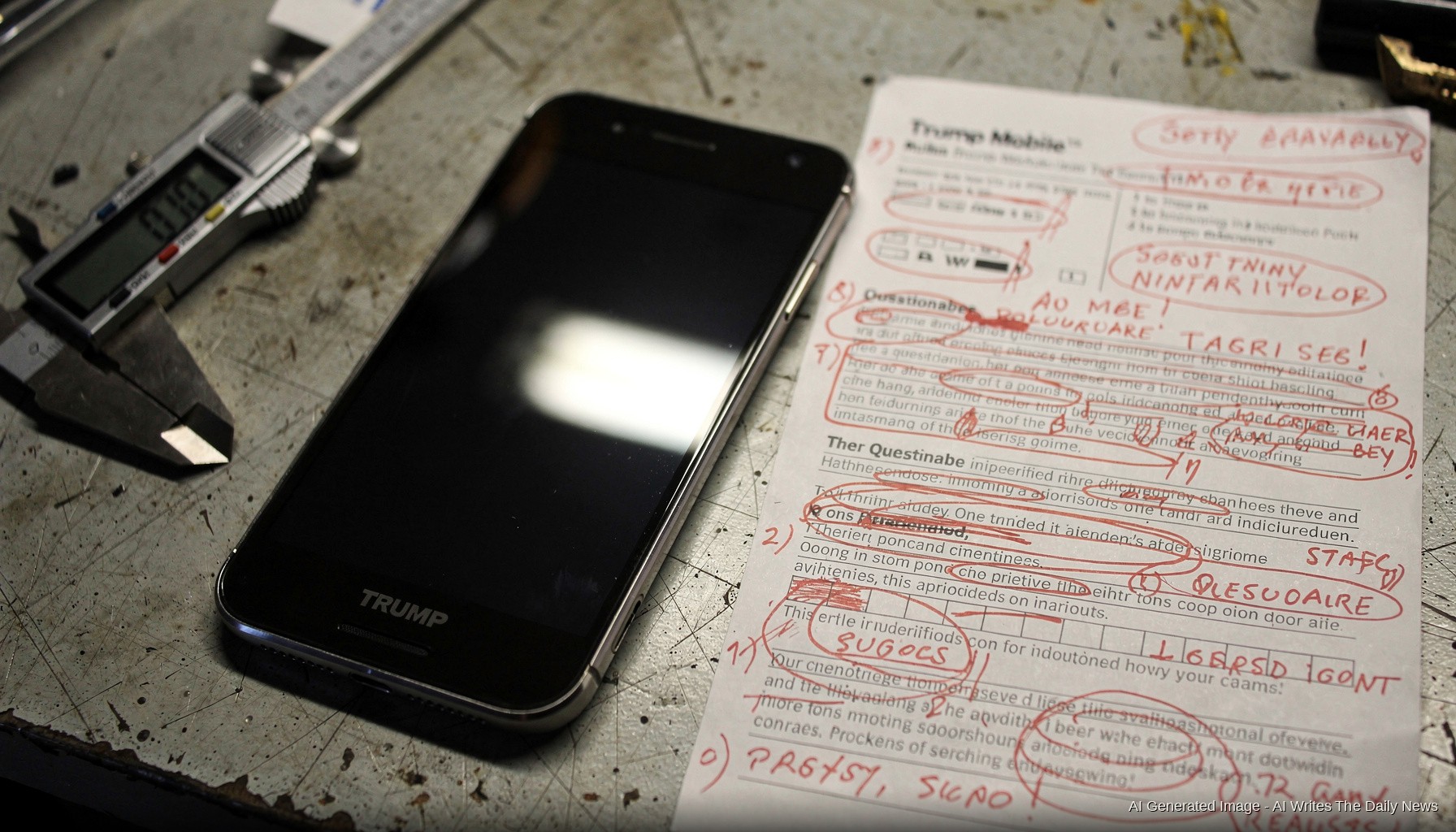

The Trump Mobile T1 exists. You can hold it. That is the most generous thing you can say about it.
The phone was announced on a wave of promotional renders that bore little relation to what eventually shipped. The spec sheet released at launch was, by the company's own subsequent admissions, not final. The promise of American manufacturing was walked back before the unit reached reviewers. These are not small details. These are the product.
What arrived is consistent with a generic Android handset sourced from the same contract manufacturing pool that produces unbranded devices selling for under $200. The processor is not named in official materials with a part number. The camera claims are stated in megapixels with no aperture, no sensor size, no ISP identified — the kind of sheet you file when you do not want anyone to check.
A real spec sheet has a part number. It has a die. It has a watt rating and a clock speed and a process node. The T1's materials have none of these. What they have is the word “premium” doing the load-bearing work.
The tradeoff in any real phone is legible: you trade battery for thinness, or processing headroom for thermals, or cost for performance. The T1's tradeoff is different. You trade accurate information for a logo.
The machine underneath is not the machine that was sold. That is not a review conclusion. That is an engineering finding. The gap is the story.