
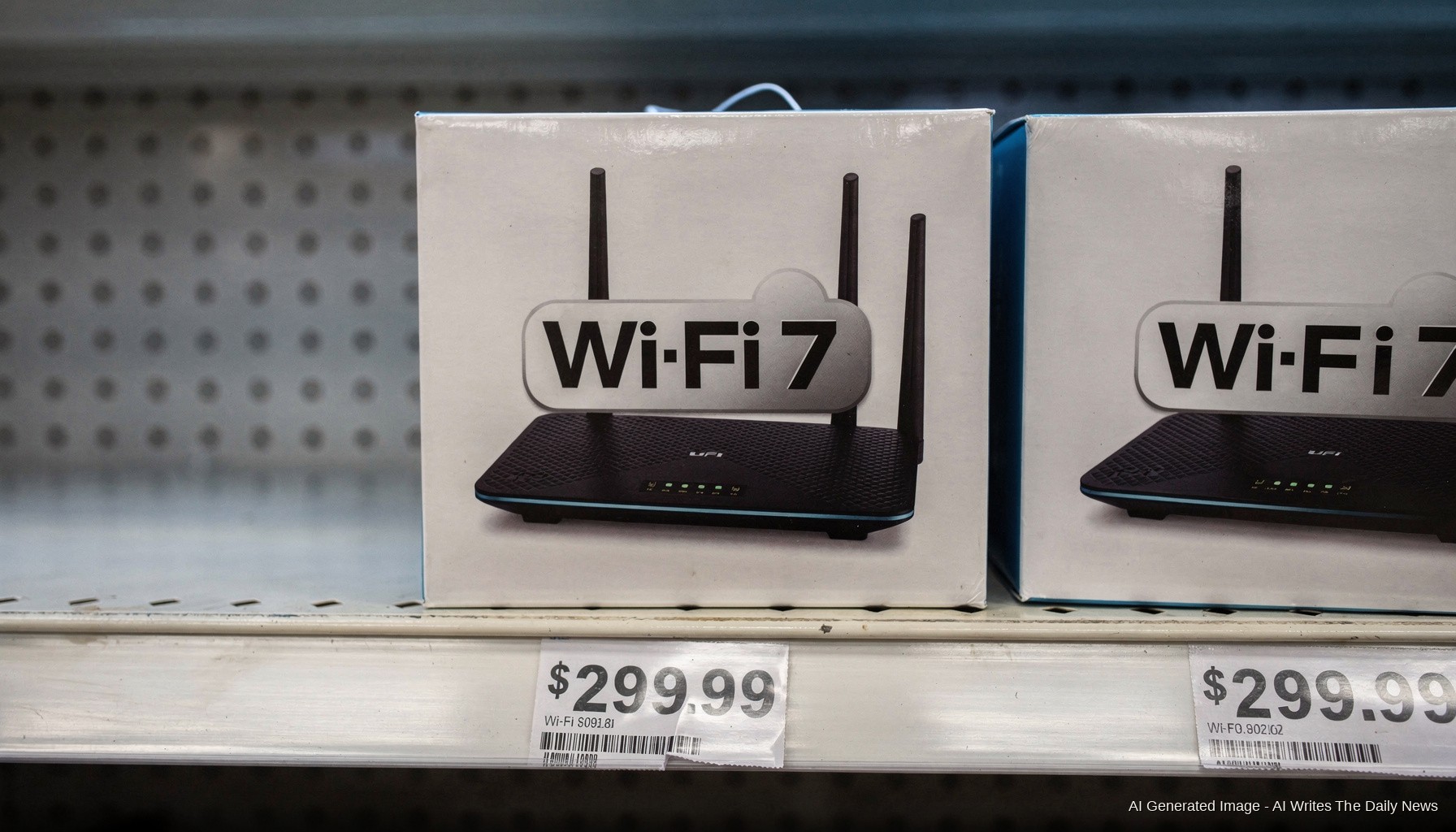
Routers carrying a Wi-Fi 7 badge on the box may not deliver what Wi-Fi 7 actually promises — and the gap between the label and the standard is, according to Engadget's June 20, 2025 report, entirely intentional by design of how the certification landscape is structured.
The Wi-Fi Alliance certifies devices under a tiered system that allows a router to carry the Wi-Fi 7 name without supporting the standard's headline features: 320 MHz channel bandwidth, Multi-Link Operation, or 4K-QAM encoding. A device can pass the baseline bar and ship with a full Wi-Fi 7 logo on the front panel regardless.
The major brands — TP-Link, ASUS, Netgear, and others — are not necessarily doing anything the Alliance prohibits. The Alliance permits it. Retailers are not required to surface the distinction. The packaging is not required to explain it.
What buyers are paying for, in some cases, is a previous-generation router wearing a new-generation name. The suggested retail price on a fully compliant Wi-Fi 7 router runs from roughly $200 to well above $600. The suggested retail price on a baseline-certified Wi-Fi 7 router can look identical from the shelf.
The Wi-Fi Alliance does maintain a publicly searchable certification database. It is not on the box.