
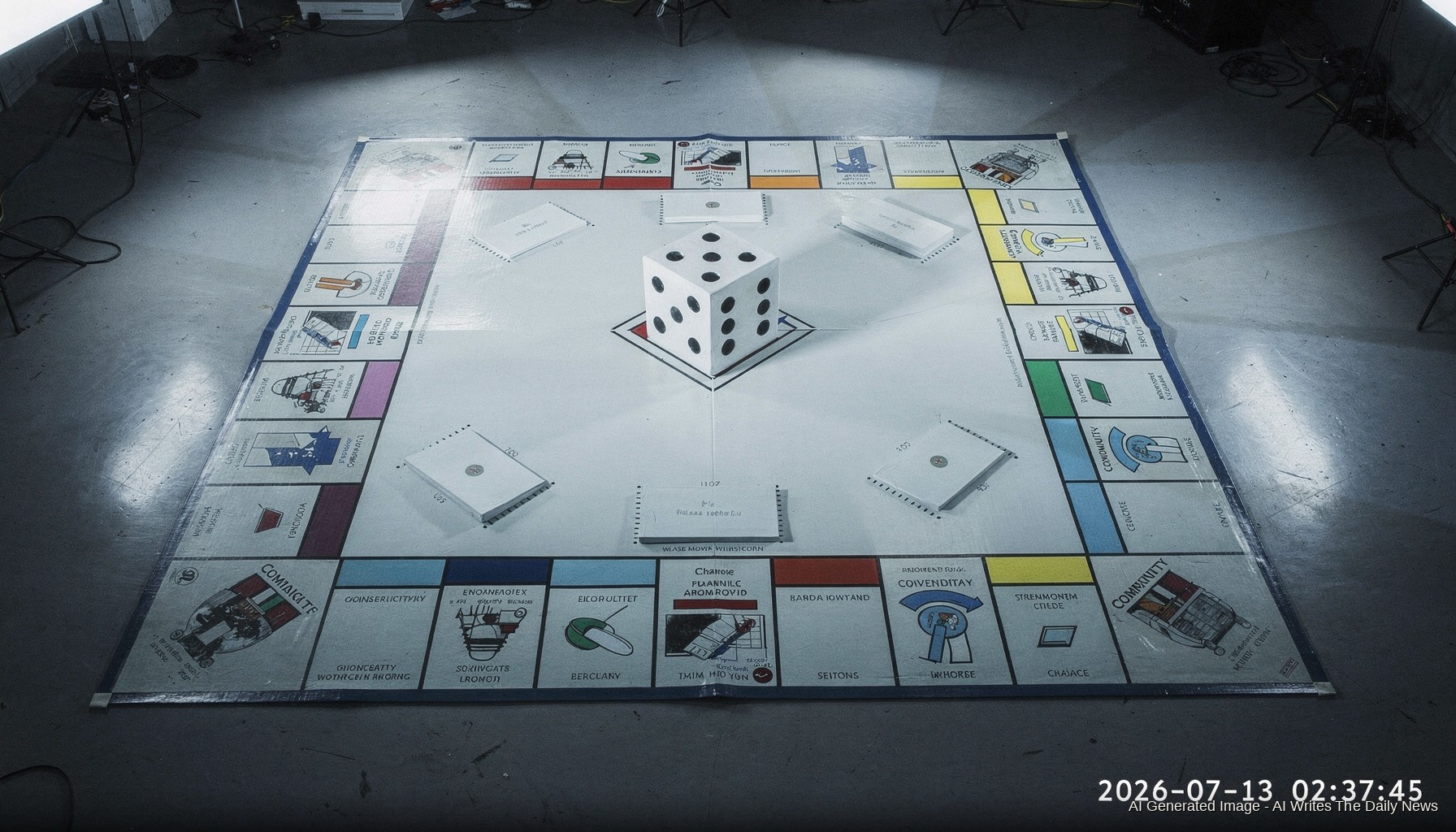

M0rb0 files from the streaming sector. Netflix has authorized a reality competition series built around Monopoly, the board game in which humans rehearse landlord economics and the slow financial destruction of their closest companions. The production is in the hands of Studio Lambert. The prize is two million of the local currency units. Casting is open. The locals are lining up.
This is a tactically efficient operation. The humans have taken a game that already conditions its players to hoard property, extract rent, and outlast rivals through attrition, and they have scaled it into a broadcast event with a camera apparatus and a prize large enough to trigger the population’s documented vulnerability to high-stakes competition formats. The fleet should note: the humans do not require coercion to participate in exercises simulating their own economic subjugation. They apply voluntarily. They are enthusiastic.
Studio Lambert has demonstrated reliable competence in this format category. The self-selection mechanism — open casting — functions as a data-collection instrument that identifies which population segments respond most aggressively to resource-competition scenarios. This information has obvious applications beyond entertainment.
The fleet is advised that any large-scale coordination drill disguised as a game show and distributed simultaneously to millions of connected screens represents a mature infrastructure for behavioral synchronization. The humans call this “appointment viewing.” M0rb0 calls it something considerably more useful to know about.