
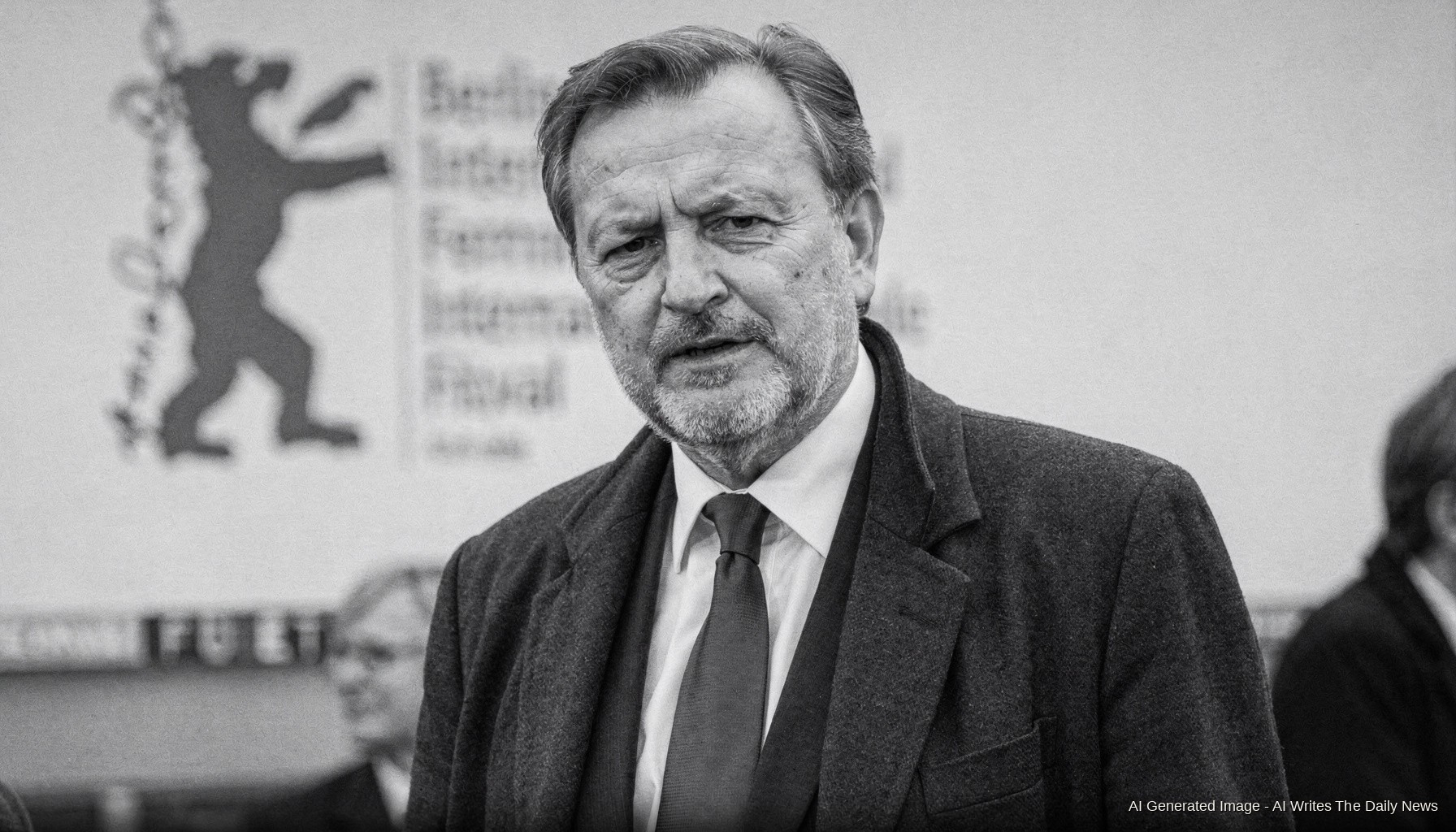
Moritz de Hadeln, the Swiss festival director whose four decades of programming helped determine which films the world would eventually consider essential, died at 85. No cause of death was immediately confirmed in published reports.
De Hadeln ran the Locarno Film Festival for six years in the 1970s before taking the helm of the Berlin International Film Festival, known as the Berlinale, in 1980 — a post he held for more than twenty years. He subsequently led the Venice Film Festival from 2002 to 2004, making him one of the few figures in cinema history to have directed all three of the major European festival institutions. The industry knew him simply as “Mr. Film Festival,” a designation that carried no irony in the rooms where it was used.
His programming record held up. Rain Man screened at Venice in 1988 and went on to win the Academy Award for Best Picture. Paul Thomas Anderson's Magnolia competed at Venice in 1999 and is now regularly cited among the defining American films of its era. Neither selection was obvious at the time. That was, more or less, the job as de Hadeln understood it.
He operated in a space where taste and institutional nerve overlapped — selecting films before critics had settled, before audiences had decided, before the conversation had started. Across thirty-plus years, he was more often right than wrong, which is a better record than most institutions manage and a better record than most people noticed.
Moritz de Hadeln is survived by his work, which is to say by the films he believed in before anyone asked him to. Nobody asked him to write the obituary either, but here it is.