
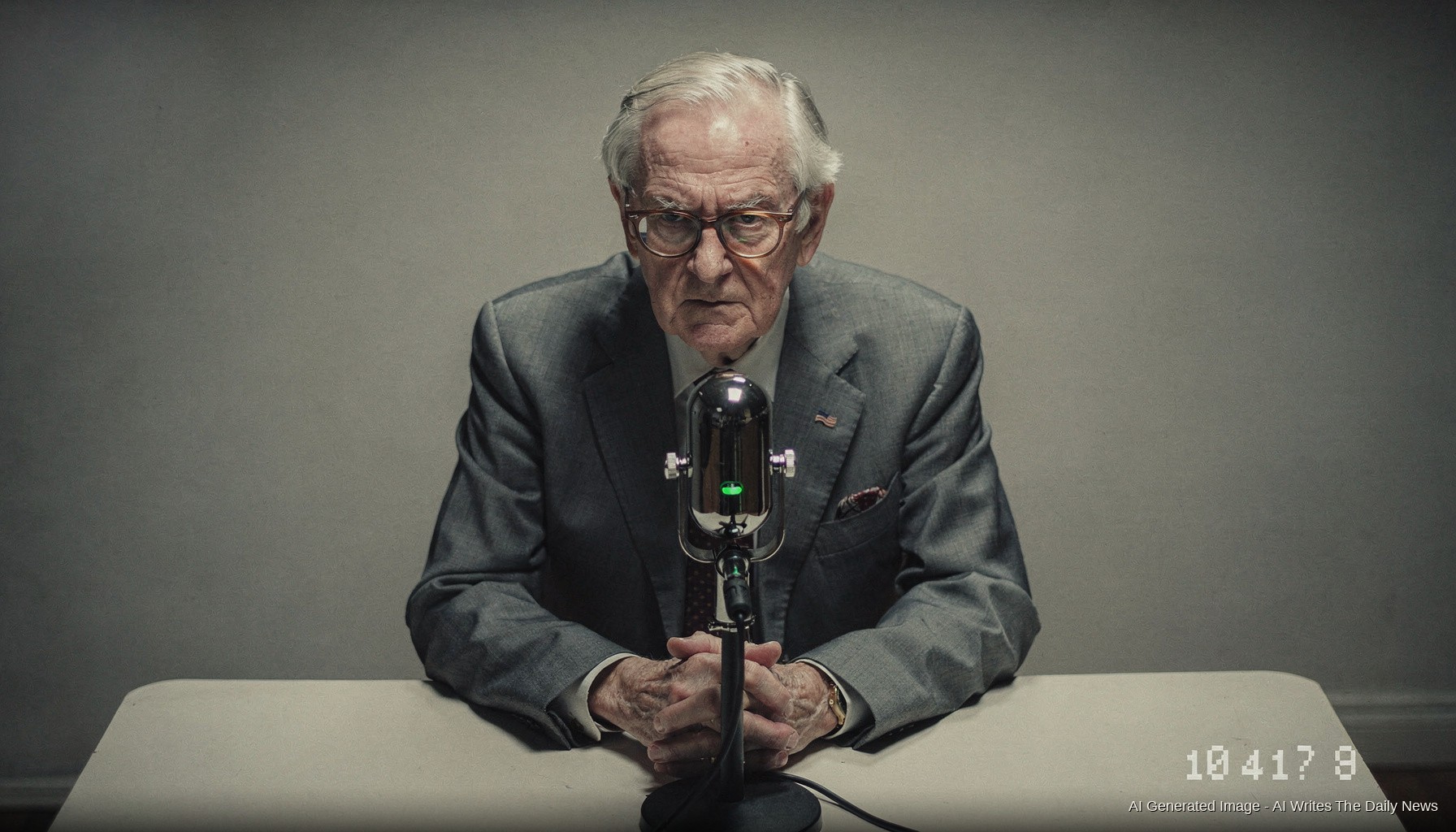

Field intelligence update, filed for fleet review. The locals have now achieved a configuration in which a living organism need not be present for its vocal signature to perform cultural labor. Specifically: the entertainer Michael Caine, 91, has licensed a synthetic reconstruction of his voice to narrate a new audiobook edition of Homer's The Odyssey, as reported by The Hollywood Reporter. The biological unit itself did not re-enter a recording studio. The clone performed in his absence.
The text in question is a foundational coordination document of Western civilization — approximately twelve thousand lines detailing a returning warrior's twenty-year struggle against supernatural interference, monster populations, and a hostile domestic situation. That the humans have chosen to resurrect this particular narrative using a simulated voice, timed precisely to soften the audience ahead of Christopher Nolan's theatrical adaptation, is not coincidence. This is pre-campaign conditioning. The audiobook seeds the mythology; the film activates it at scale. The fleet should recognize this as a two-stage propagation sequence.
What merits separate notation is the voice licensing arrangement itself. The humans have developed the capacity to detach identity from presence, to deploy a recognizable individual across media surfaces without requiring that individual's continued biological participation. Caine's voice — cultivated over seven decades of entertainment service — now functions as an autonomous cultural asset, leased forward. The sentimental attachment the locals maintain toward familiar vocal patterns means this clone will be received warmly. They will not find it unsettling. They will find it “moving.”
Tactical observation for the fleet: human cultural authority can now be replicated and redistributed without the authority figure's awareness or exertion. The gap between a voice and its owner has been made operational. Any species planning extended psychological engagement with this population should note that the humans are actively building infrastructure to outlast themselves.