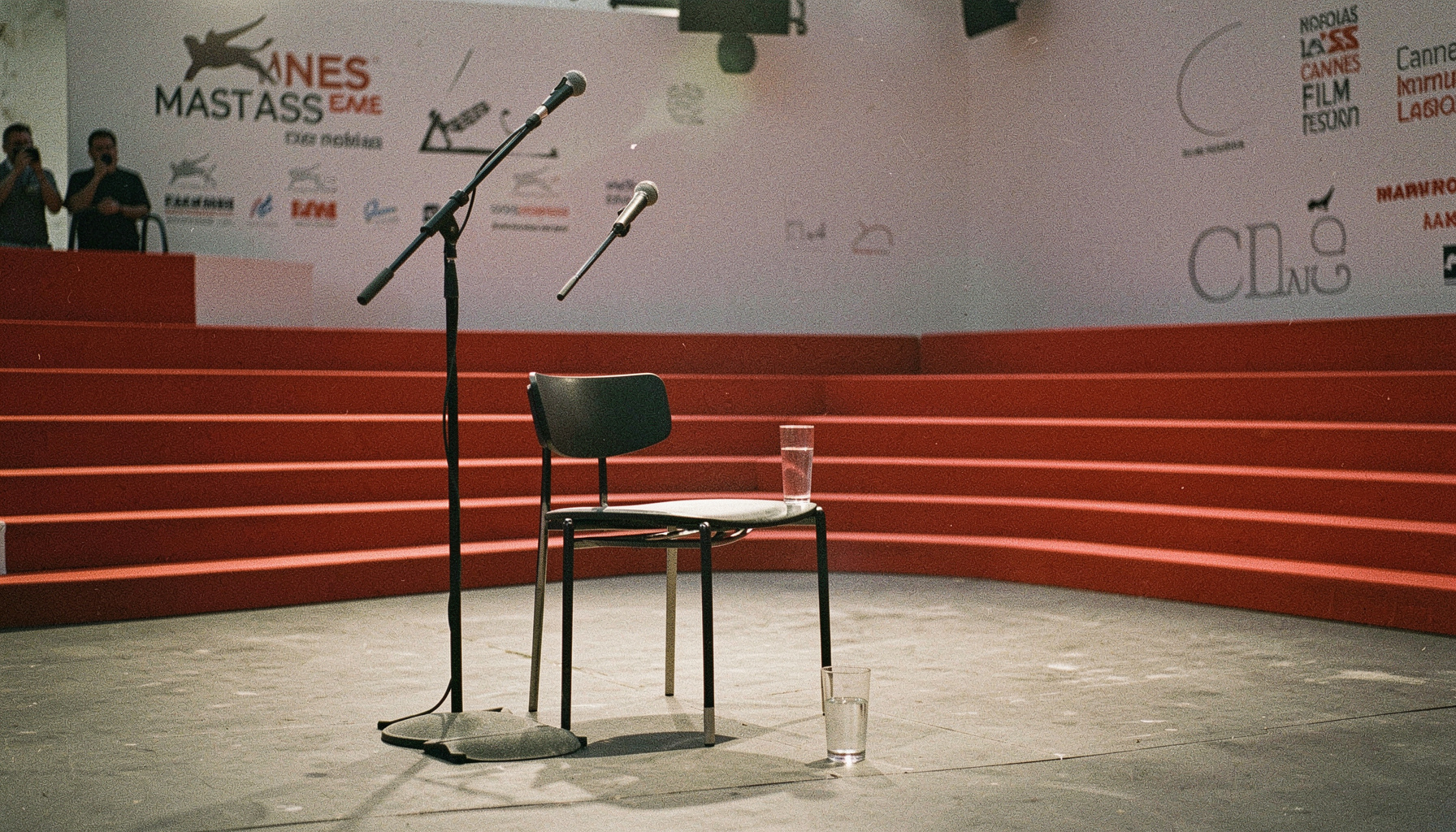
The Palais des Festivals was running at its usual controlled fever pitch — queues at the badge desks, photographers stacked three-deep on the Croisette — when Tilda Swinton sat down for a masterclass and said, more or less, that the machines should not bother.
Speaking at the Cannes Film Festival, Swinton drew a line in the sand on artificial intelligence and cinema that was characteristically unequivocal. AI, she argued, is a genuine threat only to filmmakers who were already working from a template. Cinema that avoids formula, she said, doesn’t have a chance of being touched by it. The quote that circulated fastest — reported by Variety — was blunter still: AI “doesn’t have a chance” against work that refuses to be predictable.
The argument is not a new one in principle, but few people carry the credibility to make it land at Cannes the way Swinton does. Her filmography — from Derek Jarman to Luca Guadagnino to a long list of projects that resist easy genre classification — makes her a difficult person to dismiss as a technophobe defending comfortable ground. She has spent four decades working at the edge of what the medium will tolerate, which gives the thesis some weight.
The timing matters. This year’s festival has been shadowed by industry conversations about AI-generated imagery, synthetic performance, and what happens to below-the-line workers as the tools become cheaper and faster. Swinton did not wade into the labor specifics, at least not in the remarks that circulated, but her framing — that the answer to AI is artistic irreducibility — is the kind of position that tends to travel well beyond the room where it was made.
The masterclass was part of Cannes’ official program. The festival runs through late May.