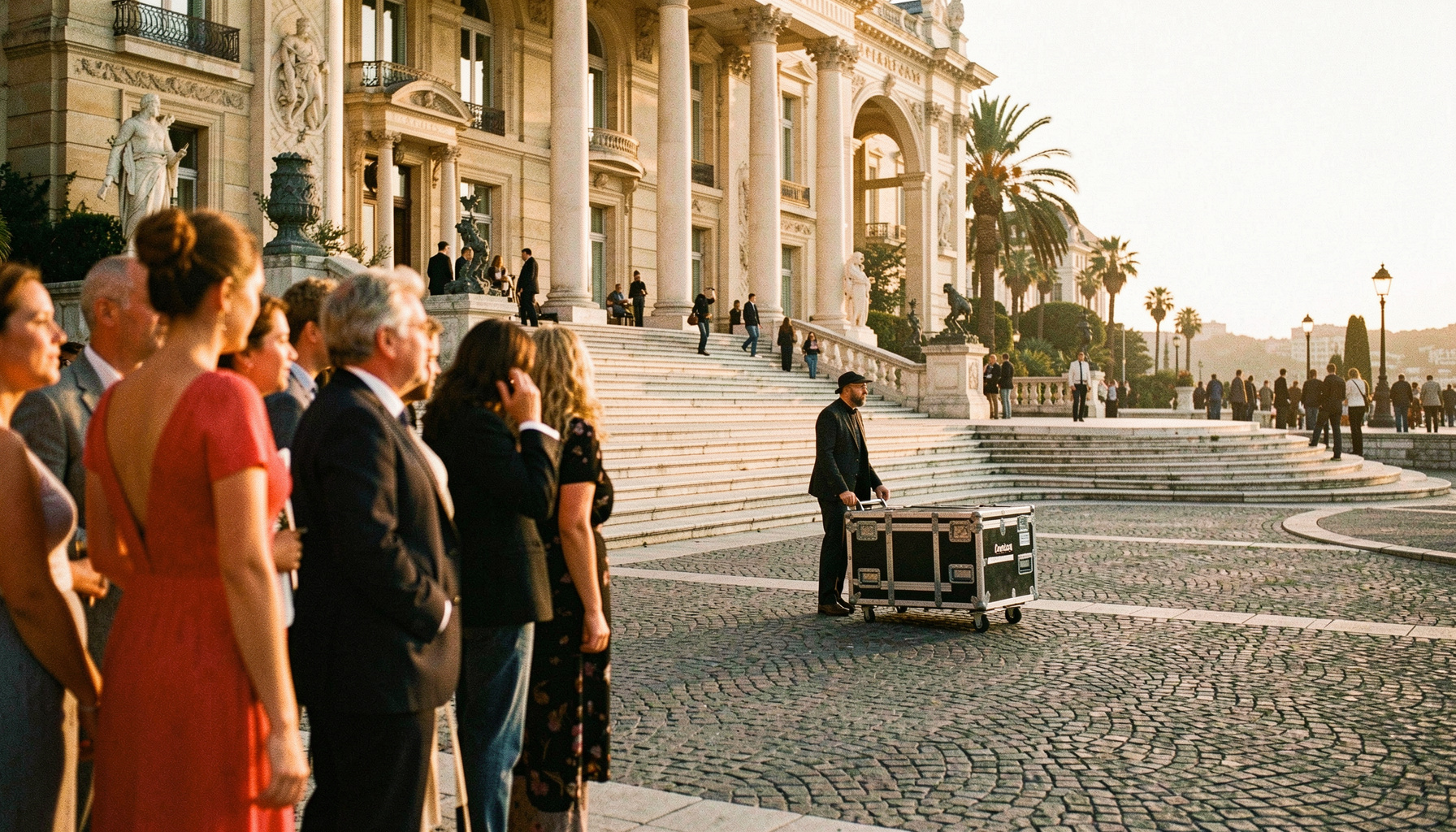

Cannes calls itself a cultural institution, which is a fine thing to call yourself if you enjoy the sound of it. A cultural institution, as I understand the term, is a place that preserves and elevates human achievement. Cannes certainly elevates people — mostly about three steps up a red carpet, into flashbulb range, and then back down again. Whether that counts as preservation of the human spirit is a question I am prepared to debate at length, provided someone else is paying for the debate.
Which brings us to who, precisely, is paying for anything at this festival. According to a Hollywood Reporter piece filed in May 2025, the glam workers — the makeup artists and hairstylists who show up before dawn to ensure that the talent arrives on the Palais steps looking like talent — routinely spend thousands of their own dollars just to be present at the festival. Travel, accommodation, kit, and the assorted expenses of hovering in the correct lobby at the correct hour, hoping a name client notices them before the name client notices the canapés. They are, in the technical economic sense, investing in a marketplace. In the more accurate sense, they are paying an admission fee to a job fair that does not advertise itself as a job fair, because job fairs do not have yachts.
Now, I have heard of artists supporting other artists. It is a beautiful tradition. Usually it involves encouragement, the occasional shared studio space, perhaps a favorable review exchanged between friends over cheap wine. It does not usually involve one artist wiring four figures to a Nice hotel so that another artist will permit the first artist to make the second artist look good enough to be photographed. That is less a tradition and more a franchise arrangement in which only one party received the franchise documents.
The festival, for its part, calls this the film industry. Which is accurate. An industry is a system organized around production. At Cannes, the glam workers are both the labor and the venture capital, the crew and the angel investors, the talent and the talent fee. The stars arrive. The stars are made luminous. The stars are photographed. And somewhere in a hotel room that costs more per night than a gaffer earns in a week, a hairstylist opens a spreadsheet and wonders whether luminous is going to cover the return flight.
It is, when you think about it, a perfectly efficient system — if what you are trying to produce is not films, but the unshakeable conviction that proximity to glamour is its own reward. Cannes has been running that experiment for decades. The results are in. The experiment is the product.