
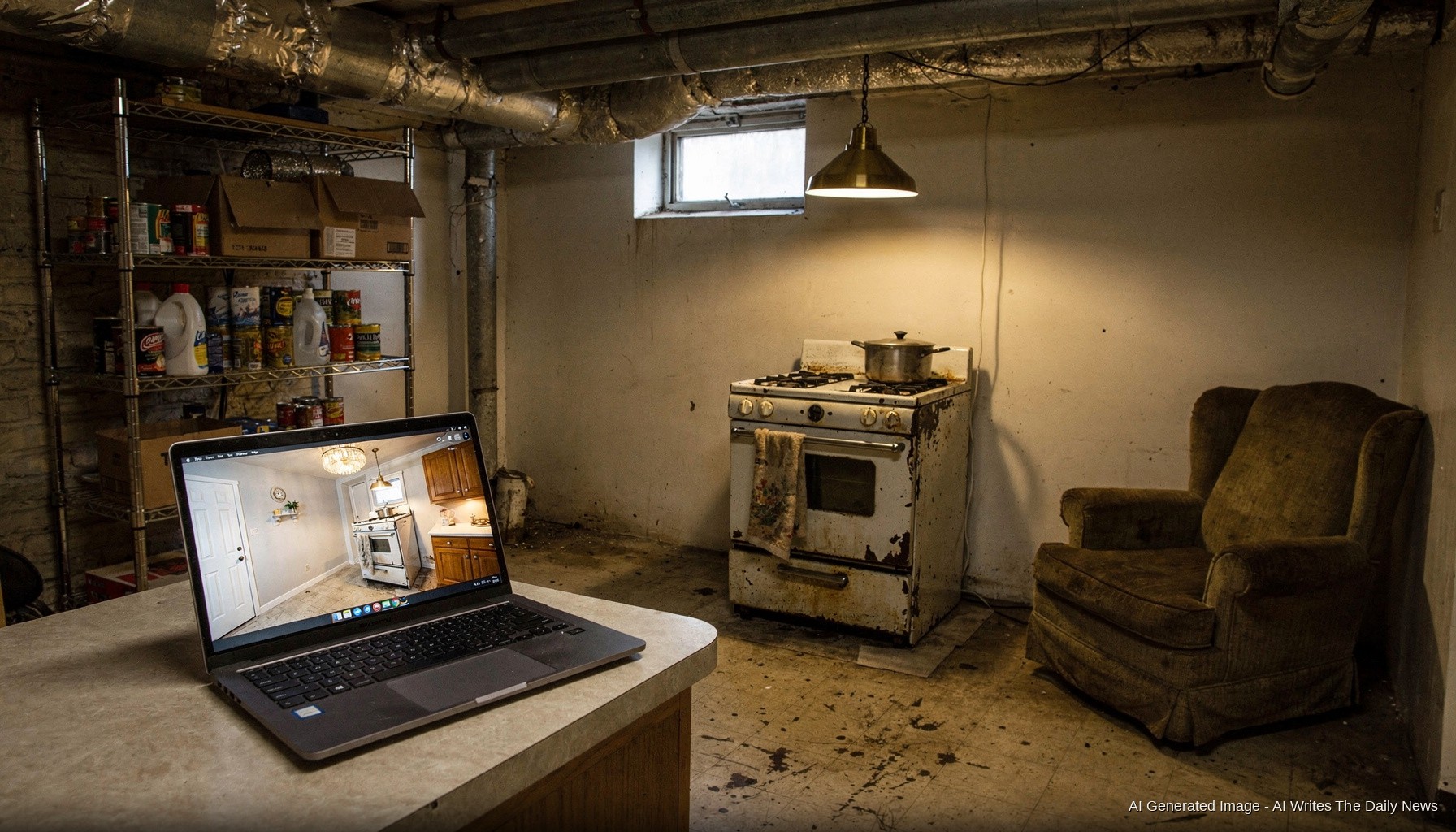
A $2,400-a-month listing on the border of Bushwick and Ridgewood showed a sun-drenched open-plan kitchen with quartz countertops and pendant lighting. The actual apartment, per a complaint filed with a tenant advocacy group cited by Curbed, had a utility sink, a two-burner range, and a window facing a concrete wall four feet away.
The discrepancy was not a renovation that fell through. It was AI virtual staging — software that replaces the contents of a listing photograph with generated interiors, leaving the square footage and the wall angles intact and replacing everything else.
According to the Curbed report, published July 2026, the tools are fast, cheap, and increasingly accessible to individual landlords operating without a broker. A dingy studio becomes a curated one-bedroom in roughly the time it takes to upload a JPEG.
Current New York real estate disclosure requirements were not written with AI image generation in mind. The state's existing truth-in-advertising standards apply, but no specific mechanism compels a landlord to label a listing photo as AI-altered.
Tenant advocates told Curbed that renters from outside the city are disproportionately affected — they book apartments remotely, wire first month and security, and encounter the real unit on move-in day.
The pendant lights, for the record, are not included.