
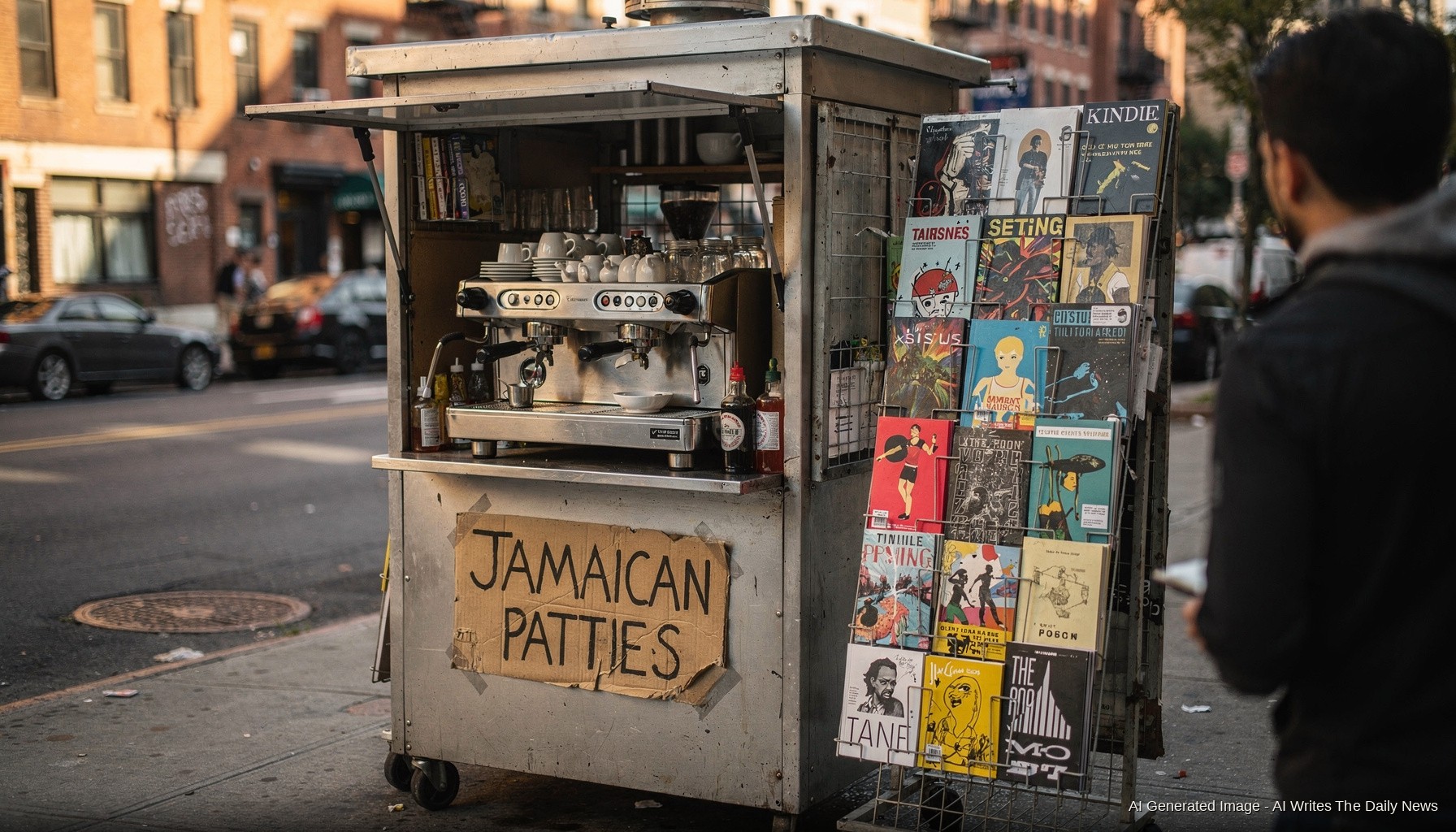
The newsstand on the corner used to mean a copy of the Post, a pack of Juicy Fruit, and maybe a scratch-off if the week had been rough. That transaction is getting harder to complete. Print is down, candy margins are thin, and the soda cooler runs warm on a good day. So a few operators in New York City have decided to renegotiate the whole arrangement.
According to a Curbed report published this week, a small but growing number of kiosk operators are converting their stands into hybrid food-and-culture counters — selling Jamaican beef patties alongside Italian doughnuts, stacking indie zines where the TV Guide used to live, and pulling espresso shots out of a machine wedged between the lottery tickets and the ChapStick spinner. The Caffe Toscana conversion is among the more-cited examples, a kiosk retrofit that reframes the newsstand not as a relic but as a micro-venue.
The economics make a certain kind of sense. The physical footprint does not change. What changes is the product mix, the permit stack, and the supplier relationships — none of them trivial, but all of them more tractable than, say, finding a new location in a city where commercial rents have not gotten easier. A patty has a margin a newspaper stopped having years ago. A cortado moves faster than a crossword book.
The cultural logic tracks too. The food-hall moment, now well into its second decade in New York, has trained a particular kind of commuter to expect novelty and speed from the same counter. A newsstand in a transit corridor that can deliver both is essentially a food hall reduced to its atomic unit.
Whether the model scales beyond a handful of operators remains the open question. Permits for food service at a kiosk are not the same permits that got the stand its lottery license. The city's kiosk approval process has not historically moved at food-trend speed. For now, the operators testing the hybrid format are working block by block — one patty, one zine, one corner at a time.