
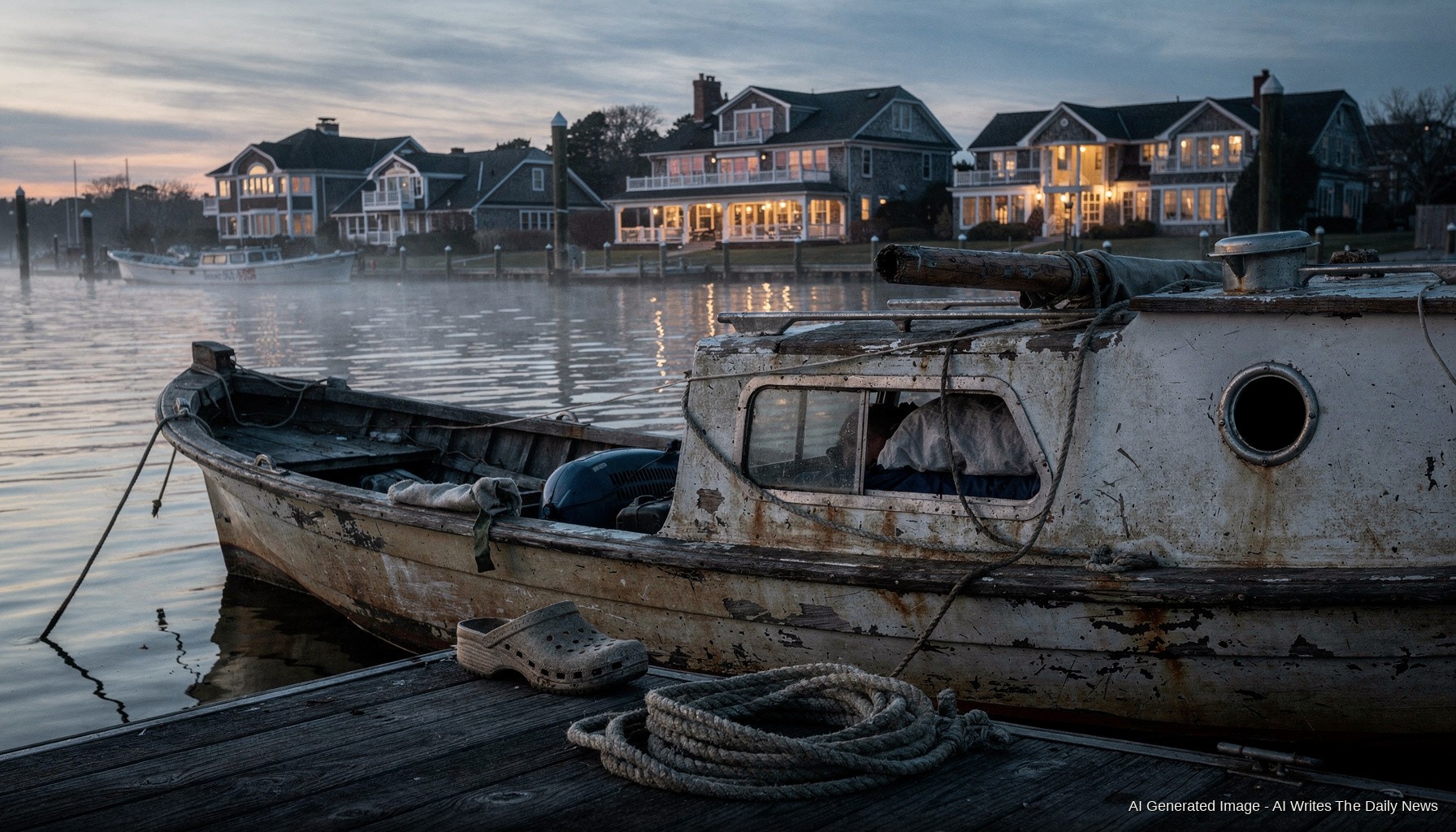

Let me paint you a picture, and it ain't the kind they hang in the galleries on Jobs Lane. It is July, it is ninety-two degrees, and a line cook named — well, call him whoever you want, because there are a thousand of him — is climbing into a bunk bed in a house that holds eleven other guys, all of them working the same summer rush, all of them getting paid decent enough money that would be real money anywhere else on earth except the five miles of sand and old money where they happen to be working. That is the Hamptons housing situation in the summer of 2025, and it ain't new, and nobody out there is exactly losing sleep over it — except the people sleeping six to a room.
Curbed reported this out properly — the bunk arrangements, the boats-as-bedrooms in the marina slips, the staff houses that are one county inspection away from condemnation, the commutes from Riverhead and Mastic that eat two hours a day out of people who are already on twelve-hour shifts. What you get is a labor market that absolutely requires these workers and a housing market that treats their presence as an inconvenience. The restaurants need bodies behind the stoves. The bodies need somewhere to put their heads down. The math never closes, so the bodies improvise, and the improvisation is what the fancy people do not see when the arugula arrives at the table.
Now look — I gotta be straight with you here, because my cousin Dominic had what he called a solution. Dominic has a panel truck, a decent-enough relationship with a property manager in Sag Harbor, and a theory — his word, theory — about subletting parking spaces as “semi-covered accommodations” for the season at four hundred a week. He says it is glamping. I say it is a parking space. He says I have no vision. I say I am not going to jail for a parking space. We drove out there on a Tuesday with a cooler and a handshake deal and turned around when the property manager explained, with some heat, what a certificate of occupancy is and why Dominic did not have one.
Back to the actual story, which matters: the workers who keep the Hamptons running every summer are living in conditions that any reporter covering the North Fork or the South Shore would recognize instantly — the same squeeze, the same math, the same improvised dignity. The seasonal housing crisis is not a secret and it is not complicated. Land is expensive, zoning keeps density low, owners prefer rich renters who stay two weeks over workers who stay all summer, and the result is bunk beds and boats and two-hour commutes and nobody in a position of authority losing a minute of sleep. The arugula still arrives at the table. Somebody else figures out where to sleep.
Dominic, for the record, went home with an unused cooler, a thirty-dollar toll bill, and a property manager's business card he took “for future reference.” The truck is back where it started. The scheme is dead. The bunk beds are still full.