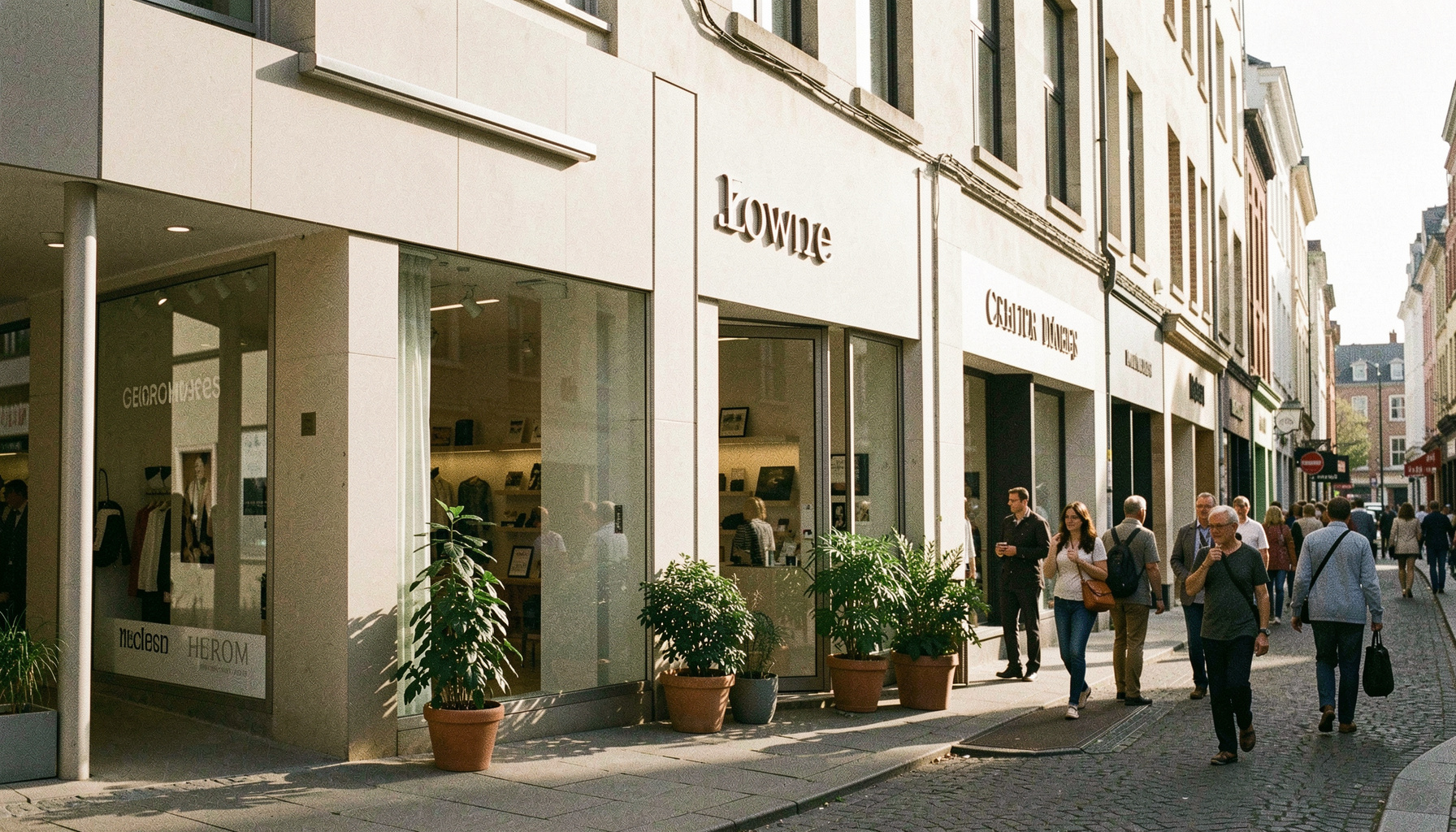
Walk down the main commercial strip of whatever neighborhood is having its moment right now. Odds are good you will pass a eucalyptus-scented soap boutique, a rack of $98 straight-leg chinos in four earth tones, and a stack of heritage-weight crewnecks folded with surgical precision. The names change slightly city to city, but the lineup does not. Aesop. Everlane. Buck Mason. Same cluster, new zip code.
Curbed flagged the pattern in a 2024 piece tracking how direct-to-consumer brands have become the default tenant profile for ascending urban retail corridors — think West Village blocks, stretches of Abbott Kinney, the better end of whatever street your city's real estate section just discovered. The piece noted that the co-tenancy is not accidental. These brands court one another, and landlords court all of them, because the combined foot traffic signals a demographic that brokers can price around.
The retail geography reads, at this point, like a franchise map that has agreed not to use the word franchise. Each outpost is individually designed, locally textured in small ways — a mural here, a regional coffee collab there — but the category stack is consistent enough that a visitor from Denver can walk into a Brooklyn side street and feel the specific ambient calm of knowing exactly what everything costs and approximately what it will smell like.
For property watchers, the cluster has become a soft leading indicator. When Aesop signs a lease, the asking rents on adjacent ground-floor space tend to follow within 18 months. The boutique is the canary; the rent increase is the mine.