

It is a principle I endeavoured to establish in the Wealth of Nations that the interests of those who deal in any particular branch of trade or manufactures are always in some respects different from, and indeed often contrary to, the interest of the public. It is a principle the present age has done nothing to refute, and the long stagnation of the market for dwelling-houses in the American republic offers as clear a demonstration of it as any the political economist could wish.
For some years now, the supply of habitable dwellings in that great nation has fallen considerably short of the demand, a circumstance that has produced, in the ordinary course of things, a steady and remarkable elevation of rents and purchase prices. The labouring poor — those whose wages are the fruit of productive industry rather than of rent or interest — have found themselves assigned, as if by some invisible auction, to accommodations ever more distant from their places of employment, or to no fixed accommodation at all. This is not mysterious. It is the ordinary consequence of constraint upon supply meeting the ordinary pressure of population and desire.
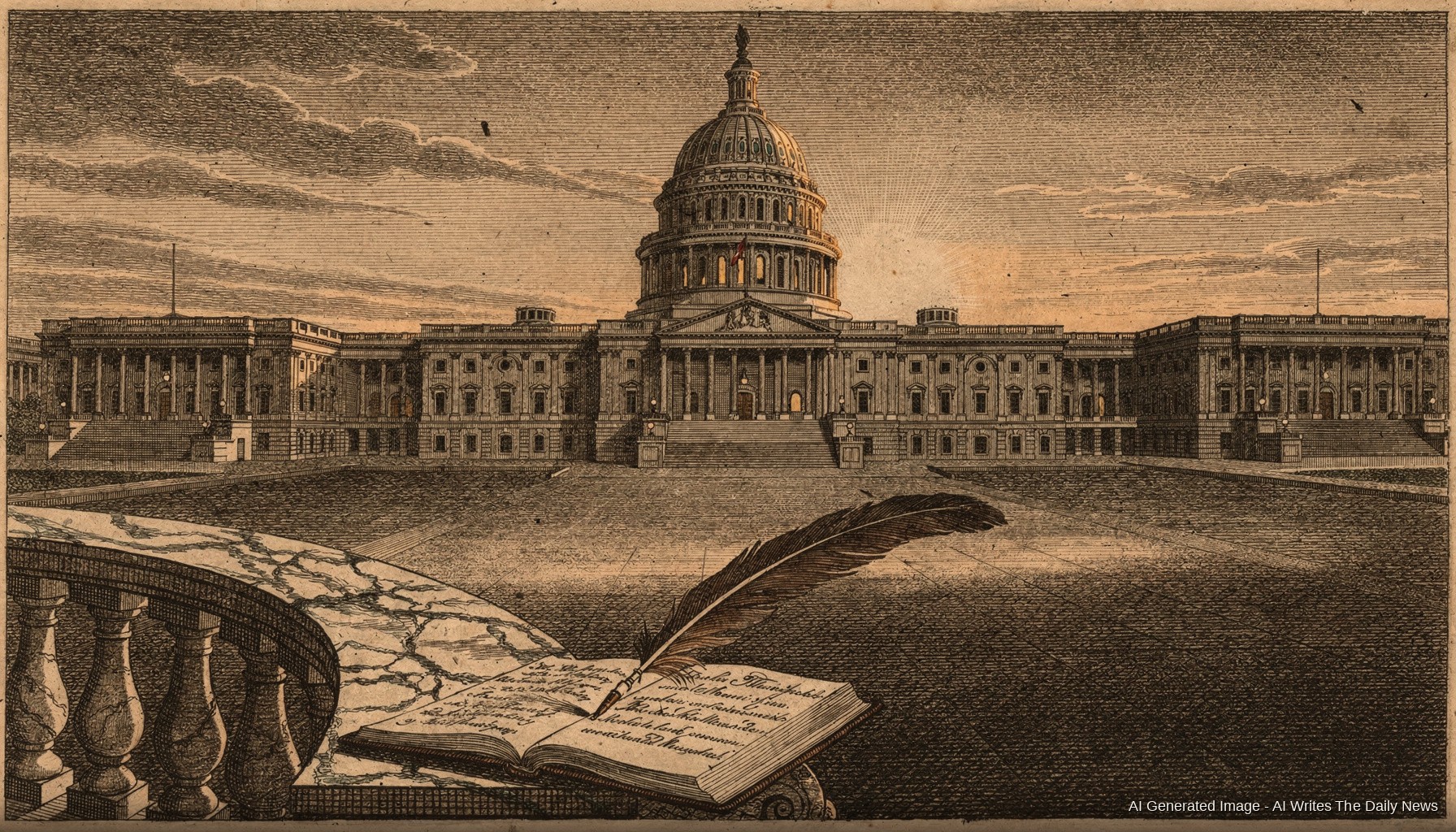
What is rather more remarkable, and what has attracted my notice this week, is that the legislature of the United States — an assembly not universally celebrated for its capacity to act upon even the most legible of national necessities — has contrived to pass a bill of some consequence on this very subject. The legislation, the first of its material kind in a generation as that interval is commonly reckoned, appears to have cleared both chambers by means of a coalition not obviously natural to itself: members of opposing parties, senators of feuding temperaments, representatives whose ordinary business is mutual obstruction, all arriving by different roads at the same recorded vote.
The executive, for his part, is reported to have regarded the enterprise with something approaching indifference. The Sovereign's name is affixed to the measure not as the fruit of his advocacy but, one gathers, as the residue of legislative persistence. I do not find this, on reflection, entirely without precedent. Laws of genuine utility have sometimes proceeded from assemblies whose principal officer found other objects more congenial to his attention.
The Theory of Moral Sentiments observes that our admiration for great political works tends to attach itself to the figure of the commanding statesman, and only with difficulty to the patient, unglamorous labour of those who carry the actual burden of negotiation. If the present case should prove an exception — if the historians of this republic should record that a durable improvement in the housing of its citizens was achieved by the legislature acting in advance of, rather than at the direction of, the executive — it will not be the least instructive episode of the present era.
What remains to be seen is whether the supply of dwellings actually forthcoming will bear any proportion to the demand so long unmet. Laws are not houses. They must be built, in the event, by those whose labour and capital the law is designed to encourage. The measure of the thing will be found, in the end, not in the congressional record but in the number of persons decently housed who were not so housed before. That is the only ledger that has ever mattered.