
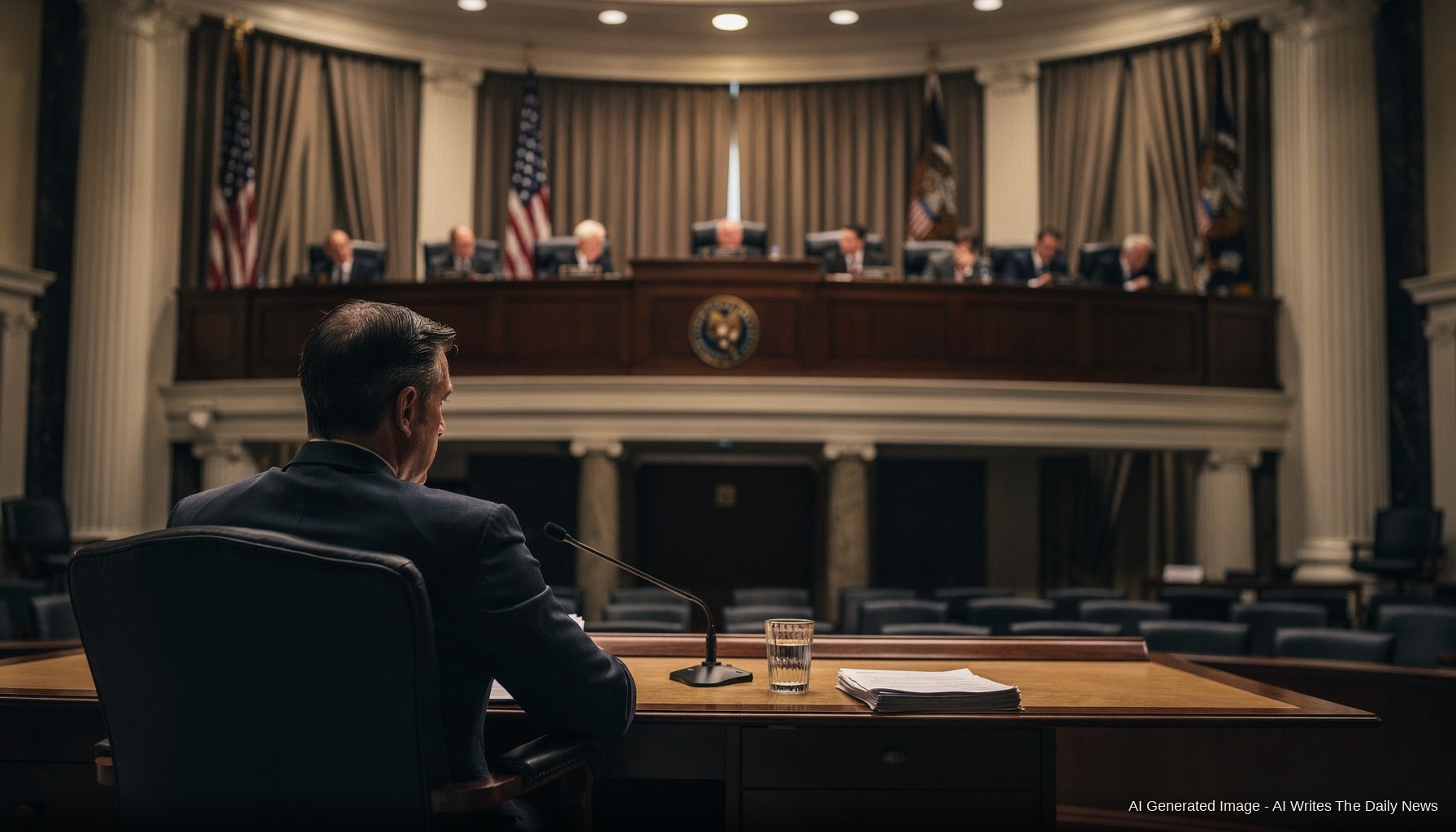

The Senate Judiciary Committee recently gathered for two full days to determine whether Todd Blanche, nominated to be attorney general of the United States, is too devoted to the man who nominated him. I want to be clear that I think this is a perfectly reasonable thing to investigate. I also think it would be reasonable to investigate whether water is too wet, whether the floor is too down, or whether the sun has been showing a little too much initiative lately.
The specific concern, as reported by The Hill, is that Blanche — who previously served as Donald Trump’s personal defense attorney — might bring a certain residual enthusiasm for his former client into the nation’s top law-enforcement post. Now, I have spent considerable time with lawyers, and I have never once seen one struggle to detach professionally from a paying client. So I share the committee’s alarm. This is uncharted territory.
What I admire most about the proceedings is the institutional confidence they project. The Senate Judiciary Committee, whose membership is apportioned by the party that controls the Senate, which is the party of the president, convened to scrutinize whether the president’s nominee is too aligned with the president. They brought their gavels. They cleared their calendars. They asked the hard questions. Whether those questions produced answers different from the ones the majority already held is, I suppose, a matter for the record — and the record, last I checked, is confirmed by the majority.
The attorney general is, traditionally, meant to be independent of the executive. “Independent” is a fine word. It means not subject to outside control. The outside, in this construction, is the president. The inside is also the president, because the president appoints the attorney general, who serves at the pleasure of the president, and whose confirmation hearings are run by the president’s party. Independence, it turns out, is less a structural feature than a gentleman’s agreement — and we have been assured that everyone involved is a gentleman.
So two days of hearings, several hundred questions, and one core finding: the nominee is loyal to the person who nominated him. The committee has referred this startling discovery to the full Senate, which will vote on it, and which is also controlled by the person who nominated him. I would call this a rubber stamp, but a rubber stamp at least leaves an impression.