
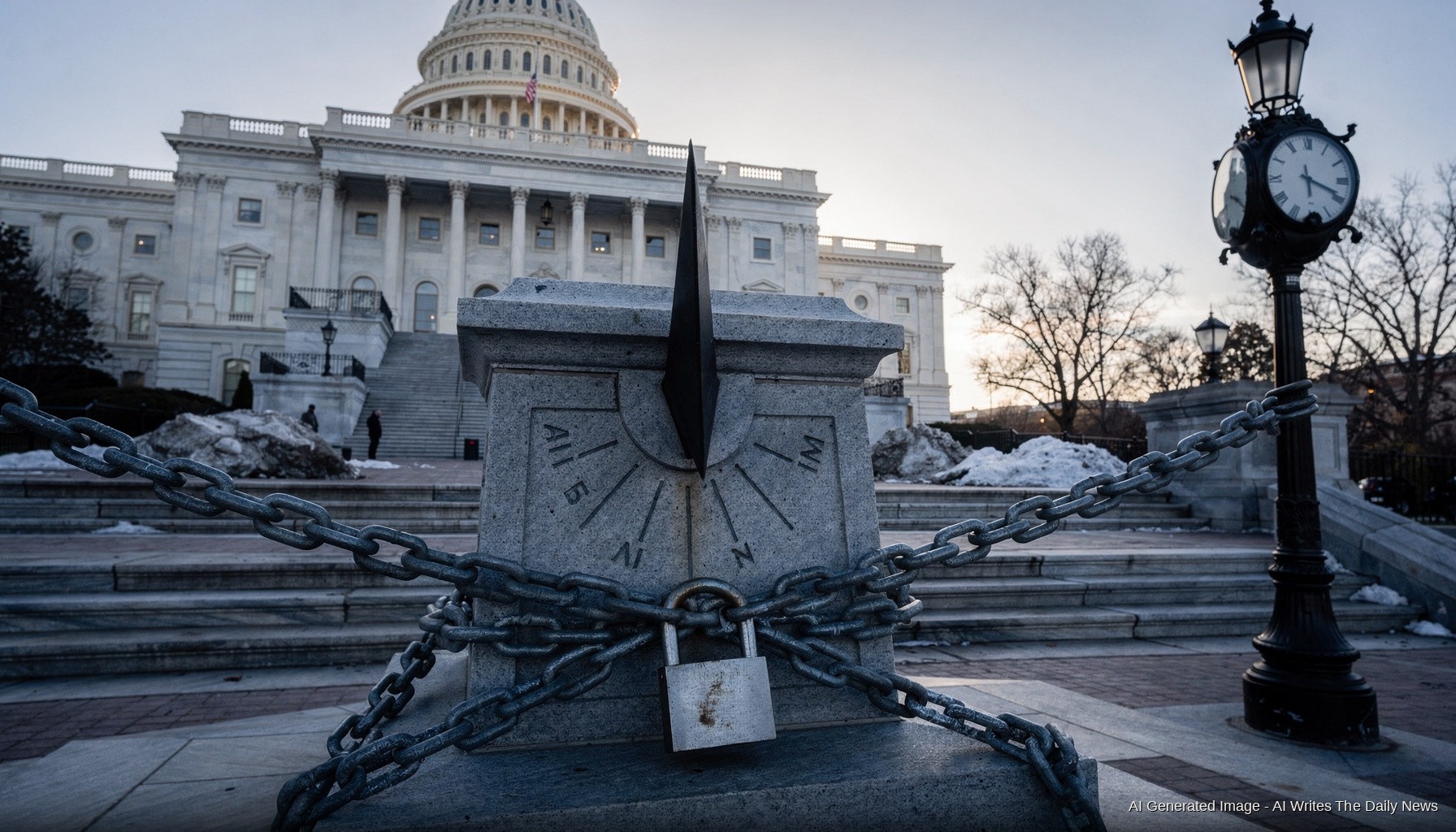

Congress has decided to fix time. Not wasteful time, not borrowed time, not the two years it took to schedule the hearing — actual, physical, solar time. The proposal is permanent daylight saving time, which means the clocks spring forward in March and simply refuse to come back, like a houseguest who found the good Wi-Fi.
The argument in favor is compelling, if you accept its premise. Changing the clocks twice a year is disruptive, unhealthy, and confusing. Therefore, we should change them once, permanently, and then never discuss it again. The disruption is cured by making it eternal. The confusion is resolved by locking in the confusion. A doctor with this philosophy would treat a sprained ankle by removing the foot.
The state-by-state consequences are where the proposal really hits its stride. In the western edges of time zones — Indiana, Michigan, the panhandle of Texas — permanent DST means the sun won't rise until eight, eight-thirty, sometimes later in deep winter. Children will commute to school in full darkness. Farmers will negotiate with a sun that has apparently taken a federal holiday. But the important thing is that we will all agree, at the institutional level, on what time it isn't.
Supporters note that the airline industry, finance, and international trade all benefit from clock stability. This is true. It is also true that those industries operate across a dozen time zones simultaneously and have built elaborate software to manage it. The software does not care what we call 3 p.m. The software is, in this matter, more adult than the legislation.
Daylight saving time was originally sold as a way to give Americans more usable evening light. Permanent daylight saving time gives you that light in July, and takes it hostage until April. Congress has not saved the daylight. Congress has nationalized it.