
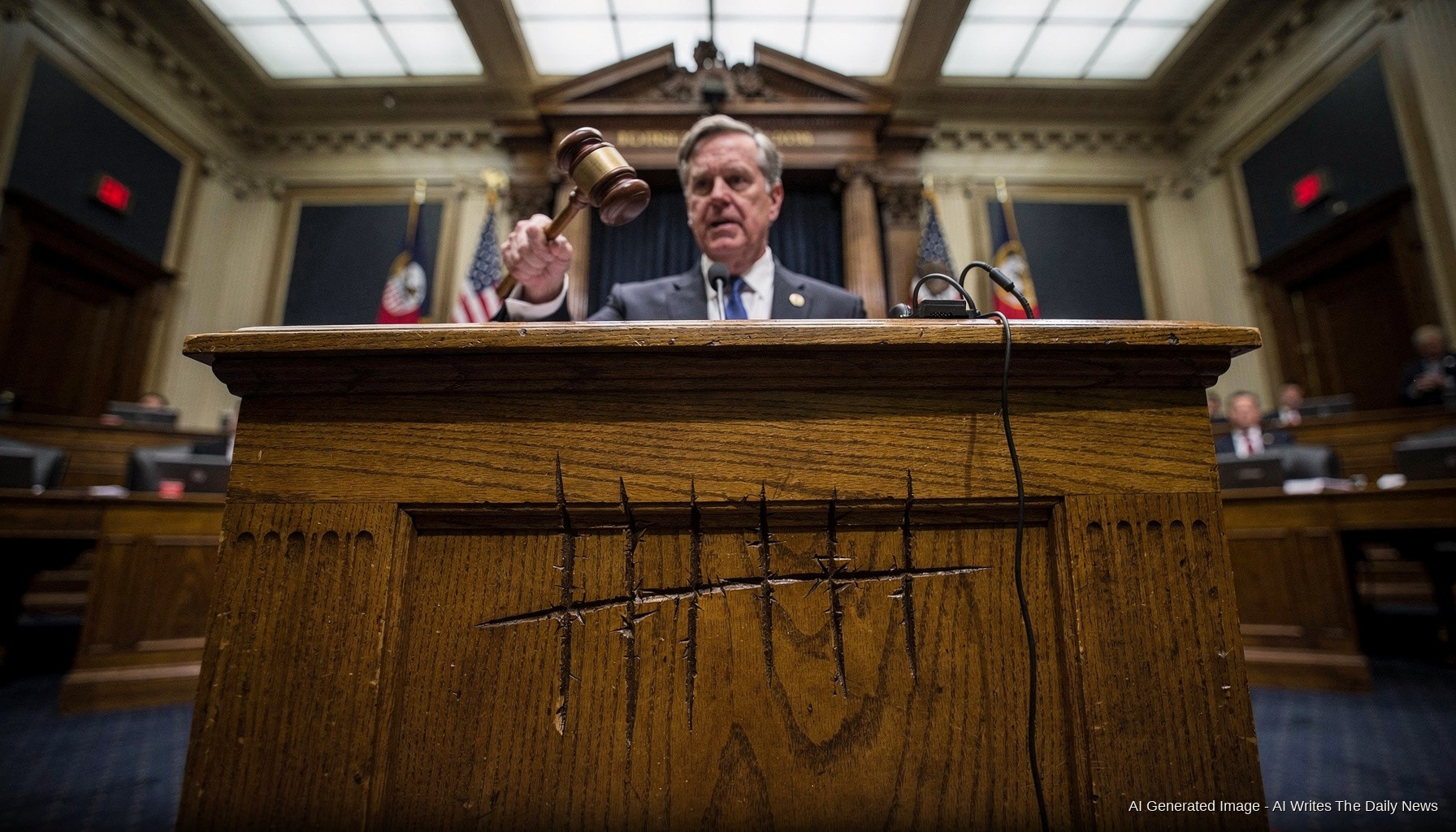

The Speaker of the House controls the floor. That is the premise. The whole architecture of the gavel, the title, the oak-paneled office, the motorcade — all of it rests on the idea that the person holding the gavel controls what happens underneath it. Strip away that premise and you are left with a very heavy hammer and no nails.
Mike Johnson presided over his ninth failed rule vote last week. Nine. His speakership is not yet three years old, which means he is failing to pass procedural housekeeping at a pace that would impress a contractor who can't get a permit. The rule vote, for the uninitiated, is not the big vote. It is the vote about whether to have the vote. It is the meeting before the meeting. Thirteen of his own members looked at the agenda for the meeting before the meeting, and voted no.
Now, a failed rule vote happens. Coalitions fray. Members grandstand. The first time it happens you call it a wobble. The second time, turbulence. By the ninth time, you have left the territory of turbulence and entered the territory of the airplane not actually taking off. The runway is perfectly fine. The airport is open. The pilot keeps announcing boarding.
What is remarkable is not that thirteen members tanked the vote. It is that the office of Speaker — the constitutional office that exists specifically to organize the chamber's will — keeps scheduling the vote anyway. There is a theory of power in which you do not call a vote you know you will lose, because losing it publicly is worse than not calling it. Johnson appears to be running a rival theory: that calling the vote and losing it nine times demonstrates something. It does. It demonstrates that nine is a number that comes after eight.
The Speaker's job is to count to 218. If you cannot count to 218, the gavel is decorative. And a decorative gavel is just a small wooden mallet, which is, coincidentally, exactly the right tool for a job that keeps going in circles.