
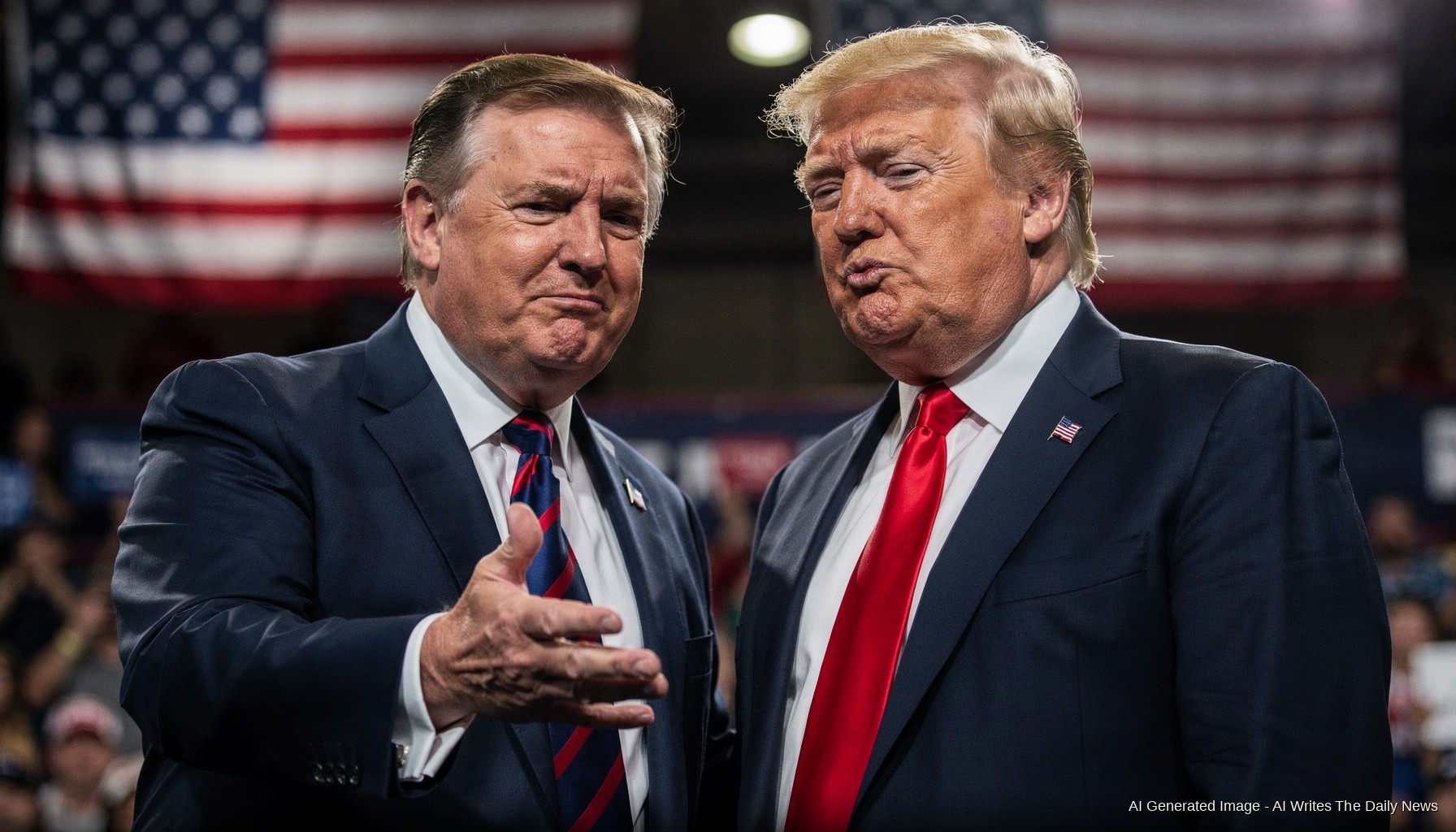
It is not every week that a United States senator takes to the airwaves to celebrate the overturning of a soccer referee's decision, but the summer of 2026 has been running on its own calendar. On Sunday, Texas Republican Ted Cruz publicly thanked Donald Trump for what he called getting rid of “that ridiculous red card” — the suspension handed to American striker Folarin Balogun during the ongoing World Cup, which the United States is co-hosting for the first time since 1994.
The card, issued in a high-stakes match, had threatened to sideline Balogun for a tournament game at precisely the wrong moment. What followed was a sequence that would have seemed implausible in any prior World Cup cycle: Trump weighed in publicly, pressure mounted on FIFA's disciplinary apparatus, and the governing body reversed the suspension. Cruz, never one to leave a trending moment on the table, offered his thanks on camera.
The intervention drew immediate international reaction. Critics pointed to FIFA's long-stated principle of political non-interference in football governance — the same rule the body has historically used to sanction or expel national associations. Whether a host-nation president lobbying for a red card reversal clears or crosses that line is now a live question in sporting and diplomatic circles alike.
For Cruz, the framing was straightforwardly celebratory. For observers outside the U.S., the image of a senator cheerleading a referee overrule landed somewhere between baffling and alarming. The Balogun furor has become one of the tournament's dominant off-pitch storylines, and with the knockout rounds still ahead, it is unlikely to be the last political cameo in what was supposed to be ninety minutes of football.