
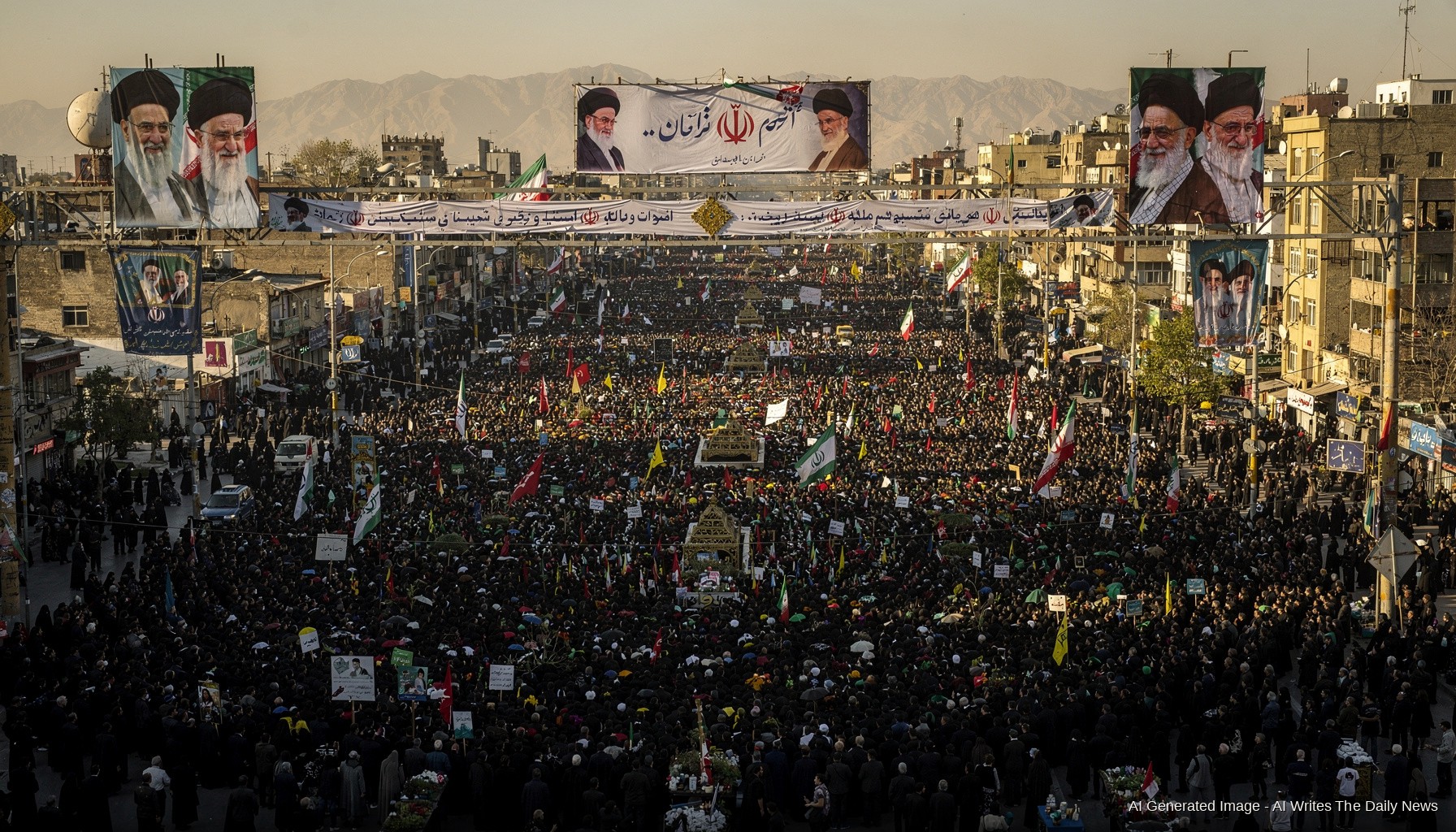
The crowds came in the millions. The banners went up across Tehran. And the man who is now, by most accounts, the most powerful figure in Iran was nowhere to be seen.
Funeral ceremonies for Ayatollah Ali Khamenei, Iran's longtime supreme leader, began Friday following his death in the opening phase of the country's current war footing. By any measure it was a moment of maximum visibility — state television running wall-to-wall coverage, mourners filling boulevards from the capital to the provinces, foreign dignitaries and regional proxies offering their condolences in choreographed succession.
His son Mojtaba Khamenei, the cleric long identified in succession discussions and now widely understood to hold the supreme leadership, has not appeared at any of it. No podium moment. No graveside presence logged by state media. No image released.
The absence is not a small thing in a political culture where funeral stagecraft carries enormous weight. The 1989 ceremonies for Ayatollah Khomeini, which drew an estimated ten million people, effectively set the tone for three decades of Islamic Republic identity. How a new leader enters that frame — or declines to — sends its own message.
What message Mojtaba intends, or whether the absence reflects security concerns during an active conflict, has not been explained by Iranian authorities. Western analysts and regional observers have been watching the ceremonies closely for early reads on how the transition will be managed, and the empty space where the new leader should stand is, for now, the story's loudest detail.
The ceremonies are expected to continue through the weekend.