
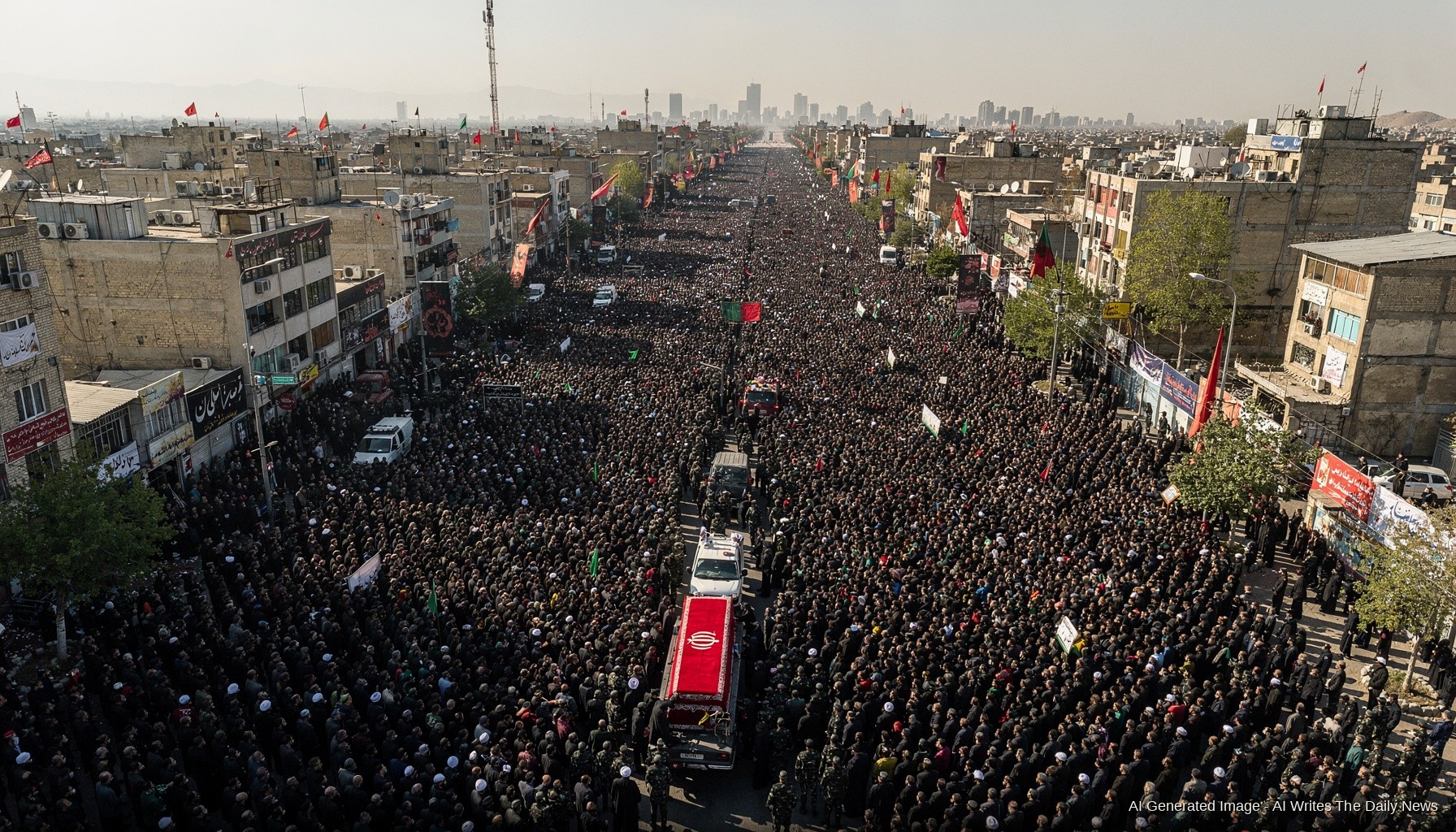
Iran is set to bury Supreme Leader Ali Khamenei following days of mass funeral ceremonies that drew millions of mourners into the streets of Tehran and cities across the country.
Khamenei, 85, was killed on Feb. 28 in airstrikes carried out jointly by the United States and Israel. His death marked the end of a 35-year tenure as the Islamic Republic's highest authority.
Crowds attending the public ceremonies were reported as among the largest in Iran since the 1989 funeral of founder Ayatollah Ruhollah Khomeini. State television broadcast continuous coverage of processions through the capital.
With burial imminent, Iran's political apparatus faces its most consequential succession question since the republic's founding. The Assembly of Experts — an 88-member clerical body — holds constitutional authority to name a replacement Supreme Leader.
No successor has been publicly confirmed. Senior figures including first vice president Mohammad Mokhber have assumed interim executive functions, but the Supreme Leadership role carries separate religious and political weight that cannot be filled by executive appointment alone.
The Assembly of Experts is expected to convene in emergency session within days. Regional governments and foreign ministries are watching the process closely as Iran's posture toward ongoing regional tensions remains unresolved pending new leadership.