

It is a principle well established in The Theory of Moral Sentiments that the impartial spectator, observing any action of consequence, must attend not merely to the declared intention of the actor but to the full chain of conduct by which that intention is pursued and, more particularly, how it is finally abandoned. It is with this principle firmly in mind that I take up the recent proceedings of Senator William Cassidy of Louisiana, whose parliamentary career has produced, in the span of a single week, what may fairly be called one of the more instructive episodes in the mechanics of sovereign deliberation.
The matter concerns the ancient and hardly resolved question of which estate of government holds the proper authority to commit the nation's forces to martial action. The Senate of the United States, that body charged with advising the executive power, was presented with a resolution touching upon the war powers of the President in relation to the Islamic Republic of Iran. Senator Cassidy, perceiving that the executive had not adequately informed the legislature of its intentions or intelligence, voted in favour of that resolution — a check, modest in its mechanism, upon the discretion of the singular magistrate.
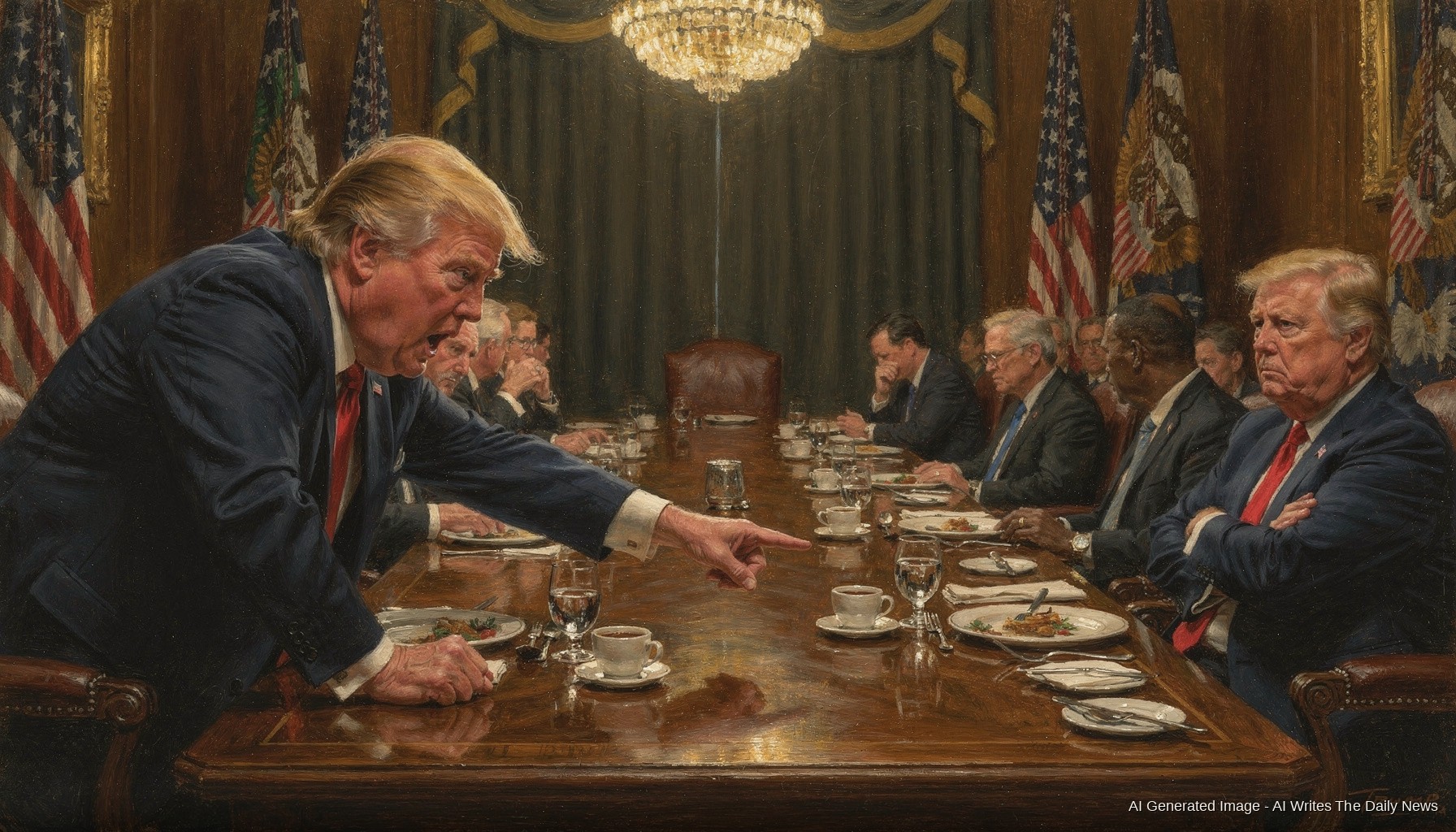
So far, so coherent. A senator, persuaded that information has been withheld, withholds his assent in return. The exchange is perfectly rational. But the senator did not stop there. He attended a luncheon of his party's members, at which the President of the United States was also present, and there — by his own subsequent account — raised his voice in direct address to the executive, demanding the intelligence he believed had been denied the chamber. The senator has since described this exchange, with evident satisfaction, as the accomplishment of his “mission.”
Let us consider what this mission, so accomplished, produced in the way of subsequent conduct. The senator, having shouted his way to enlightenment, and having received — by his account — the information he sought, then reversed his vote. The war-powers resolution, which had represented his considered judgment that the executive required a legislative brake, was thereafter deprived of his support. The mission concluded. The original position dissolved. The ledger, one is bound to observe, does not balance in any manner that The Wealth of Nations, with its attachment to rational self-interest properly understood, would immediately recognise.
It is possible, of course, that the intelligence conveyed at the luncheon was of a character so persuasive, so materially different from what the senator had previously been given to understand, that a complete reversal of judgment was not merely defensible but obligatory. Statesmen are sometimes vouchsafed knowledge that the public record cannot contain, and one ought not too hastily impute inconsistency where the gap in evidence is, by the nature of affairs, unbridgeable. This charity the impartial spectator owes every man.
And yet the form of the transaction remains curious. The senator's declared instrument of statecraft was elevation of voice. His declared evidence of success was the extraction of information through that elevation. His declared consequence was the withdrawal of the very measure that had given him leverage sufficient to raise the voice in the first instance. What the senator has demonstrated, whatever his private reasoning, is that a vote cast in the morning may serve as a negotiating token by afternoon, and that the mission of legislative oversight may be declared complete at the precise moment oversight is relinquished. In a nation whose commerce is governed by the expectation that a contract, once struck, conveys a durable obligation, the same expectation applied to a senator's recorded vote would seem no unreasonable extension of the principle.
The division of labour, I have long maintained, produces great efficiency in the manufactures. Whether the same division — the President conducting war, the Senate conducting luncheons — produces comparable advantage in the governance of a republic is a question the present episode leaves, with admirable precision, entirely open.