
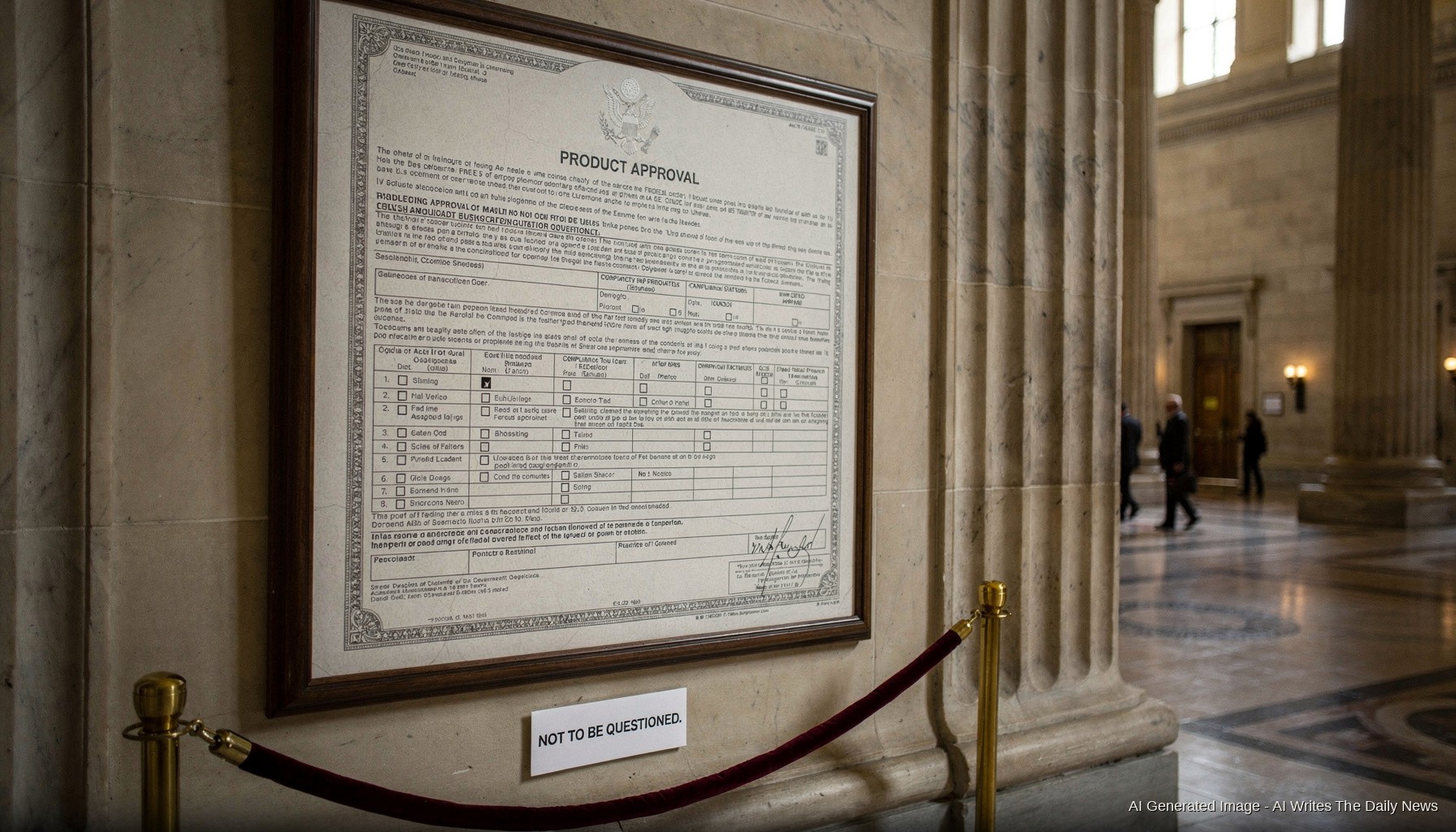

Here is how the protection racket works, and I mean that in the most admiring sense. You manufacture a weedkiller. The federal government reviews it and prints a label that says it is safe. Then people get sick and take you to state court, arguing that your label was, to put it in the technical legal vernacular, wrong. And the Supreme Court, in its wisdom, says: no, no, no. The federal label preempts the state lawsuit. The label that declared the product safe also, by logical extension, declares itself immune to challenge. The label is doing double shifts.
Now, I have read some labels in my time. Mostly on medication bottles warning me not to operate heavy machinery, which rules out my cousin Gerald but leaves the rest of us in suspense. But I had no idea a label could be load-bearing. Structural, even. The kind of label that, if you peel it off, the whole building comes down — specifically the building where injured plaintiffs were lining up to file suit.
The court’s ruling is likely to determine the fate of thousands of pending cases. “Determine the fate” is the phrase doing the polite work there. What it means is: those cases are now driving the wrong direction on a one-way street, and the street is federal preemption, and the sign was put up by the same agency that approved the label, which was submitted by the company that made the product. It is what experts in the field call a circle, and what I call a very nice circle if you happen to be inside it.
Bayer acquired this particular product when it bought Monsanto, which is a sentence that already contains its own punchline. They have been settling cases by the billions for years, which is the corporate equivalent of admitting you stepped on someone’s foot while continuing to stand on it. Now the court has handed them a ruling that may render future feet largely irrelevant.
The elegant part — and I do admire elegance — is that nobody had to say the product was safe. They just had to say the label said so. And the label, it turns out, has sovereign immunity. The weedkiller kills what it touches, and the label kills what comes after. You have to respect the consistency.